
Flotsam & Jetsam
Your letters and such...
Regarding a photo in our Seasoned Sailor episode on Lon Zimmerman, reader David Bower writes:
WOW! That’s a brave man towing a Scaffie behind a VW Bus! I LOVE VW buses, and used to own a camper version. But I’d never tow much of anything behind one. If I did, I’d have to be content with around 50 mph. The terrain in AK would make even that a challenge.
Reader Jason Sabo sends his Happy New Year wishes and a lovely photo:
Happy New Year! Love your newsletter! Here’s our West Wight Potter 15 coming into St James City, Florida under the first full moon of 2026!

After reading Rowing the Harvest, David Peebles sends the following question for readers:
I have rowed, and enjoy rowing, but have no experience in a scull. In watching video, I have noticed that often, on the recovery, the boat very briefly seems to stop its forward glide. I would assume that this is simply Newton's 3rd at work; that the rower's mass, in moving toward the stern, retards the forward motion momentarily.
So, does this really happen, and is there any modification of the rower's moves that could mitigate the effect? It looks as if the effect is more pronounced with multiple rowers.
Our friend and legendary small-boat sailor, David Omick is doing some house cleaning and has a stack of old print SCA magazines from 2011-2022 that he’s willing to give away for the cost of shipping them. Please contact josh@smallcraftadvisor.com if you’re interested. We assume they will be spoken for by the end of today. —Eds
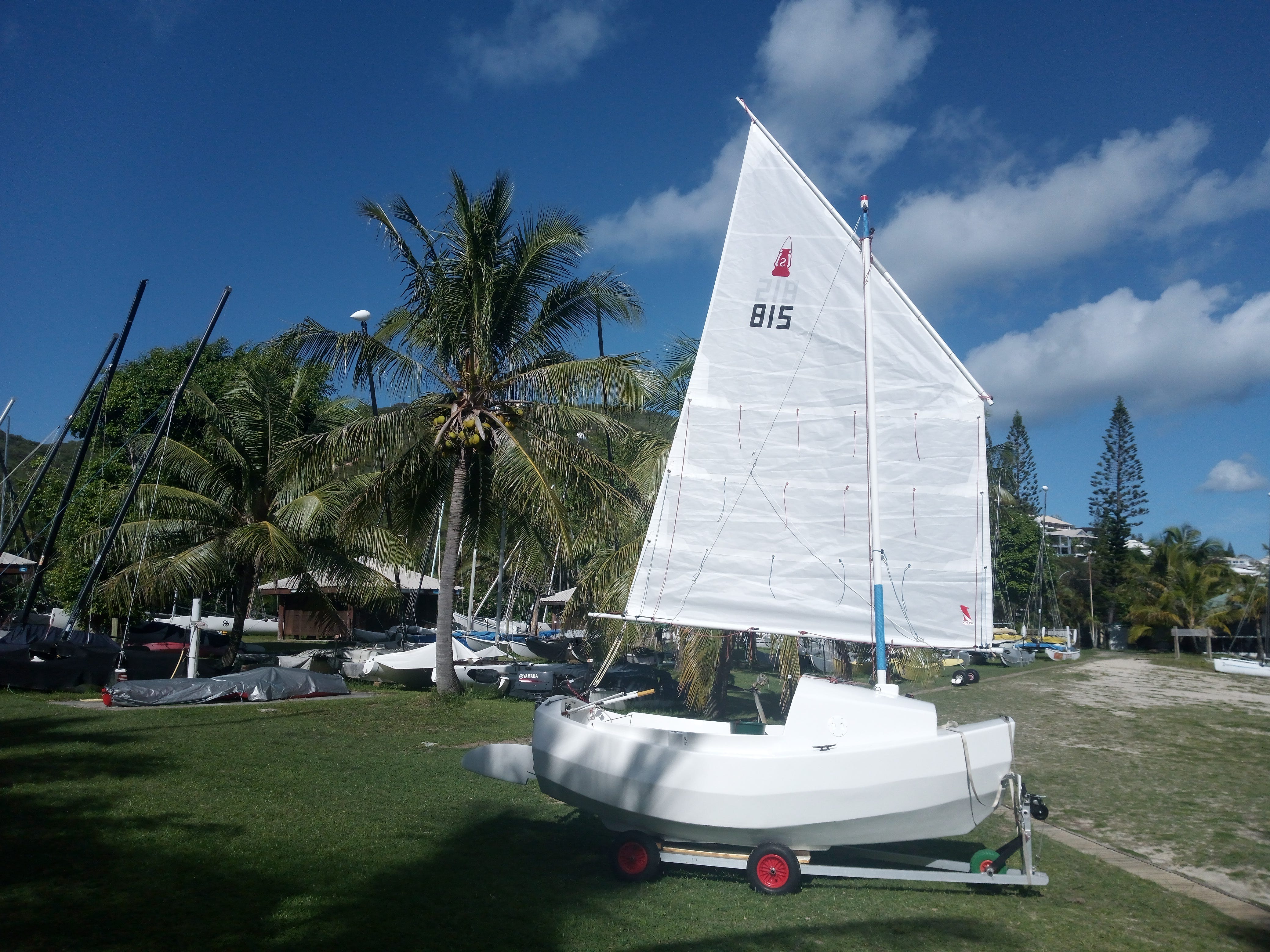
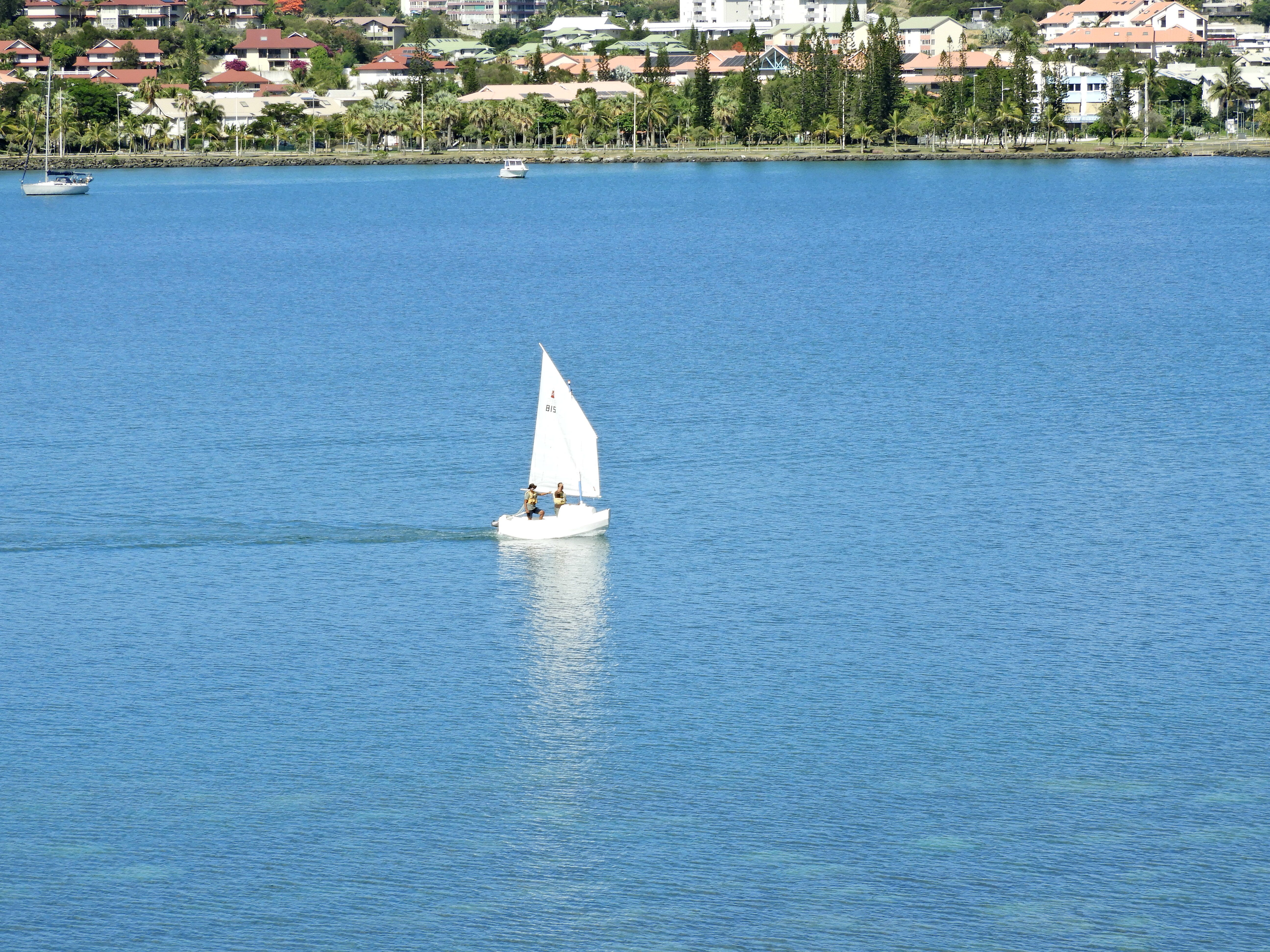
Finally another Happy New Year’s wish with a photo—this time from Georgia Blancher in New Caledonia. Happy SCAMPing #815!
@David Peebles
your 'stall at the recovery' observation is correct!
it's caused by the rower stopping their aft-ward motion, and is translated to the boat as pressure through the foot stretchers.
minimizing this is a big part of competitive rowing technique, and virtually impossible for amatuer rowers to do for hours/miles on end - like many of us do on weekend/overnight type adventures. You just accept it and keep rowing...
besides technique, there is one thing that can be done to almost completely eliminate it: switch to a sliding RIGGER. Most sliding rowers have sliding SEATS, but there is such thing as a sliding rigger. I have one on my 18' Expedition SUP, and I absolutely love it. I'm also modifying my Angus Expedition Rowboat to accept it.
Advantages:
- no energy is wasted moving the rower's body fore/aft, only the (much lighter) rigger and oars.
- no energy is wasted hobby horsing the boat fore/aft, and robbing speed by doing mini wheelies/nosedives in endless succession
- you can position the fixed seat so that the trim of the boat remains dead flat
- and, to your point, and related to the first bullet, the negative impact of the recovery is reduced to just the weight of the rigger/oars.
Sliding riggers were banned from sanctioned international rowing competitions, including the Olympics, by FISA (now World Rowing) around 1983-1984, primarily because they offered a significant efficiency advantage (keeping the rower's body more stationary) that was deemed unfair. But who cares when we're on our own boats for fun?
Here is the sliding rigger I have (not affiliated with them in any way):
https://na.rowsup.com/products/rowing-rig?variant=40583677182049
I put about 500km on that unit in 2025
There is another sliding rigger unit on the market, targeted at mostly SUP owners. I took one for a test row before deciding on the one above. I won't name it, but it was poorly designed and fabricated. The seat was much too low relative to the foot stretchers, so the recovery became quite the hamstring workout, when it should be feather light/effortless. Also there are NO BEARINGs in the other design...just plastic on plastic, not even self-lubricating UHMW strips (which would be perfect for that kind of design). Just plastic on plastic...so each stroke had 5-10 lbs of additional force required to overcome the friction, on both the drive and recovery. While I do think it would be great for training/building stroke strength, its not welcome on long trips where average speed and covering lots of water is the goal.
Hope this helps you. Welcome to the weird and wonderful world of sliding riggers!
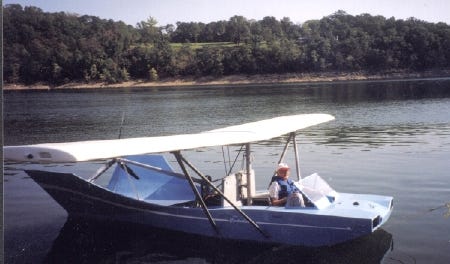
I never expected to see a picture of a Spratt 107 Control-wing seaplane here!