
Article by Jon Ferguson
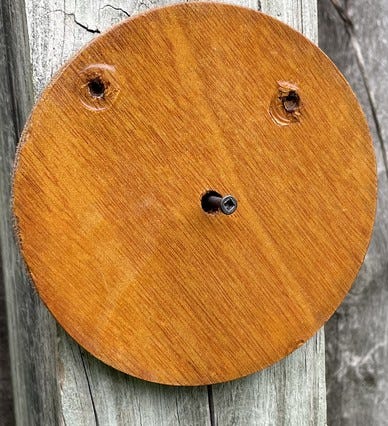
I wanted to know whether Cetol—a finish many builders love for its ease of maintenance—could successfully bond to cured epoxy. Instead of guessing, I ran a backyard torture test using real boat materials under real boatyard conditions.
So, I’m not an expert on finishes or boatbuilding. I’m currently building a CLC Southwester Dory. I have built one other boat but that was decades ago.
*Do not take this as advice. My experiment and its findings are not recommended by CLC or Sikkens or really anybody. It is just a little experiment.
Why did I do the Experiment?
We’ve all read about Cetol-over-epoxy horror stories, and Sikkens consistently states that Cetol systems are formulated for use on wood substrates, not epoxy.
Other more accepted varnish systems like Epifanes also discourage the use of varnish over epoxy.
“Not suited for direct use on epoxy resin unless the amine blush from the epoxy has been removed first.” —Epifanes Clear Varnish Technical Datasheet (May 2022)
Interlux at least provides a little guidance with the warning:
“Epoxy surfaces must be thoroughly cured, washed to remove amine blush, and sanded before applying varnish.”
“Failure to remove amine blush will result in poor adhesion and improper curing of the varnish.”
—Interlux Schooner Varnish and Schooner Gold product data sheets
Cetol doesn’t even broach the subject, they just say it’s for wood. Most experienced builders will tell you that it’s for wood only and you should use a proper spar varnish over epoxy.
My reason for investigating is that I want the ease of maintenance that Cetol provides that no other varnish system seems to have. Cetol has earned a reputation as the workboat finish because it's so easy to maintain.
Why Cetol?
If Cetol could survive on epoxy, it would give me a finish that’s easy to maintain and still shows the wood beneath.
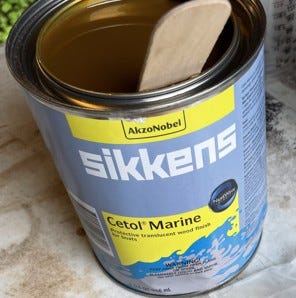
Some folks love Cetol and some don’t. It’s not a varnish in the traditional sense, but it can do the job of varnishing. Most varnish systems require a lot of stripping periodically and then gradually build up the coats of varnish again. With Cetol, maintenance is simple: scuff the surface with a gray Scotch-Brite pad and apply another coat. I have said I prefer a workboat philosophy, choosing ease of maintenance over glossy beauty. Of course, real workboats use paint, so why bother with a clear finish at all? Because I still want people to see that my boat is made of wood.
Before I put a coating on my boat that might go wrong and creates a lot of work to remedy, I thought it would be best to run an experiment. I wanted to duplicate the conditions my boat would experience. So first I found a piece of the boat that had some epoxy on it and was actual Okoume plywood. My sample was the cutout for a 4” Beckson deck plate, sawed right off the boat.
Long Epoxy Cure Time
The sample had been cured for several weeks. I’m not saying that all epoxies must be cured for several weeks before Cetol, but it should be completely cured, think days not hours. Also, I used MAS epoxy which has very little blush. I washed any blush off with warm soapy water and I sanded the epoxy sample with 180 grit sandpaper.
Every failure story I’ve ever heard about Cetol over epoxy starts with the first coat going wrong! This first coat is critical! Every other coat is Cetol applied over itself and that chemistry is known. But the first coat is over epoxy and if you leave blush or don’t create some tooth by sanding it WILL GO WRONG. The slightest little bit of blush and the Cetol will likely fail.
It was at this point that more experienced folks were telling me to pick another varnish system, but I decided to continue the experiment.
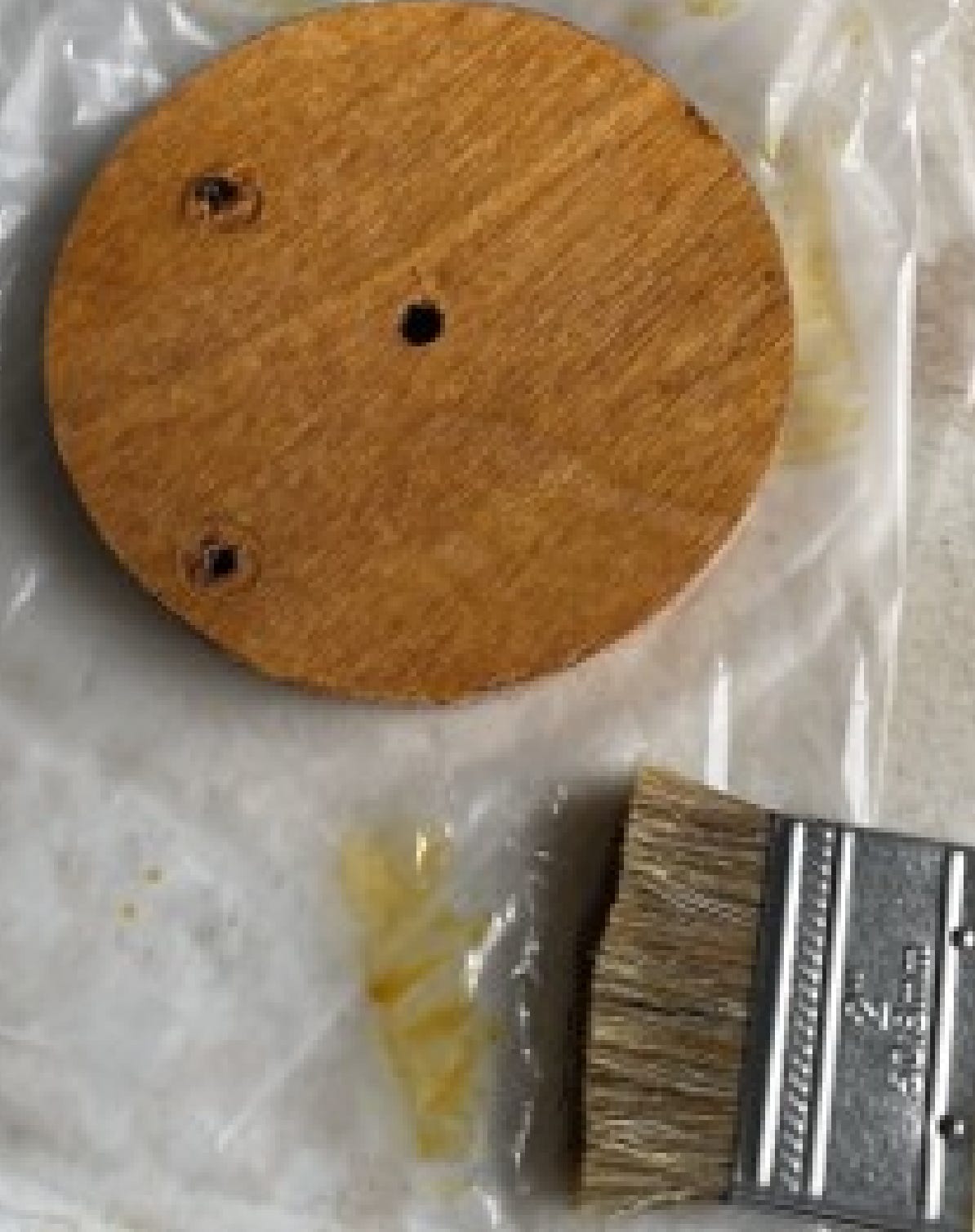
This sample has a thin coat applied with a trimmed chip brush. Since the coating can’t breathe on the backside (epoxy) and only the front side you must keep the coats thin.
The First 24 hours (Coat #1)
4
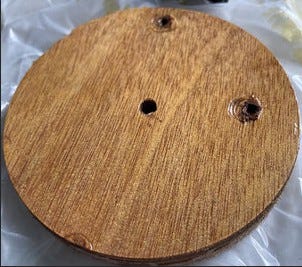
The sample sat on a worktable to cure in the shade in my boatyard which sees a little rain from time to time. I’m in East Tennessee in July which means massive humidity spikes, wide ranging temperatures, and just about daily rain this summer. Coat #1 only got a 9-hour cure window before rain.
This is the result of Cetol applied over MAS epoxy after 24 hours in a high humidity environment.
Hour 65, Coat #1 Torture Test
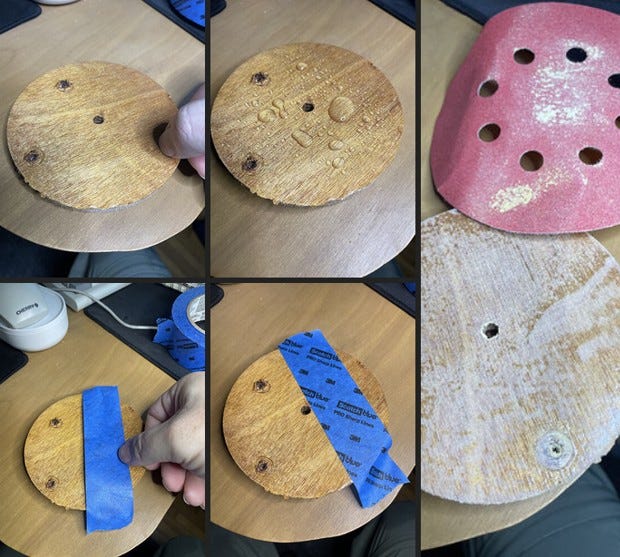
Since the Cetol can only breathe on top of the epoxy I decided to give it an extra long cure time, remember, the first coat is critical. After 65 hours the first coat was tested. I did the thumbnail test (a common woodworking check in which I pressed a thumbnail firmly into the finish) and could only see the indent under magnification. After several coats of you couldn’t even see an indent under magnification. The color and tone look different here because I have the sample under an extremely bright light.
The next test was misting the sample with tap water. The water beaded up and did not soak in.
Next, I used painters tape to test adhesion. A strip of 3M painters tape was applied, burnished firmly down everywhere and then ripped off rapidly. Only one microscopic speck of Cetol came off with the tape and that was right at the edge of the sample.
Next was the sanding test. I used 180 grit sandpaper and really went to town on the sample. Some dust stuck to the sandpaper, but it didn’t get gummy or show any other signs of coating failure.
Applying Coat #2
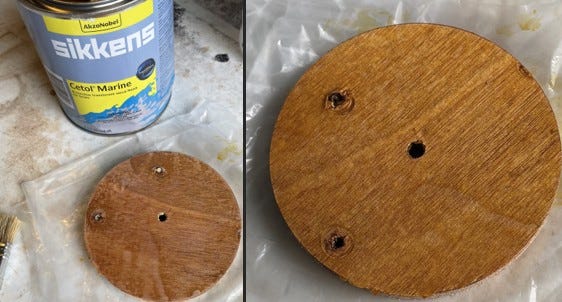
The sample was returned to the boatyard and washed with warm water and a drop of dish soap, rinsed and dried thoroughly.
Second coat applied. Again, apply a very thin coat.
Coat #2 was allowed to dry out in the boatyard with the humidity and spotty rain showers and everything for 26 hours. Temps averaged low 80s. The surface was hard, passed the thumbnail test. After 26 hours it did have a slight solvent smell which means it’s still curing.
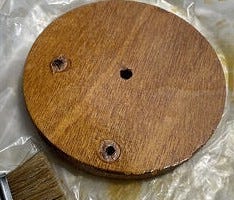
Coat #3 applied 26 hours after coat #2.
I felt it was cured enough to apply coat #3. This time I washed the sample with water and dish soap and scuffed it with a gray Scotch-Brite pad which is typical Cetol recoat practice. Then I applied another thin coat.
The Immersion Test
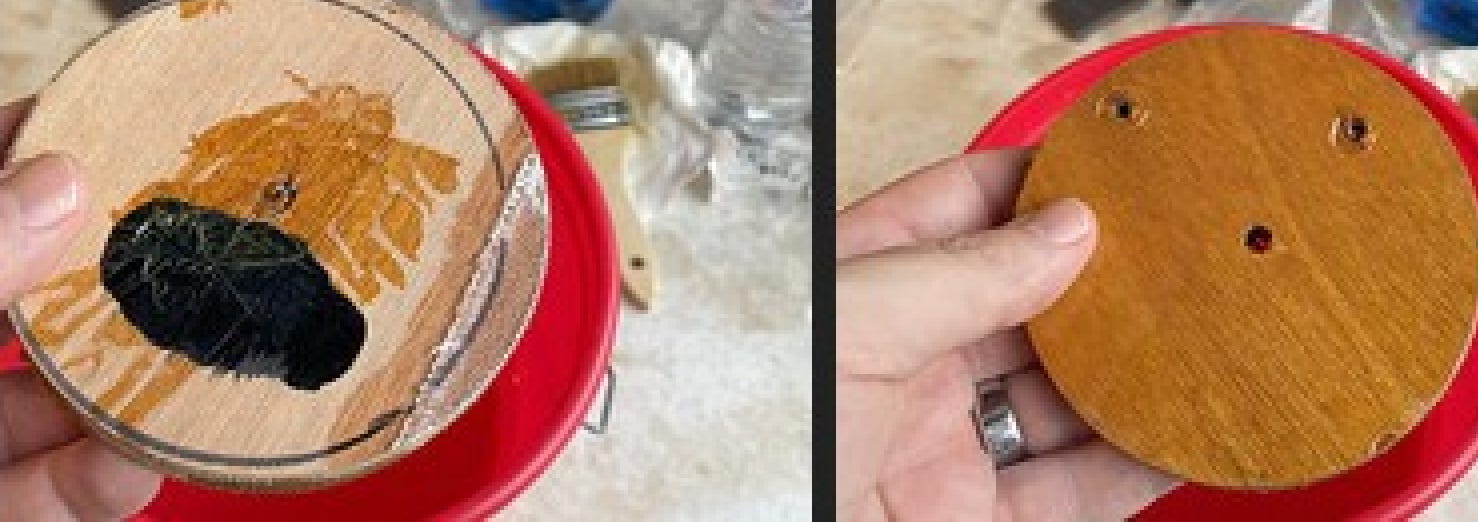
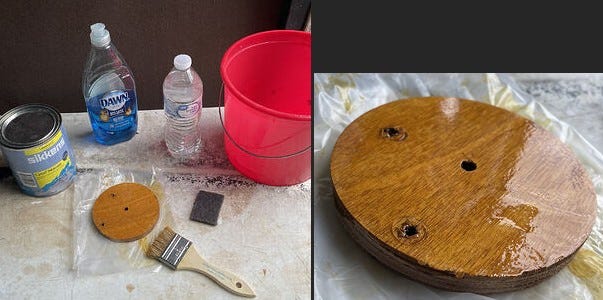
After Coat #3, it dried for 31 hours. I meant to get out there sooner, but you know, real life. It passed the thumbnail test. I decided to do an immersion test. I will point out that this entire time the sample has endured humidity spikes and occasional sprinkling with rain. I dropped the sample in a bucket full of rainwater.
Unlike my actual boat, the sample isn’t fully encapsulated, it’s only really glassed on the side the Cetol was applied to. The other side has a little residual glass on it from the boat and is otherwise uncoated with anything. The edges and the holes are also uncoated, though I suspect a little Cetol found its way into the holes from the three applications.
Sample was placed Cetol side down in the bucket for 24 hours.
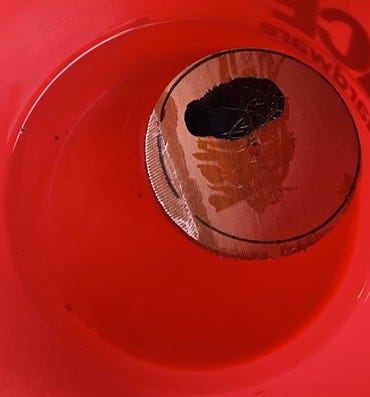
24 hours later I pulled a sopping wet sample out of the bucket. The surface of the Cetol felt hard and passed the thumbnail test. I dried it a little with a paper towel and the surface looked a little hazy. The sample was placed on some plywood scrap to dry.
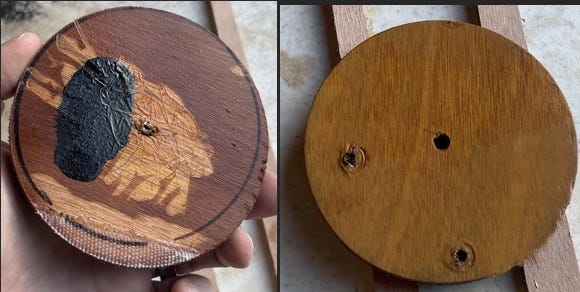
Even though I set the sample out to dry, during the night we got a big storm and the poor little sample got rained on again. I went out in the morning after the storm, and the sample was hard and glossy, and the raindrops had beaded up. Again, it passed the thumbnail test.
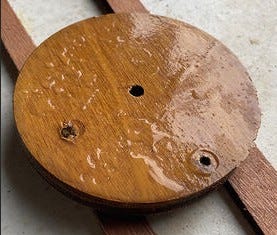
Second Tape Test (Dry Cetol and Epoxy over wet plywood)
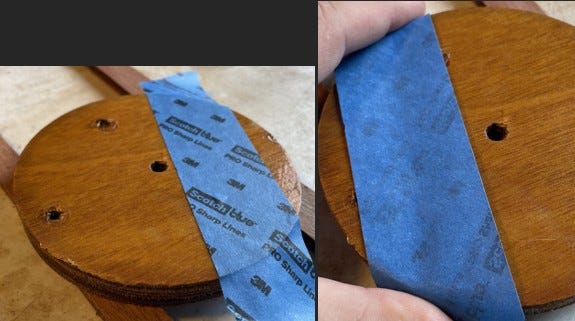
After epoxy and Cetol dried, but the plywood underneath was still damp, I did the thumbnail test again. It passed. I did the tape test again, it passed.
Now I’ve hung the sample on a south facing fence to subject it to UV for the rest of its life.
Lessons Learned
· Cetol can bond to fully cured, properly washed, properly sanded epoxy.
· Thin coats matter.
· The film can survive full immersion and recover.
· Moisture haze is temporary, not failure.
UV Test, From now to Infinity
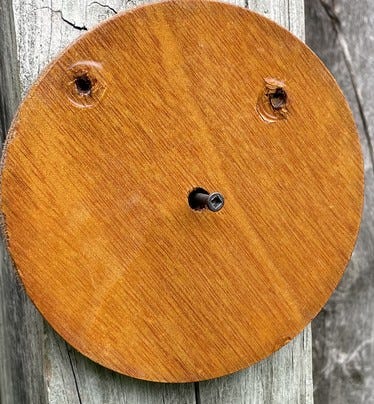
I’ll keep you updated on how long a few coats of Cetol applied under far from perfect conditions over MAS epoxy survive the UV exposure test. Also, if you are considering applying Cetol over epoxy, I urge you to do your own test sample to confirm my findings.
I am satisfied that Cetol will work on the deck of my boat and I plan to use it. I’ll write again when the boat is finished and we can see how itl does on the deck in the real world. Every part of my deck is fully encapsulated so my hope is that Cetol will perform even better on the deck than it did on this poor sample!
Happy Boatbuilding! •SCA•
Good article! I share your philosophy (I'm not going for yachty glamor, but I like attractive woods and want them visible).
I did not take the exceptional precautions you did (wait days or thoroughly scrub the epoxy). I did use a low-blush epoxy (Total Boat 2:1).
It seems to be holding up fine after a year of epoxy-killing desert sun.
I’m new to this product. How does it differ from spar varnish ???