
The Famous Tyee Guide Boat…
A Classic, Popular Design from Campbell River, British Columbia
by Jim Tolpin
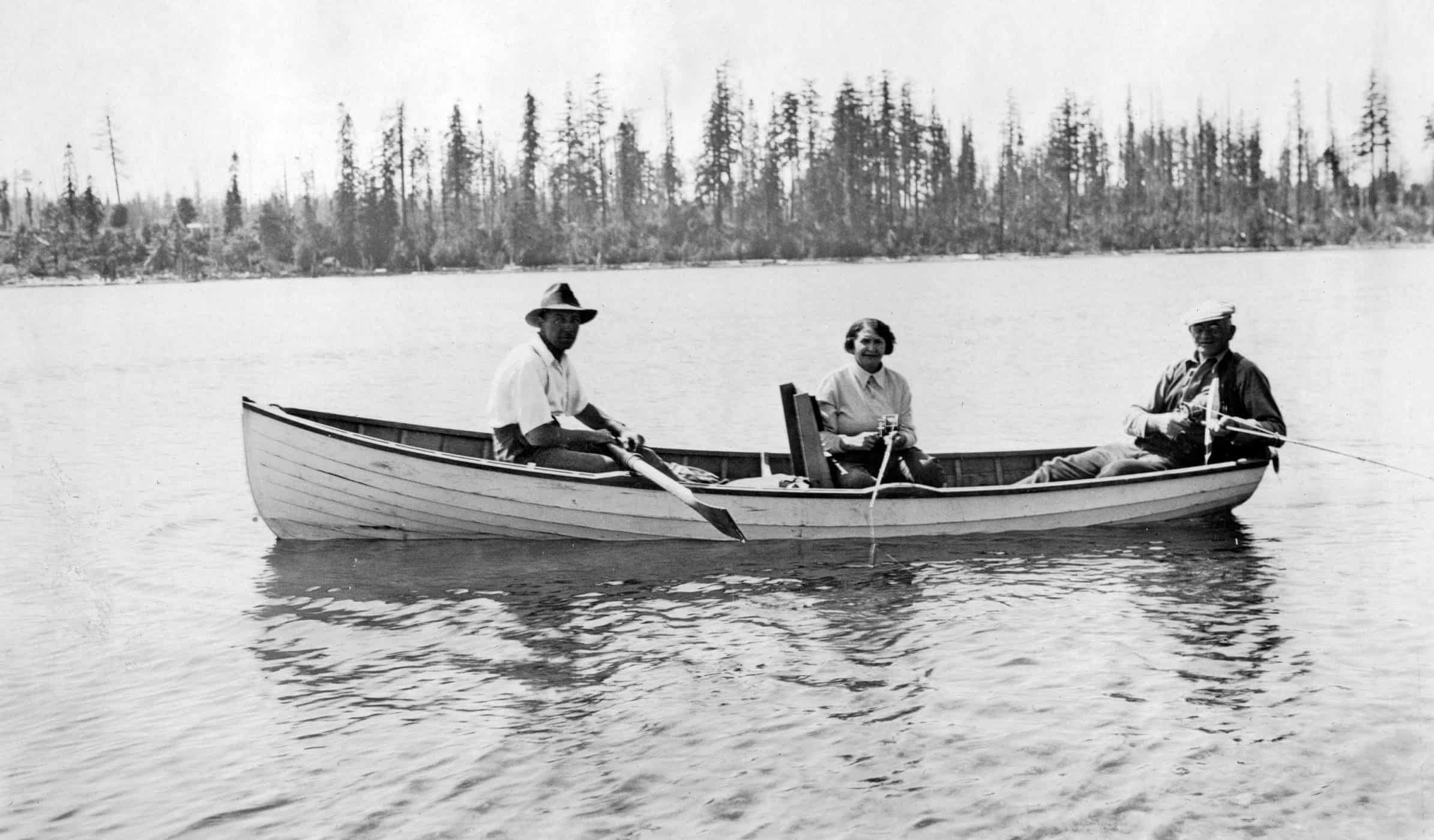
Above - An early photo of the Tyee, with fishing guide and two guests. (Used by permission of the Museum at Campbell River)
This 14 ft. long open skiff was first built around 1920 by shipwright Ned Painter for the resort livery trade in Campbell River, BC. These “Tyee rowboats”—most likely influenced by the waterman’s skiffs common throughout the UK (where Painter learned his trade)—were designed to provide a stable and controllable platform for rod-and-reel troll fishing for salmon. Equally important was the boat’s ability to carry the guide, the clients and their catch safely through the often choppy waters at the mouth of this swift tidal river. The Tyee’s full-sectioned hull allowed this little skiff to carry a considerable load (three people and a Tyee salmon weighing up to 70 pounds!) with good stability and just enough freeboard. The Tyee rowboat—-a few originals, a few reproductions, and a large number of fiberglass replicas—are still in use one hundred years after the first one was launched from the beach at the mouth of the Campbell River!
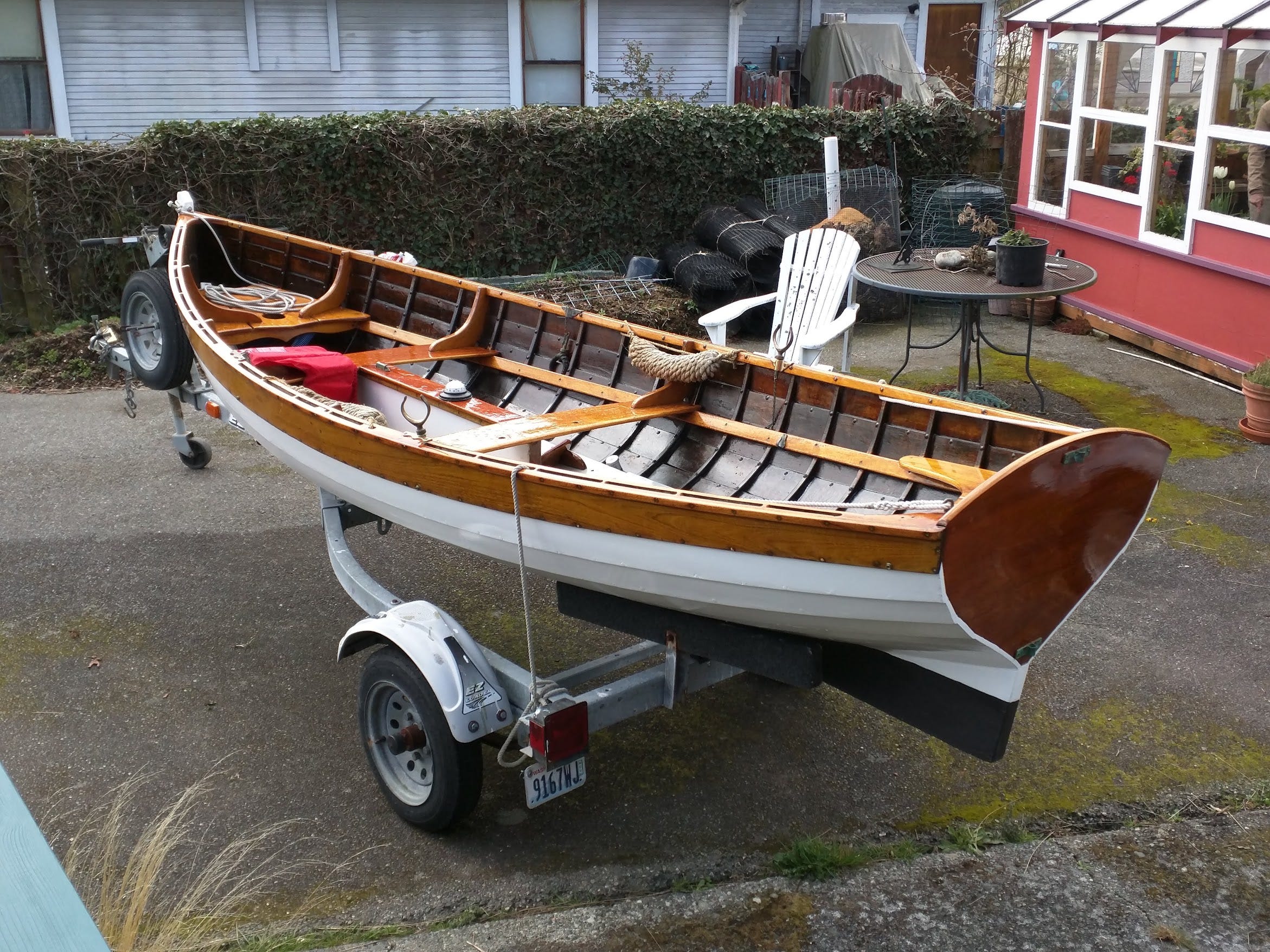
Above - Tyee boat replica owned by the author and his wife since 1995. Builder unknown. Photo by the author
I became interested in the Tyee boats when I began to suspect that the 14-ft. rowboat that my wife and I purchased nearly thirty years ago in Port Townsend, WA may have been built as a replica. My research over the last several months—which included acquiring accurate line drawings of an original—confirmed that our “Ariel” was indeed a very close match. After rowing many hundreds of miles throughout the Salish Sea and Puget Sound we can attest to this rowboat’s superior seaworthiness—and sea kindliness.
My research began in earnest when I joined up with Mark Reuten of Nomad Boatbuilding in Victoria, BC and traveled north on Vancouver Island to visit a boatshop that had built Tyee rowboat replicas and two museums that each have restored skiffs on display. Mark had refurbished an original and was keen to learn more about them. I was keen to see if we could confirm my decades-long suspicion that my skiff was indeed a Campbell River Tyee rowboat!
Our first stop was at Hilmark’s Boatshop in Comox Valley, BC where its new owner Mark Jacobson showed us station moulds and transom and stem patterns that he had traced from an original skiff. He generously allowed us to make tracings of them. Traveling further north we visited the two museums in Campbell River that had restored Tyee boats on display. The staff gave us unfettered access to photograph and measure them at our leisure. We found the two examples to be quite similar—not surprising as Ned Painter and his crew likely built the vast majority of these boats well into the 1950’s.
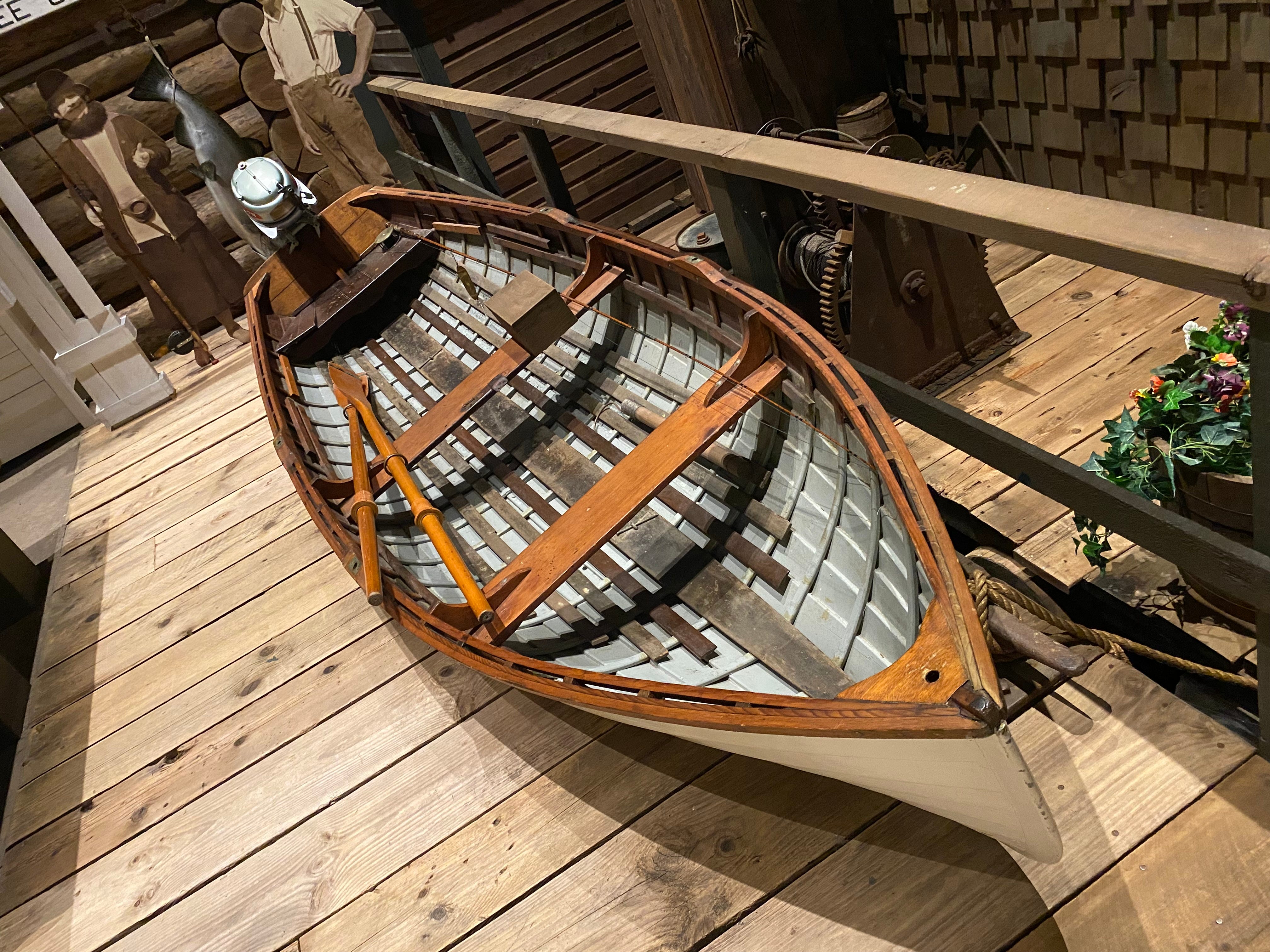
Above - Display at the Museum at Campbell River. Photo by the author
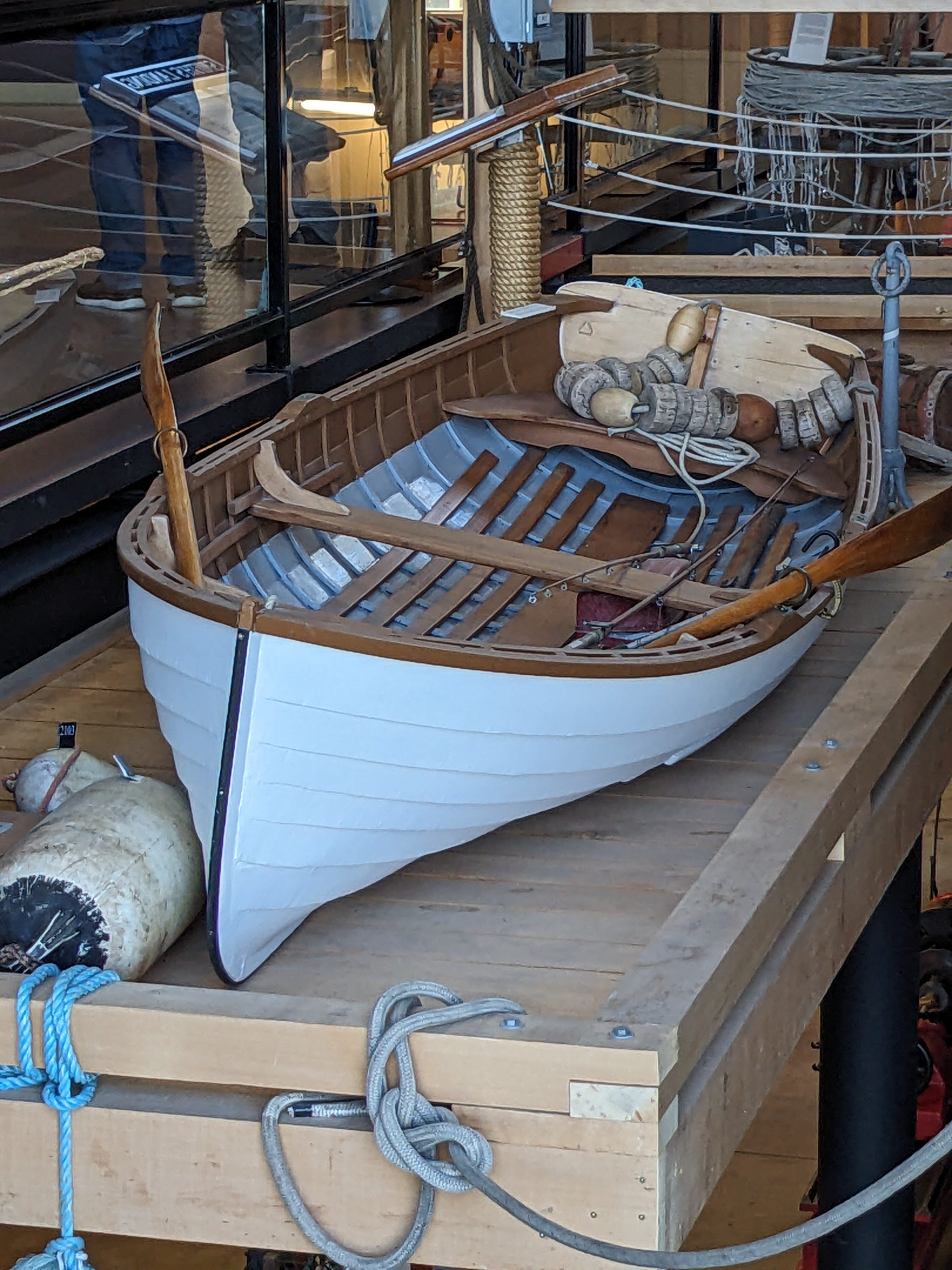
Above - Display at the Campbell River Maritime Heritage Center. Photo by the author
We also interviewed local resident Barry Ross about his experience working for Painter’s Lodge in the 1960’s as a fishing guide. He told us that he never personally experienced, saw, or heard of a Tyee rowboat foundering in the tide rips—but he did see a guide and a “sport” (i.e. client) work together to pull in a particularly large Tyee salmon. With a hard pull the fish came on board—unfortunately the strong righting momentum of the little skiff tossed the two men overboard on the opposite side!
With the mould tracings, photos, sketches and measured drawings in hand, Mark and I reconvened at his shop in Victoria, BC and proceeded to loft the skiff full-scale. Mark went on to convert our collection of data into five sheets of highly detailed and annotated line and construction drawings with a full-scale, loft-proven set of offset tables. We are confident that a boat built to these drawings and offsets will produce a boat imbued with the excellent performance—not to mention the beauty—of Ned Painter’s original rowing skiff.
A Line and Construction Analysis
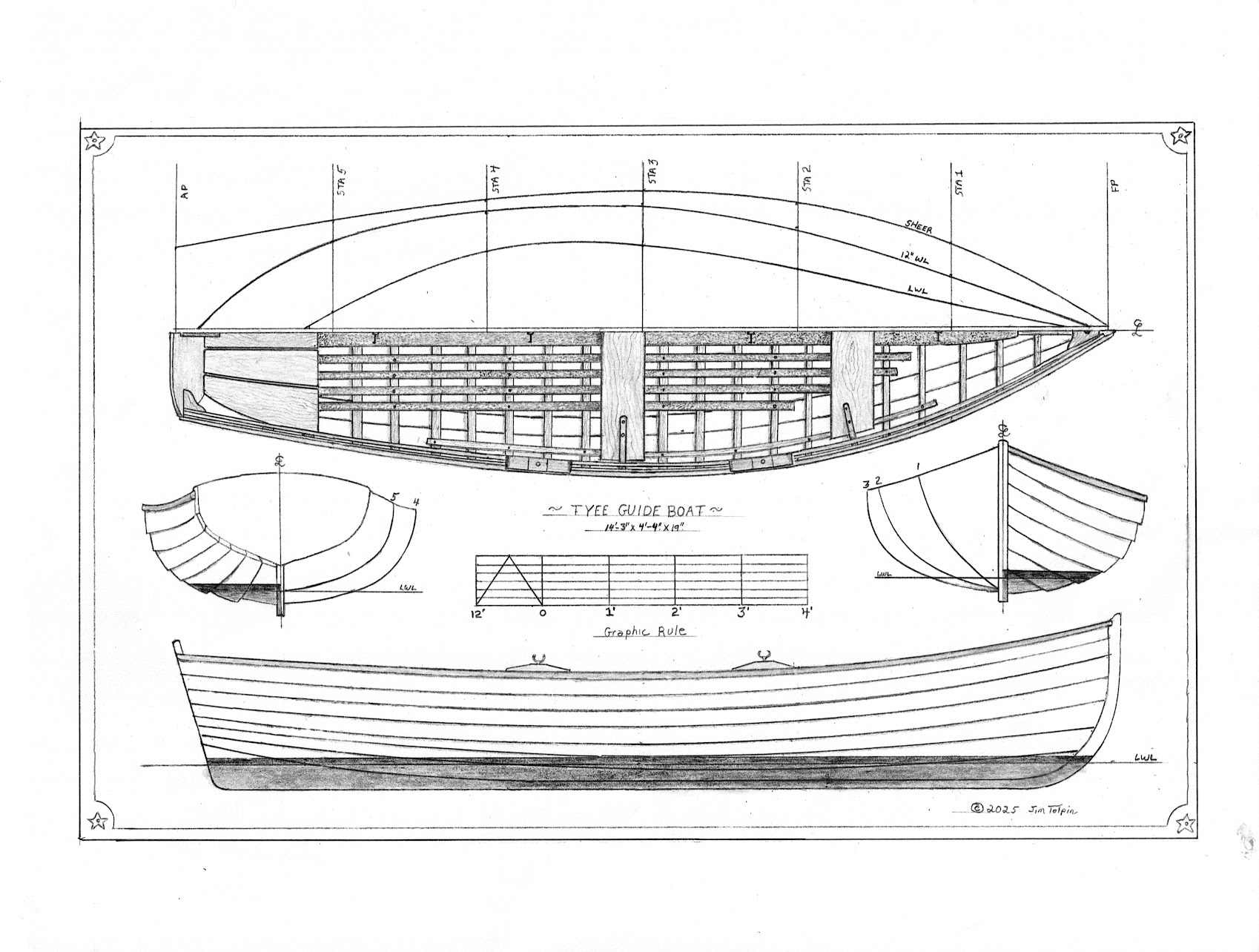
Above - Pencil drawing by the author. (See others at the end of this story.)
So what do the lines of the Tyee salmon skiff tell us about the boat’s performance characteristics--which I know personally from long experience to be exceptional for not only troll fishing but for all kinds of adventures in the open bays and waterways of an inland sea? The following is my take on it:
The length, beam and depth (typically 14’ X 52” X 19”) are just right for a rowboat with the Tyee’s hull form to safely carry up to a quarter of a ton of people and gear (and fish!). While the length is at the minimum (less would sacrifice too much displacement); another foot would be a bit better for room and fore and aft stability but not really necessary and would only add to the weight and cost of construction. (This would have been an issue for a livery boat business). The generous beam allows for long oars (I use 8’-3”) that rest on the gunnels and don’t necessarily need to be rowed cross-handed (which can be problematic in choppy conditions).
The high bow, full sections fore and aft, and the relatively deep hull provides sufficient freeboard to ensure a dry boat in chop, not to mention when hauling big salmon over the side! The ample depth also allows oars to more easily clear steep wavetops. Relative to a performance pulling boat the added depth does make for a heavier boat, but the Tyee skiff is not prioritized for efficient rowing. As Greenhill and Manning pointed out in their book on the inshore craft of the UK: “[waterman’s skiffs] were heavy, had full rounded bilges and deep hulls which suggest a no-nonsense approach to bad weather”.
The clinker (lapstrake) planking makes for a quicker build, a bit lighter weight overall; and perhaps a slightly drier boat.
The skiff’s rounded sides with moderate deadrise angles reduce the speed of roll, smoothing out its response to wave action. (This is what we mean by “sea kindly”). In the common wave conditions of this area, taken broadside, we have discovered that the Tyee boat hardly rolls at all, but rather rises and falls as its shape mimics the period and shape of the wave.
Its full stern sections easily support a person sitting in the stern sheets and even allow the use of a small outboard motor without modification. Again, unlike more slender performance pulling boats, the Tyee rowboat’s moderately full forward sections (with the attendant wider sheer beam) allows the boat to lift to oncoming chop, reducing the chance of it punching into a wave. In all our travels we have never taken water over the bow (or the stern or side gunnels for that matter!) Forward sections below the waterline were kept as fine as possible however.
The transom is raked just enough (around 18 degrees) to lift to following seas; but not so much that the hull required modification when the use of an outboard motor arrived in the 1950’s.
Bilge stringers protect the hull when beaching, add some lateral resistance to wind forces and promote directional stability.
The straight, no-rocker keel and an aft skeg greatly reduces yawing in crosswinds and helps keep the boat tracking straight while trolling.
The center of buoyancy (CB) is located at the longitudinal center of the boat. This assures stability (due to full and balanced longitudinal immersion of the load water line) when hauling fish over the rail. The more typical location of the CB for most waterman’s skiffs, however, was located at the primary rowing thwart location. (See an analysis of the waterman’s skiff in a separate article by the author).
The Pencil Drawing (see above)
Available as a limited run of 50 prints signed by Jim Tolpin. The prints are 8″ X 10″ and are printed on heavy weight art paper (80 lb. Cougar Natural). They come with a hardboard backing and are protected with an acid-free clear plastic sleeve. Shipped flat in a sturdy mailer.
Order at the author’s website:
https://www.byhandandeye.com/home/nautical-drawings/
Contemporary Boats:
Fiberglass versions of the Tyee rowboat are available from Whitehall Row of Victoria, BC Canada
The Plans:
A full set of plans to make an accurate reproduction of the Tyee boat are available from Mark Reuten. The five sheets include line and construction drawings at one-eighth scale and full-scale drawings of the transom; station moulds; stem; and skeg. Contact Mark through his website (
https://www.nomadboatbuilding.com
(…or his Instagram feed (https://www.instagram.com/nomadboatbuilding/). He also hosts a Youtube channel with a treasure-trove of videos on boat building and related subjects. Mark would also be happy to build one for you!
Jim Tolpin’s Small-Boat Drawings…
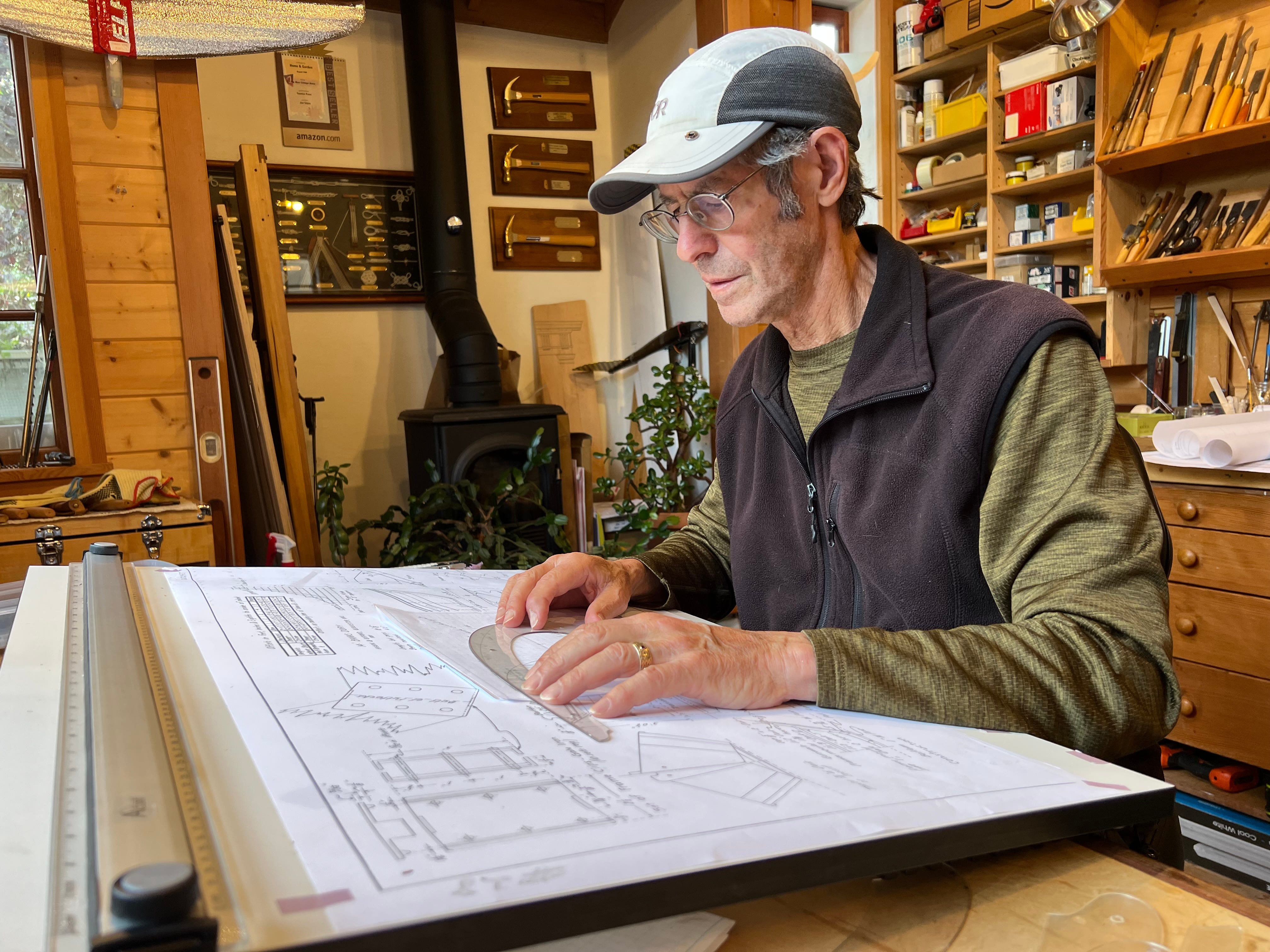
Above - The author at his drafting table, where he has made pencil drawings of the classic boats illustrated below. See a link to Jim’s website, above, if you’d like to order prints of the following classic small boats.
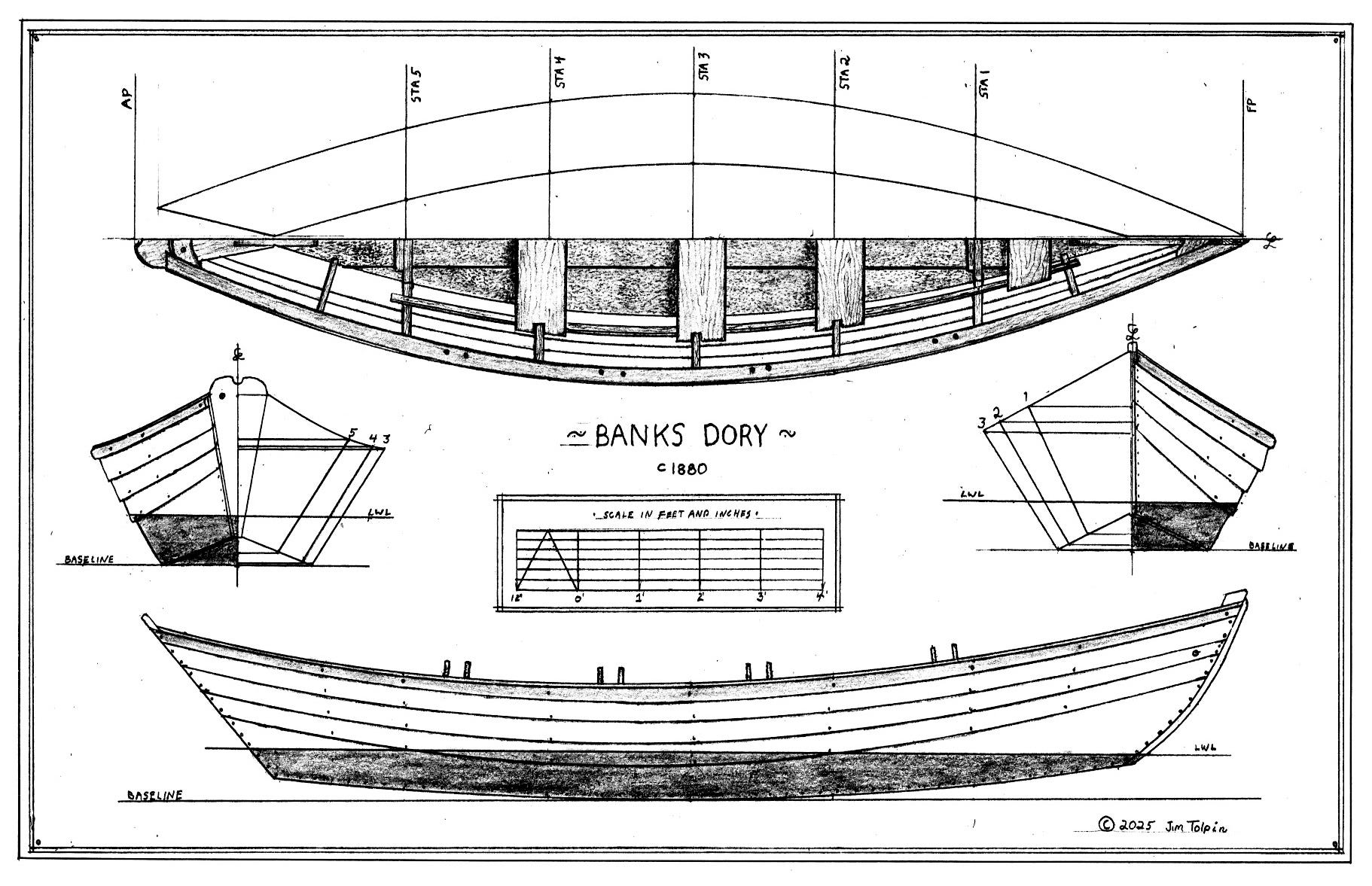
Above - The Banks Dory, sketched from an example from 1880.
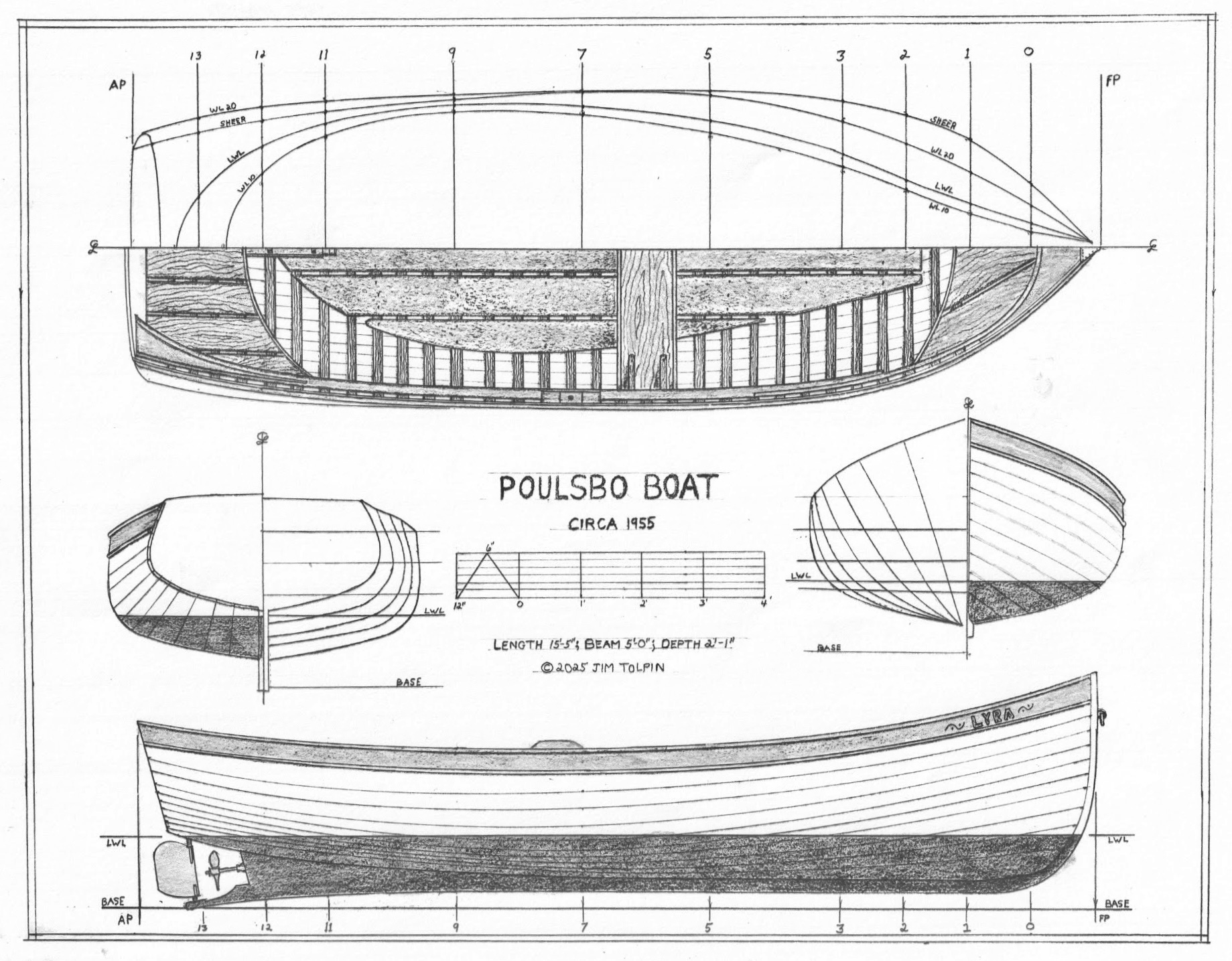
Above - Poulsbo Boats, powered by small air-cooled Briggs & Stratton or Wisconsin inboard motors, were designed and built by Ronald Young of Poulsbo, Washington between 1930 and about 1960. This salty and seaworthy 16-footer, with generous tumblehome aft, was a popular at boat-rental businesses in Puget Sound and along the Washington State coast of the Strait of Juan de Fuca.
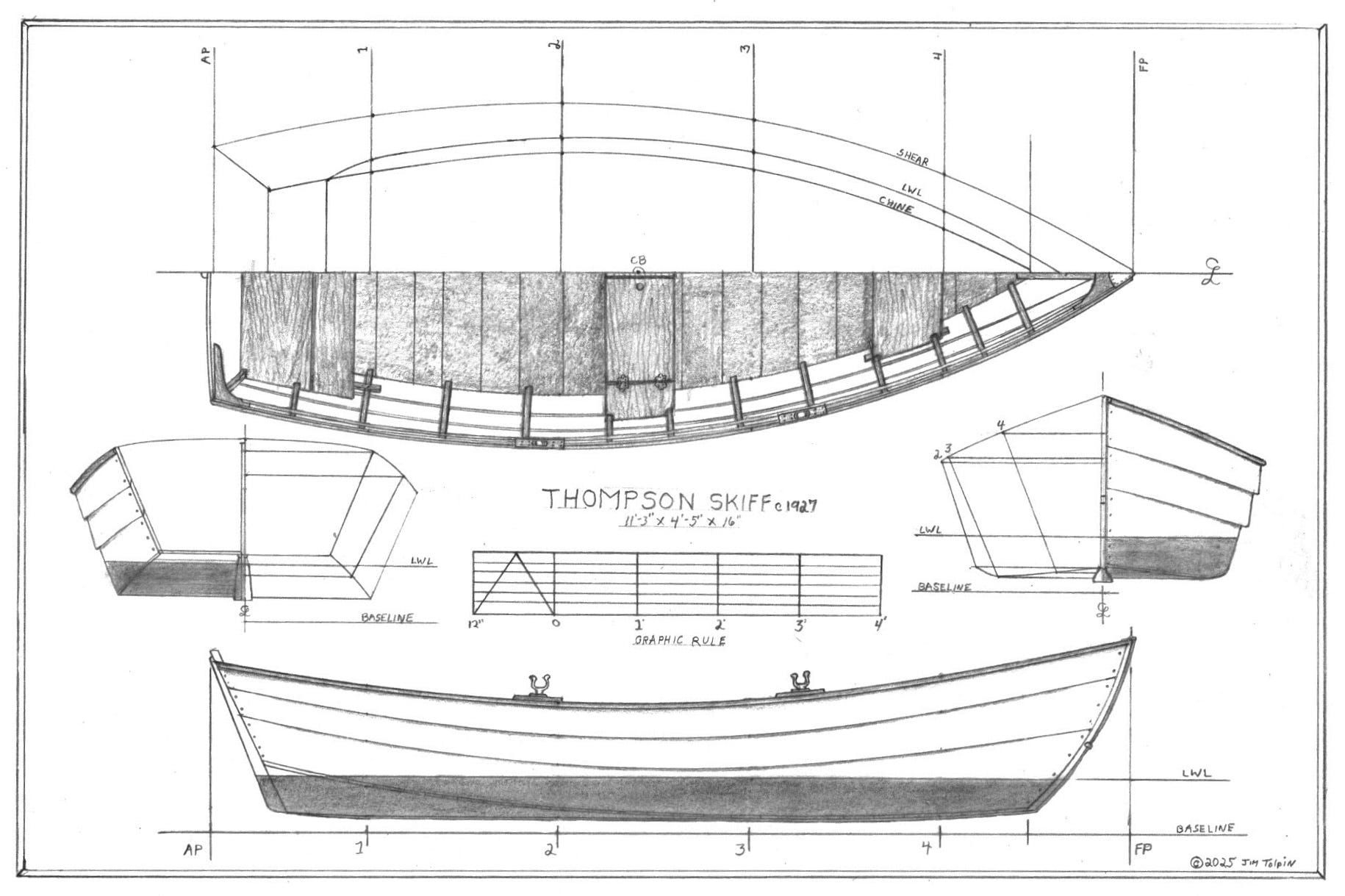
Above - The author’s pencil drawings of a Thompson Skiff, a flat-bottomed boat with two rowing stations, circa 1927.
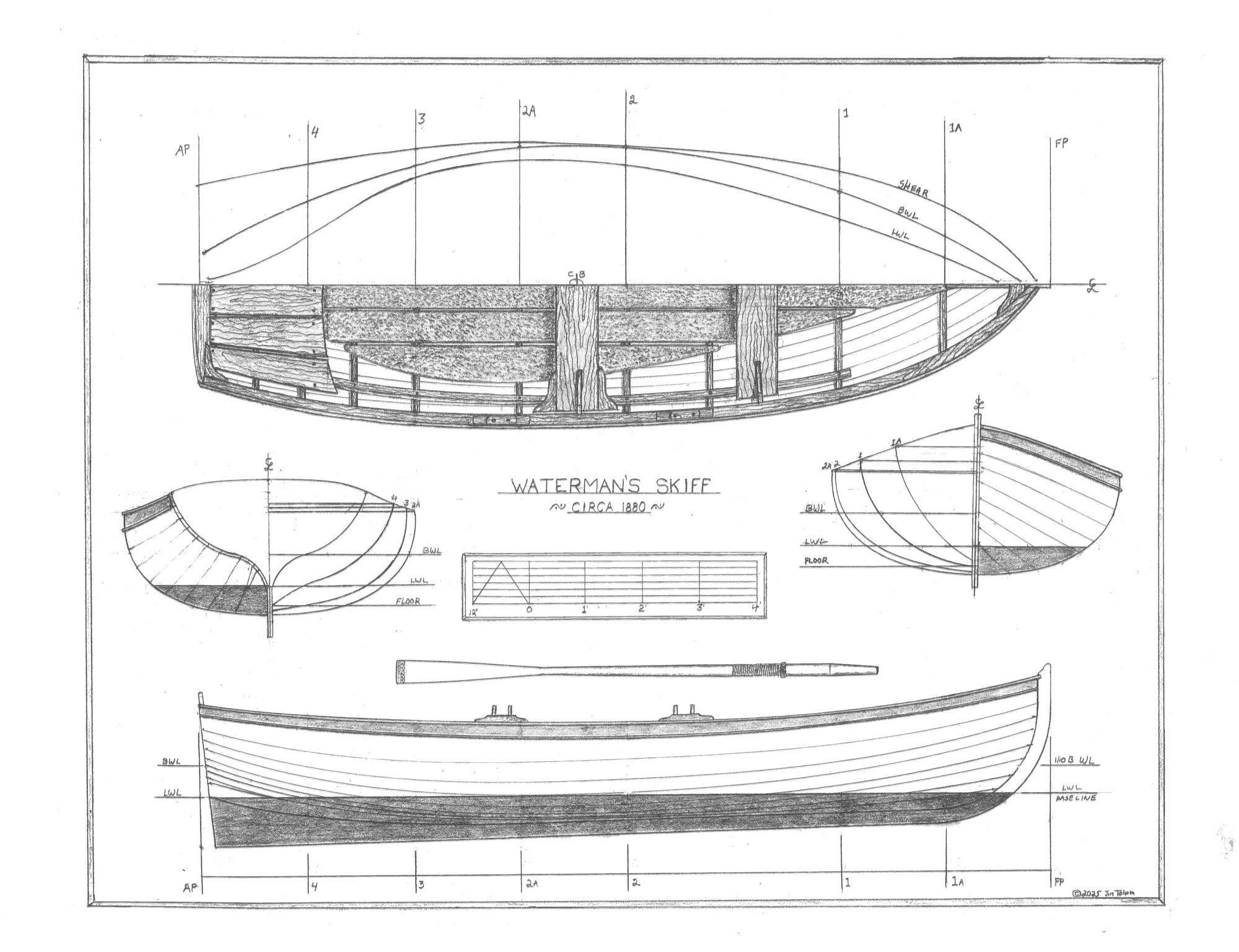
Above - A round-bottomed lapstrake Waterman’s Skiff, circa 1880.
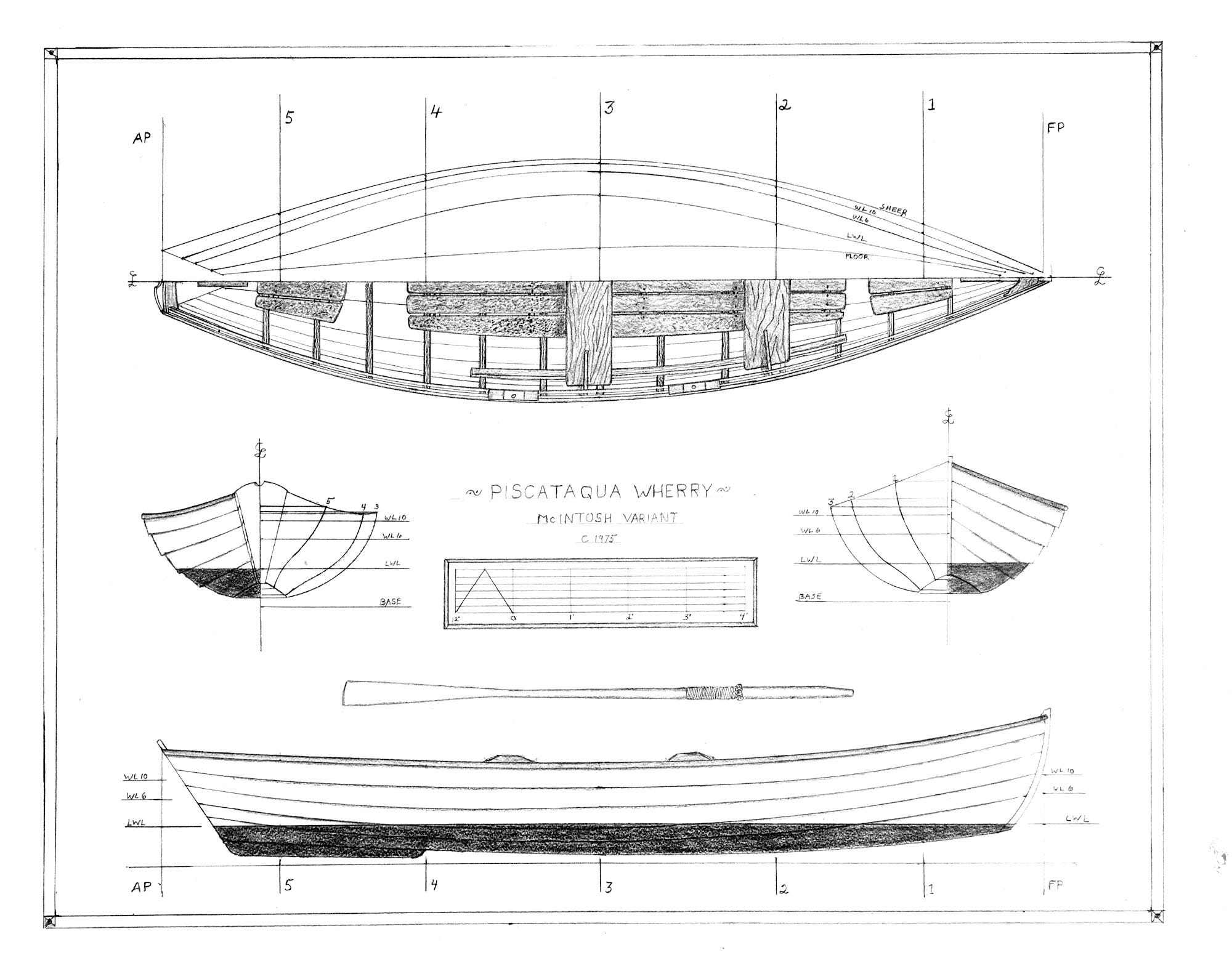
Above - A Bud McIntosh variant of the beautiful Piscataqua Wherry, circa 1975.
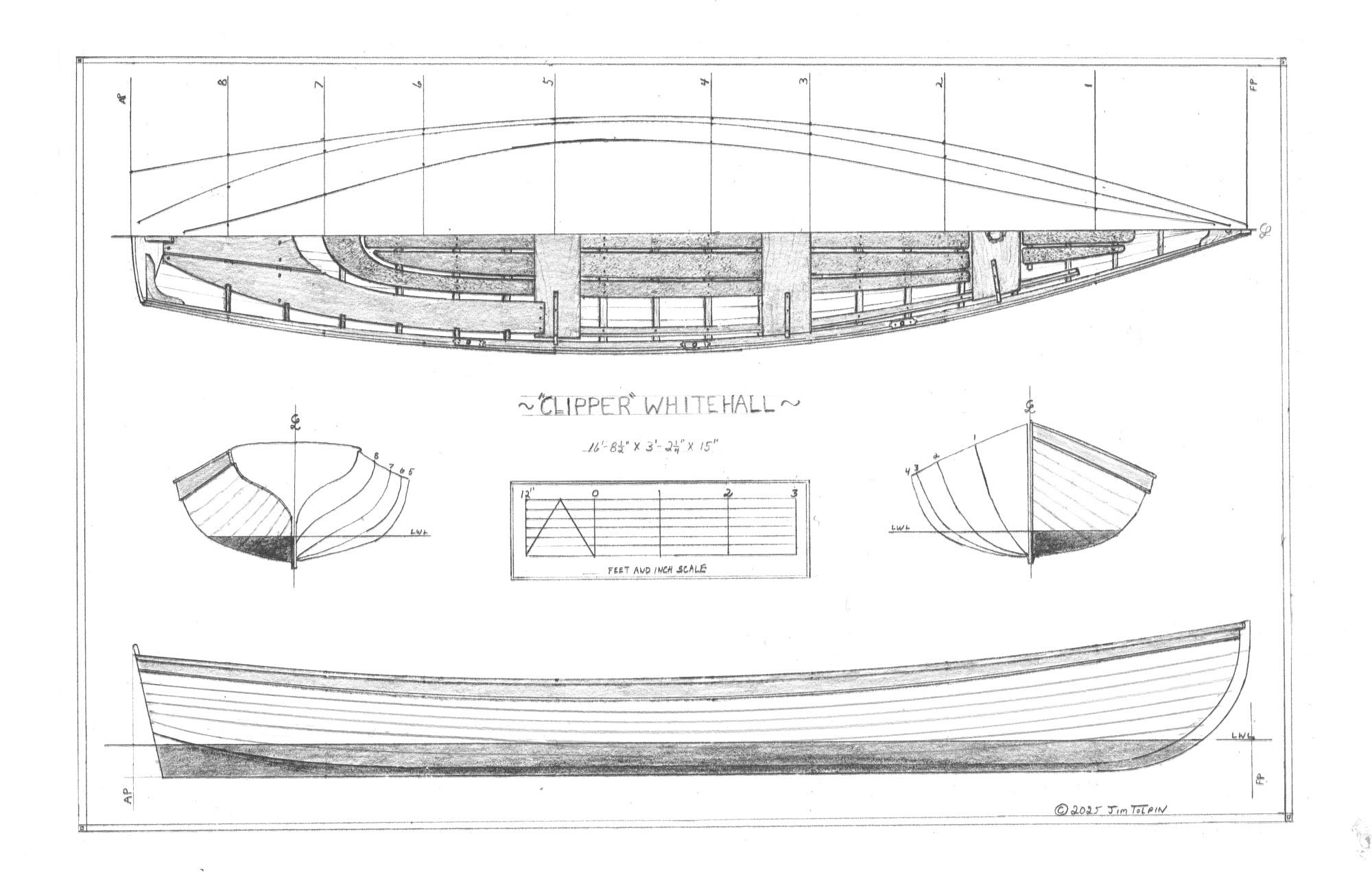
Above - The elegant ‘Clipper’ Whitehall, 16’ 8-1/2” x 3’ 2-1/4.”
•SCA•
There is a Tyee skiff that is a prize in a lottery that will be won by some lucky person at the Maritime Center in Cowichan Bay B.C. Canada. Tickets are $5. CDN for one and $20 for five. This beautiful example of a Tyee guide boat was recently built by a boat building class at the Maritime Center under the instruction of Mark Reuton of Nomad Boat Building. Google the Maritime Center in Cow Bay for more information about this and other small west coast fishing boats like the handliner they have on display.
This design is very similar to the concept of a Whitehall. She is fuller in the bottom, which gives her more righting moment and makes her more forgiving when less skilled "dudes" are working off centerline to fish or haul nets and buoys.