
Resetting Perspective
In interview with Chris Reuter from Team Chiliwilliwa, R2AK's fastest 20-feet-and-under finishers.
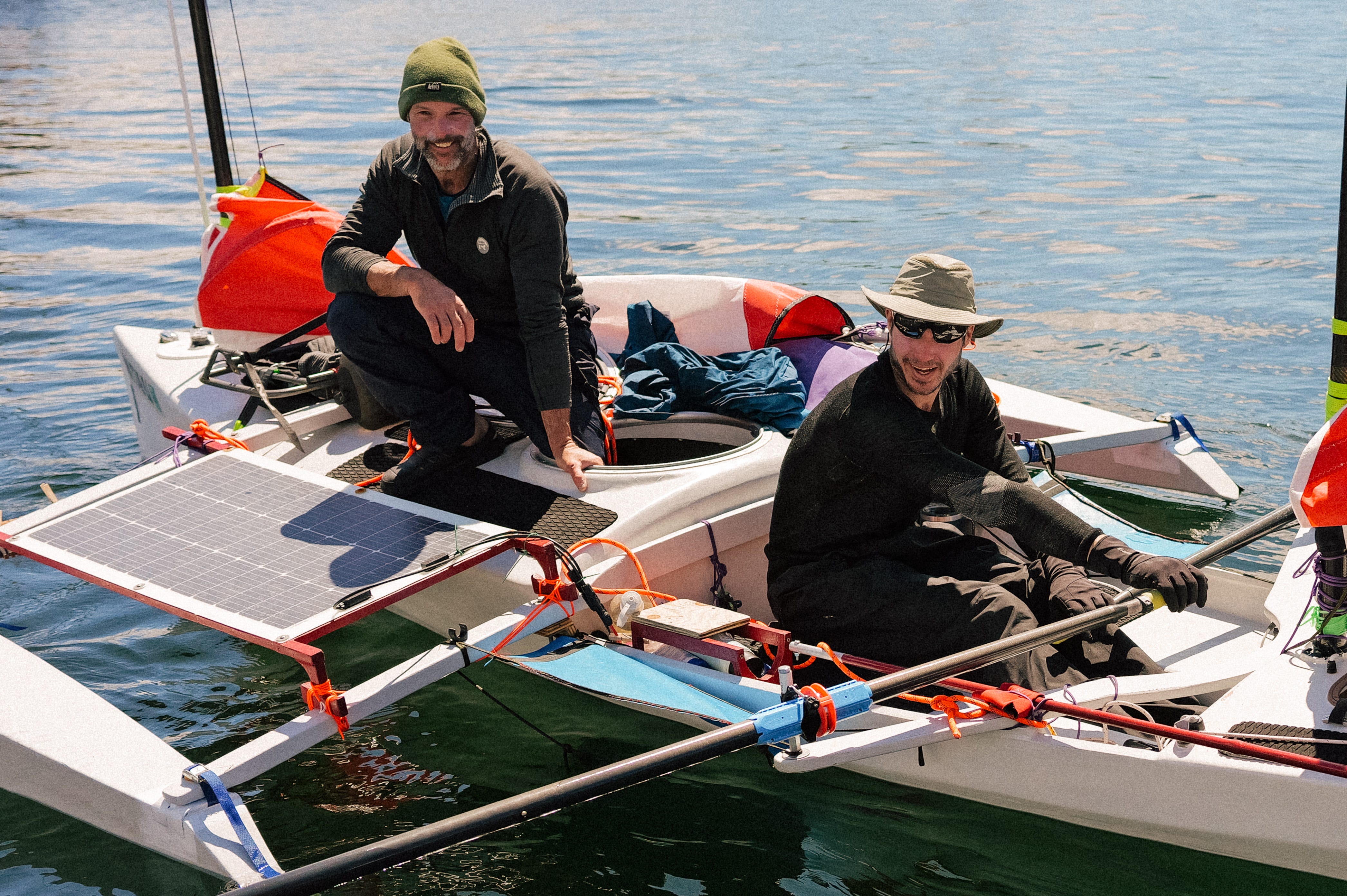
We caught up with Chris Reuter from Team Chiliwilliwa, just after he and crewmate John Calderera became the first team in a boat 20 feet or under to finish this year’s R2AK, aboard their Angus Rowcruiser. Team Chiliwilliwa are winners of the Small Craft Advisor $1000 prize and Turn Point Design’s titanium spork set.
How does it feel to be done? Kinda like finishing a good book, it’s a little bittersweet. I extracted so much fulfillment out of building the boat, and certainly completing R2AK is something I’ve looked forward to for many years. I’m happy to return to my family, and less happy about returning to work, haha.
What was the most challenging stretch, what happened there, and was there ever a point you worried you might not finish? Each section was challenging in its own way. Early on, first couple days of the race I thought we might have to bail before the finish simply due to the forecast and fact I had to return to work by a certain date. Luckily, we kept pushing and soon were past the point where we could have turned back. Full commitment feels good.
The cruxy bit had to be Grenville Channel. We approached Grenville just before the flood, but the ebbing current was stronger than expected when we arrived at the mouth of the channel. Passing boats were reporting 1.5 knots against us when we were supposed to be at slack. Tacking back and forth the current finally eased and we proceeded tacking up the channel against 20-knot NW winds. We were aiming for a beach by Mosley Point when the current abruptly turned us around, forcing us to give up about 4 nm of hard earned progress and shelter in Union Passage Narrows for the next tide. Early the next morning we departed just before flood again and rowed against the wind swapping every 30 minutes until Lowe Inlet. Our plan was to continue until the conditions held us back, so we passed Lowe and progressed a couple miles before getting turned around again. The next tide, I was hoping to ride the flood to the channel’s midpoint before the ebb started, which theoretically would pull us north. This was quite a push through the night but we did it, escaping the channel later that day.
Colin’s Rowcruisers have become almost the signature small craft for the R2AK. Why are they so well-suited? The model is an attainable blend of performance and versatility. It has everything you need for extended cruising, is highly customizable, and reasonably cheap to build. It’s interesting so few have finished when they are so popular.
I was impressed with the other rowcruisers in this year’s race. Notably Aloha, Perseverance & Bangarang. No two are alike, but those three boats were built with extreme care and attention to detail. It’s inspiring to see what else I could do with mine now that the basic construction is finished.
What custom mods or touches did you make to the boat and what proved valuable?
Ocean hatch instead of large companionway. This allowed weather-tight sealing of the cabin when we were punching through solid water. Also more seaworthy if we were to capsize.
Reef points added to sails. The original design is meant to be fairly simple and cost effective, but lacks the ability to reduce/strike the sails underway without removing the full mast. That is untenable on a trip such as R2AK with anything more than mellow conditions. I cut the luff sleeve off my sails, and sewed on reinforcements for two reefs. Sheeves were added to the mastheads for halyards, and loops sewn on the luff to attach the sail to the mast. I wasn’t quite sure we’d need a second reef but glad I added them. We were double-reefed frequently.
Daggerboard in cockpit, balanced with larger mizzen. This gave us slightly more sail area, which only proved useful during the short periods of light wind and wind abaft the beam.
Composite foam-core foredeck instead of wood. This provided a stiff, strong deck with no need for internal deck supports or quarter-knees. Without those supports or the daggerboard trunk inside the main cabin, we had the full cabin area unobstructed. Not exactly spacious, but the available volume was maximized.
Raised oarlocks. About 40mm higher than designed, this gave us better rowing in seas. Our vessel was fully loaded with two aboard, so it’s possible the risers only brought us up to the normal unladen level.
Bolstered construction. The hull was glassed externally with 830gsm biaxial glass and triaxial glass in select areas instead of 6oz plain weave. All bulkheads were also glassed in instead of just fillets. This is a bit heavier, but much stronger than originally designed. Hitting logs underway, it was nice knowing that the reinforced bow and bolstered hull could shrug off a thorough beating.
Were there any particularly useful pieces of gear you brought along? We were pretty bare bones. However, if I had to pick one thing that really made a difference to us that not all boats had, it would be an AIS transceiver. This piece of kit coupled with a built in VHF radio and MFD made communication with commercial traffic much easier. We could see and be seen by barge traffic around corners while smashing through tidal rapids in the middle of the night. Huge stress relief to communicate a collision-avoidance plan with traffic before you would have seen them. I’d highly recommend any boat doing this race prioritize an AIS transceiver.
What did your crew routine and responsibilities look like each day? We don’t run set schedules, but generally try to balance effort and rest. This meant 3-ish hour shifts; shorter if conditions necessitated and longer if conditions allowed.
Actually, on the topic of crew, it’s important to mention how important the team effort was to our success. I would love to singlehand the race, but there are some notable advantages to doublehanding even though the boat is small. There’s a safety factor being with another person. There’s the effort-sharing and more frequent rest. We were able to proceed nonstop as much as conditions allowed, which after a full 24 hour weather stand-down in Nanaimo, lasted until Ketchikan with only short stops for contrary tide and water fills. One plus one can make three on a boat/trip such as this. Being able to proceed whenever possible was a core element of my strategy for the race. Of course, it took the right partner and John was up to the task. But of course, hats off to the singlehanders out there. I know how hard that is and am in awe of those that complete this race solo.
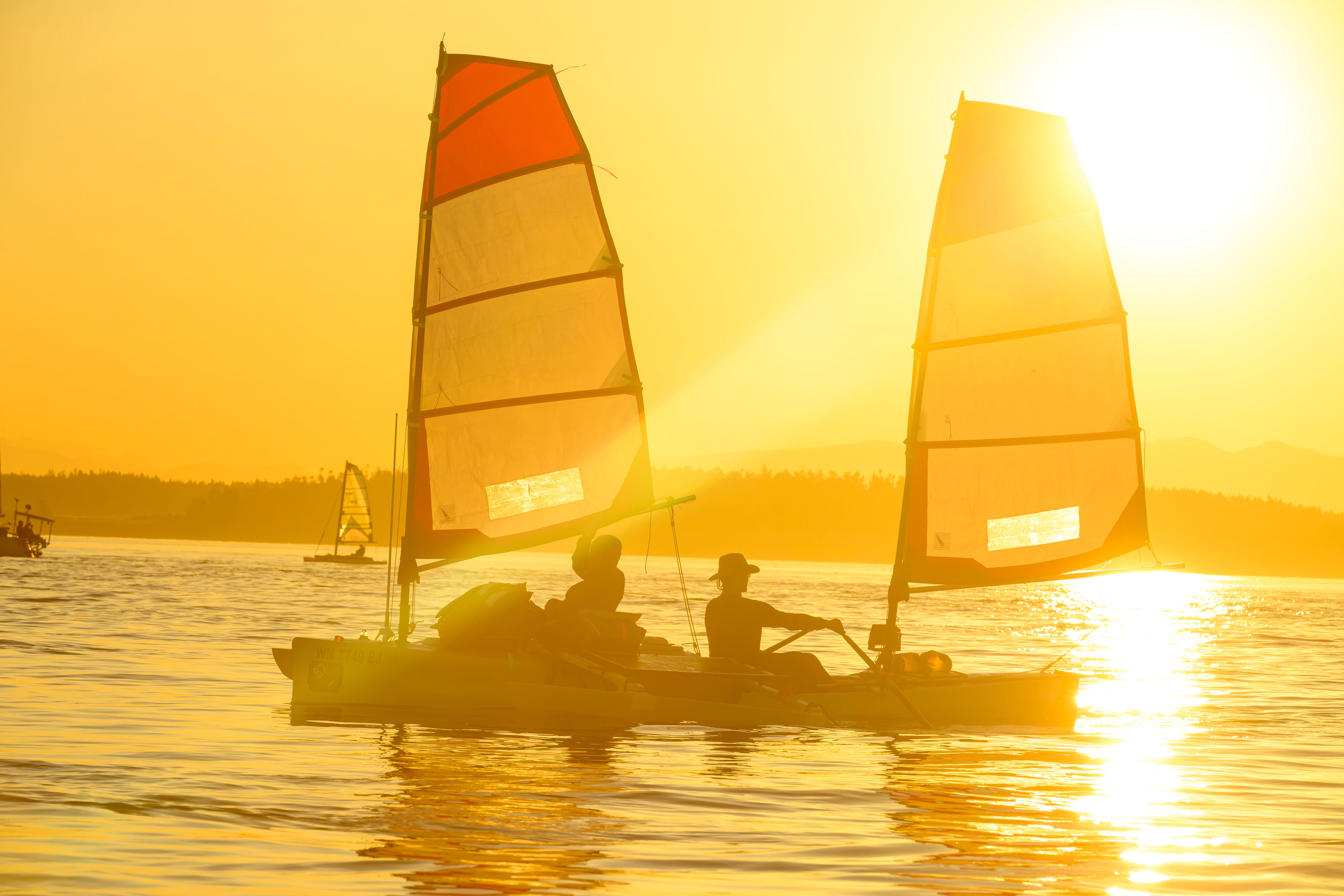
Beside finishing—and winning the $1k prize and sporks—what was a favorite memory or highlight of the trip? I just really liked being out n’ boat, removed from screens and connectivity. Outside of being a husband/father, sailing has provided me with the both most fulfilling and most frustrating moments of my life. Submitting to the elements, where you have very limited control of your own destiny; there’s just something about it I can’t shake. So the highlight of the trip is resetting an awareness of my place in nature. Resetting my perspective. Perspective is, after all, the vessel’s name—a tribute to a late friend who had a boat of the same name. •SCA•
Good questions, followed by lucid and detailed answers. Makes a good read.
Excellent, thought-provoking interview. Thank you!