
R2AK: Team Bangarang
As another Race to Alaska begins, we thought it would be fun to take a closer look at some of the teams employing smaller boats on the 750-mile adventure from Port Townsend, Washington to Ketchikan, AK. Small Craft Advisor is once again offering the $1,000 “Side Bet” prize to the first team to finish in a boat 20 feet or under. Turn Point Design will award that same team with a set of tactical titanium sporks. Oh the glory!
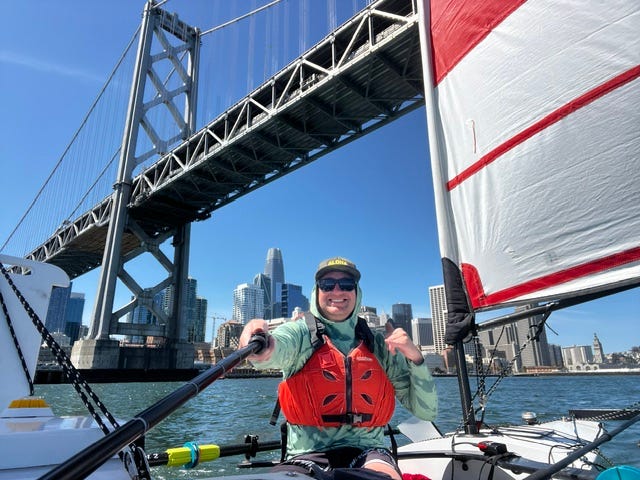
TEAM BANGARANG
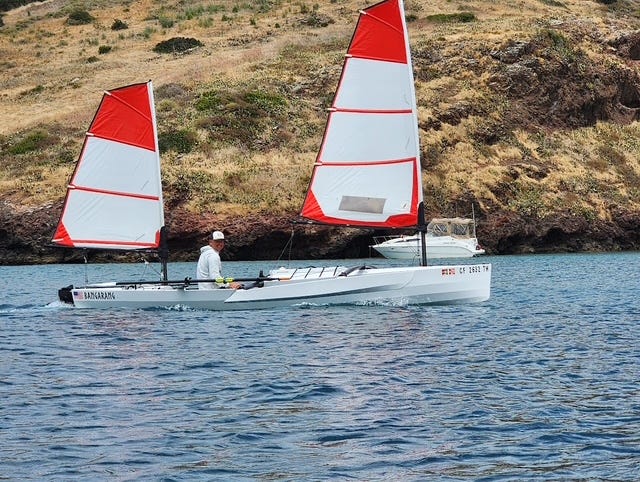
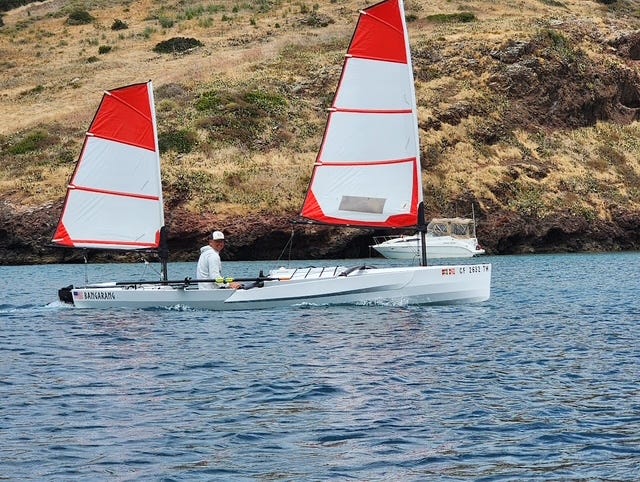
Tell us a little about your boat and crew. So my boat name is Bangarang. It’s a 19-foot Rowcruiser pretty much 99% in line with Colin Angus’ original plan. It was a kit boat I bought back in 2018 and finished 2021 in my garage in Pasadena. I had zero boat building skills going into this project but Colin guaranteed me if I could follow his instructions it would come out well. And it sure did! Props to Colin for making an exceptional kit. I’ve been sewing my own backpacking gear for decades so it’s been fun to make all aspects of this boat. From the hull to sewing sails!
As for the name of the boat, I noticed several boat names in previous R2AK had a Peter Pan theme. If you are familiar with the 90’s film called Pan, “Bangarang!!!” was the battle cry of Lost Boys as they charged into battle against Captain Hook. Though most people associate Bangarang with the popular dubstep song by Skrillex, but originally Bangarang is an old school Jamaican saying “to cause trouble.”
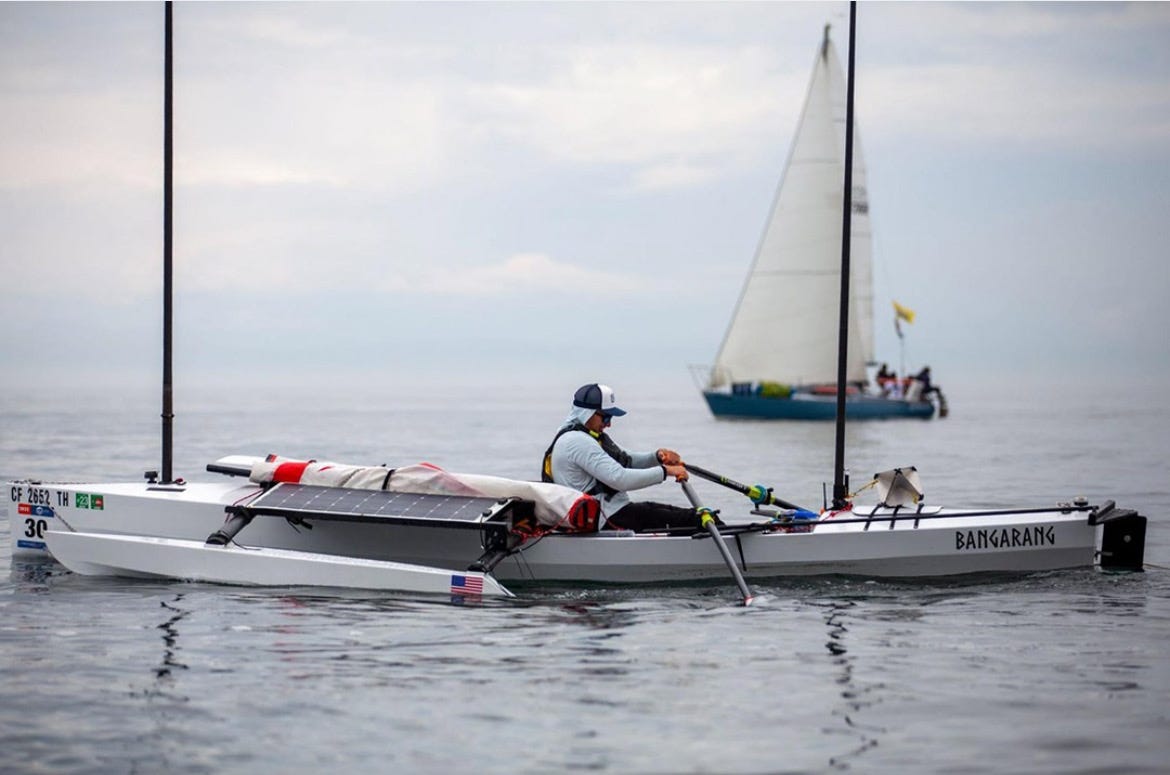
As for myself, my name is James Gibling. Going solo is my gameplan so yeah…doing the one-man-band thing. I funded this boat working as an Engine Operator on a wildland fire crew out in Malibu California for the last 5 years. Usually my summers are spent in the woods and mountains cutting and plumbing fire line or manning a tower so its a nice a vacation for me to be able to be up north and do this race!
I was inspired to do Race to Alaska after a combination of experiences. The inside passage first popped up on my adventure radar after reading about the famous couple—climbers Ray and Jenny Jardine’s—kayak trips from WA to Alaska and linking the Northwest Passage. And later I had visited Denmark on my way to Greenland to hike the Arctic Circle trail with my wife and we visited a viking skip museum. There I saw craftmen building incredible replica viking long boats. I never liked motors on boats (makes me seasick) so a rowable sailboat sounded like my kind of boat. In the process of looking for a rowable sailboat, I stumbled across a photo of Colin Angus standing in a Rowcrusier. I tracked him down and to my surprise he said, “You can make one yourself.” I’ve been hooked ever since!
What makes you think this crazy plan might actually work? I have planned like crazy to prepare the boat and to build my knowledge of the Inside Passage, but most importantly to work on my rowing and general fitness. But even with all this planning and prep…I also believe in not projecting too far into the future. I’d rather sail and be in the moment. Good situational awareness is everything on small boats—especially heading out into the cold and wild waters of the north! I believe solid on-the-water preparation is key to building the quiet solid confidence to handle the race.
What do you expect will be your biggest advantage—or biggest challenge—in the race? One of my weaknesses is simply a geographic one. I don’t have local knowledge of the complex Inside Passage waters. Back in 2021 preparing for my first go of R2AK. I figured if I could eliminate one variable by knowing my boat inside and out and building solid fitness and skill handling a Rowcruiser, I could give myself a good chance of completing. To do this, I set a goal to row the entire Southern California coast from Santa Barbara to San Diego—200 miles. And I also rowed and sailed to Catalina Island twice. 4 crossings total. One trip at 60 miles and another at 75 miles. I also rowed/sailed from Sacramento to San Francisco (100 miles) combining river rowing skills on the Sacramento River and the big winds and currents of the San Joaquin Delta and San Francisco Bay. I also dialed in my winter boating skills rowing around Lake Tahoe when everyone was skiing.
In spite of all that training, I still came up short in my first R2AK attempt in 2022 due to work constraints and a 10-year wedding anniversary I didn't want to miss. But this year I have no constraints, so feeling good about going the distance! In preparation for this year’s race I sewed new sails along with a set of storm sails. I also made a few modifications including a static and dynamic kick-up rudder system. The dynamic rudder uses a bungee cord so when I hit a log or kelp the rudder lifts up but the bungee tension pulls it back down. Pretty cool. You can see all these mods on my instagram page rowcruiser_bangarang.
My biggest strength, I think, is my training. Before I was a firefighter I was a beach lifeguard/ towerguard at Huntington for 5 years. Our training was pretty brutal. But ever since I was a kid, I loved the water so it was fun for me. My dad pushed me into waves when I was a kid learning to surf, so I have a deep connection and love for the sea. I like to think of myself not just as a surfer but a well-rounded watermen. My dad was in the Navy in submarines and later became a merchant mariner and he always pushed me to be versatile on the water. He’d say, “Don’t just be a surfer —learn to bodysurf and swim, and learn to sail big boats and dinghies. Learn to windsurf, kitesurf, scuba, kayak, freedive, spearfish, lifeguard…do it all!” So I did! And we managed to do it all with next to no money. Finding surfboards in trash cans, sewing up used kites and windsurf gear and making it work. Half the fun was turning other people's used gear into waterman skills. All I’ve known my whole life was dirtbag sailing and surfing so really….my whole life has been kind of a long preparation for this 100% dirtbag sailing race!
Anything else you’d like readers to know? I believe you can have a dialed boat, but if you aren’t prepared to row for hundreds of miles while keeping a positive attitude—especially when the finish line seems like a a myth—I think your brain will just find ways to get you to quit and go back home to where life is comfortable. You just gotta be physically and mentally prepared to work hard and manage the “type two fun” perils of such a race—the blistered hands, the sore body, being cold, wet, sunburnt, and fearful when conditions get gnarly. You just gotta keep paddling with a smile! Simple. But simple things aren’t always easy in the moment. Gotta fight that pessimism on mile 100, 200, 300, 400, 500, 600, 700! And really to just look around and love the moments out there! I mean, how blessed are we racers to have this opportunity to experience one of the world’s most incredible waterways in a tiny boat? So grateful.
•SCA•
Just an excellent description of the deep commitment you have to this race. I can't imagine a better life of preparation for this very real adventure. Best of luck all the way!
Way back, before there was a R2Ak, back when the world was green and I lived in Ketchikan and worked for the USDA Forest Service (I'm talking 1978/9) the local newspaper had an article about a woman who was rowing up from Seattle. She had done it before IIRC, and completed the journey to everyone's amazement. Here we're 48 years later, lots of people have done this, you will be fine. I envy you the chance!