
More Small-Boat Tents
Plus a detailed article on Mark Bratton's Caledonia Yawl tent
Some time back, Marty Loken wrote about boat tents in his feature Gimme Shelter, posted below. Recently, we’ve been noticing other clever tent ideas and asked readers to send us a few photos. Hopefully these photos will spark some ideas of your own. —Eds
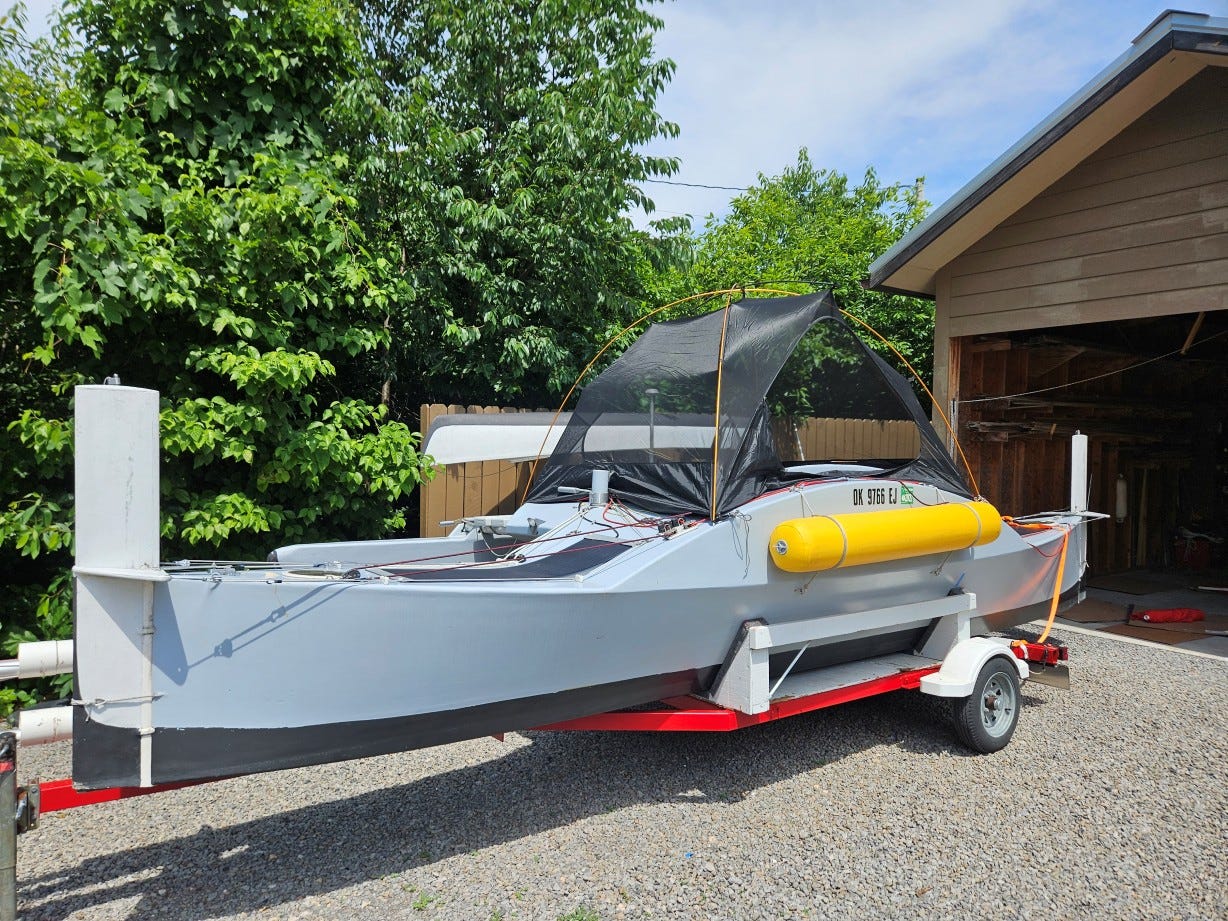
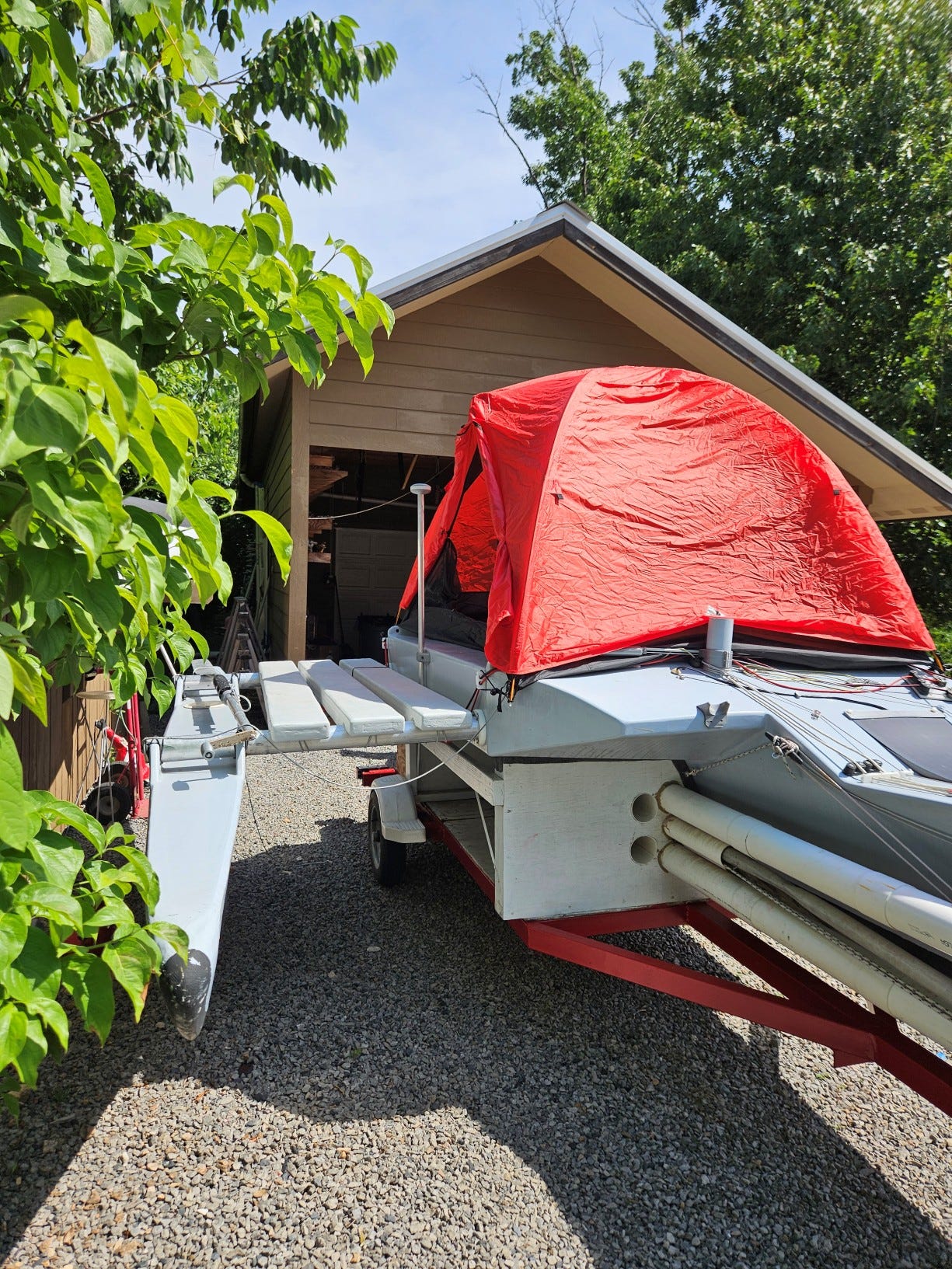
Reader Skip Johnson recently geared-up for the Texas 200—an event where shade and protection from mosquitoes can be lifesaving. He writes:
Tent is a standard two-person dome style with the bottom cut out. There's standing room available. Rain fly is rarely used, tent is primarily protection from mosquitos when the wind dies at evening along the Texas coast. With a little practice it's easy to set up without getting off the boat. Having the platform on the windward side helps as well as the tent opening on both sides.
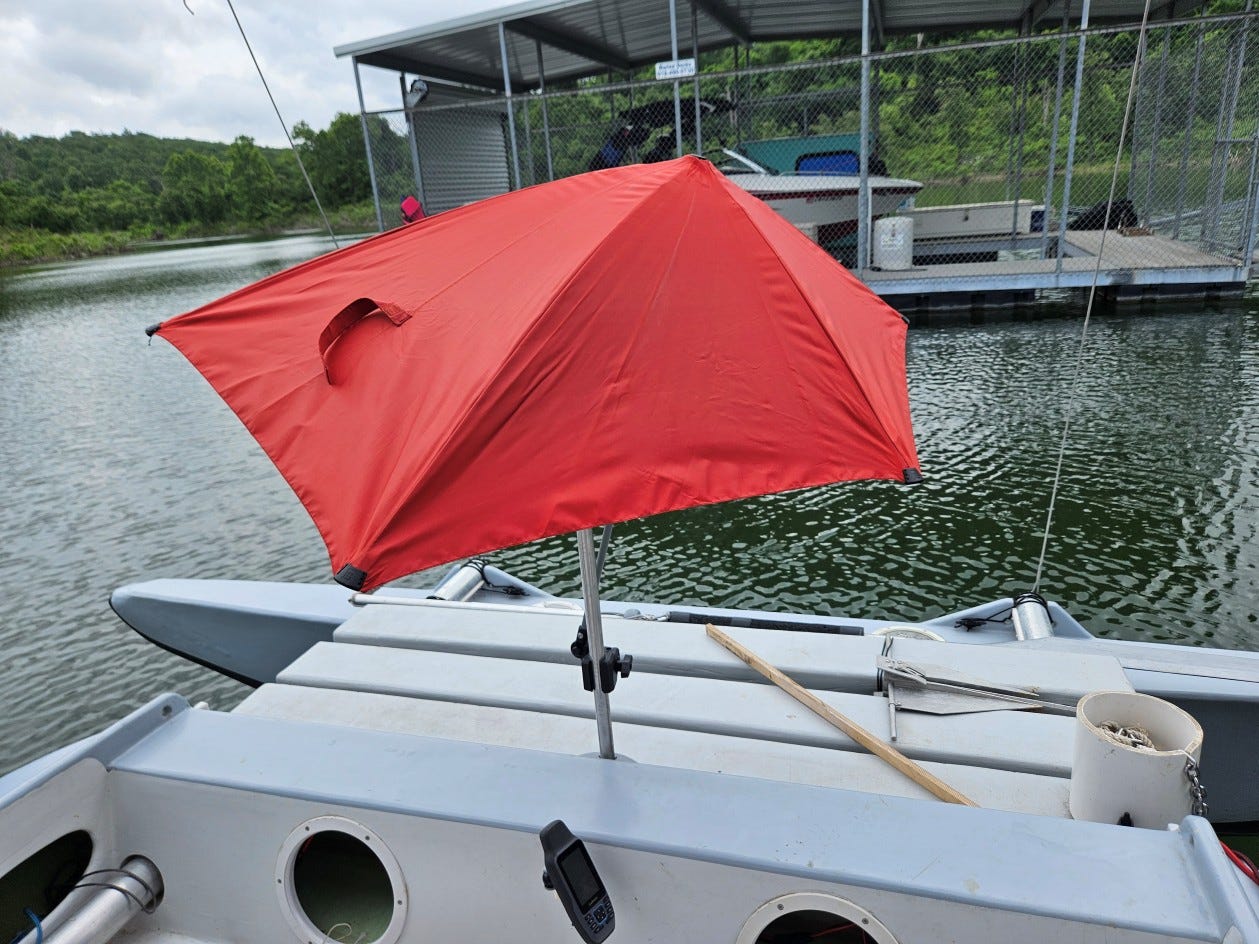
For comfort during the heat of the day under way, I found this nice little umbrella on Amazon that has a couple of adjustable joints and a clamp that snugs up on the boats navlight mast.
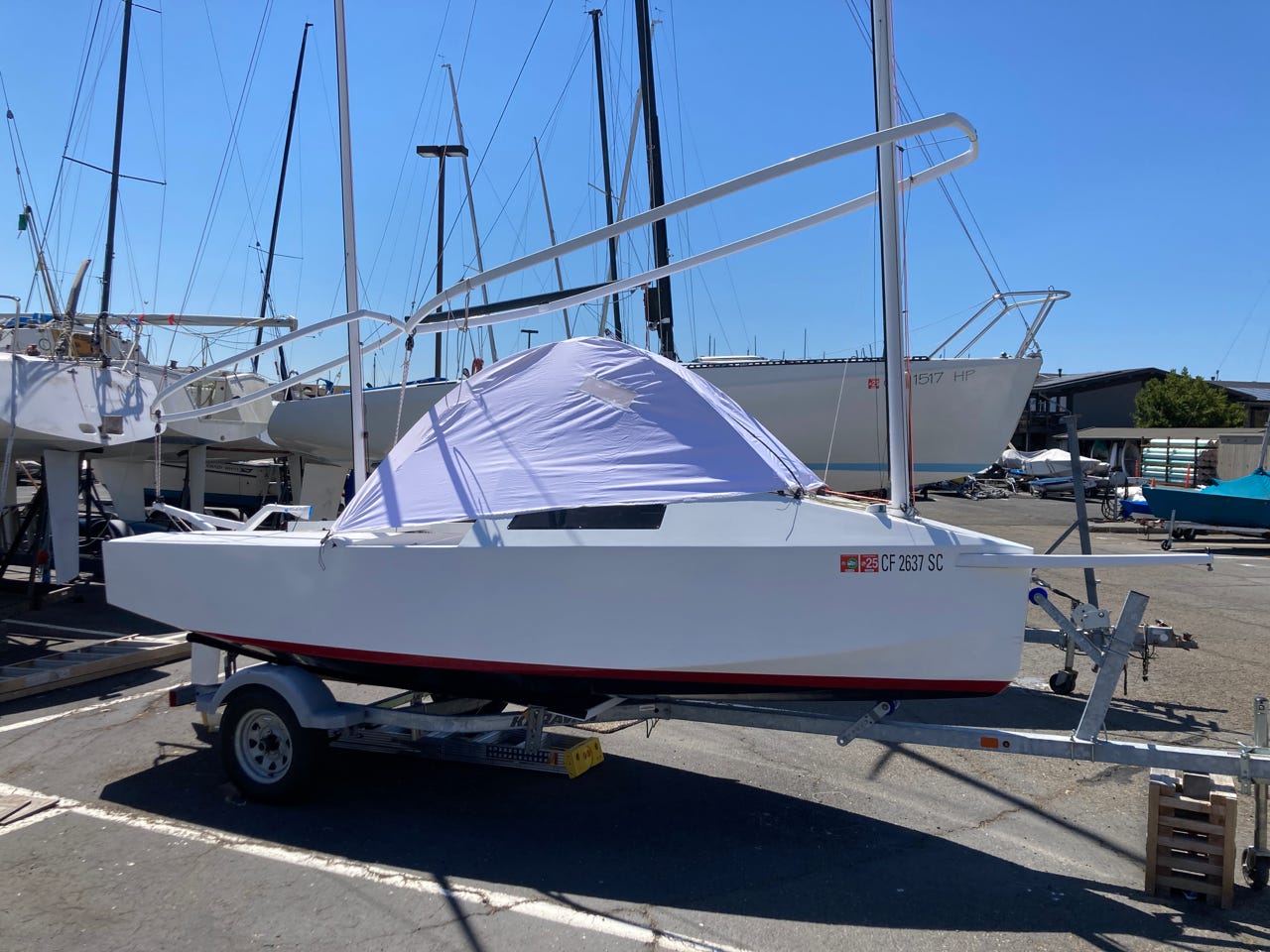
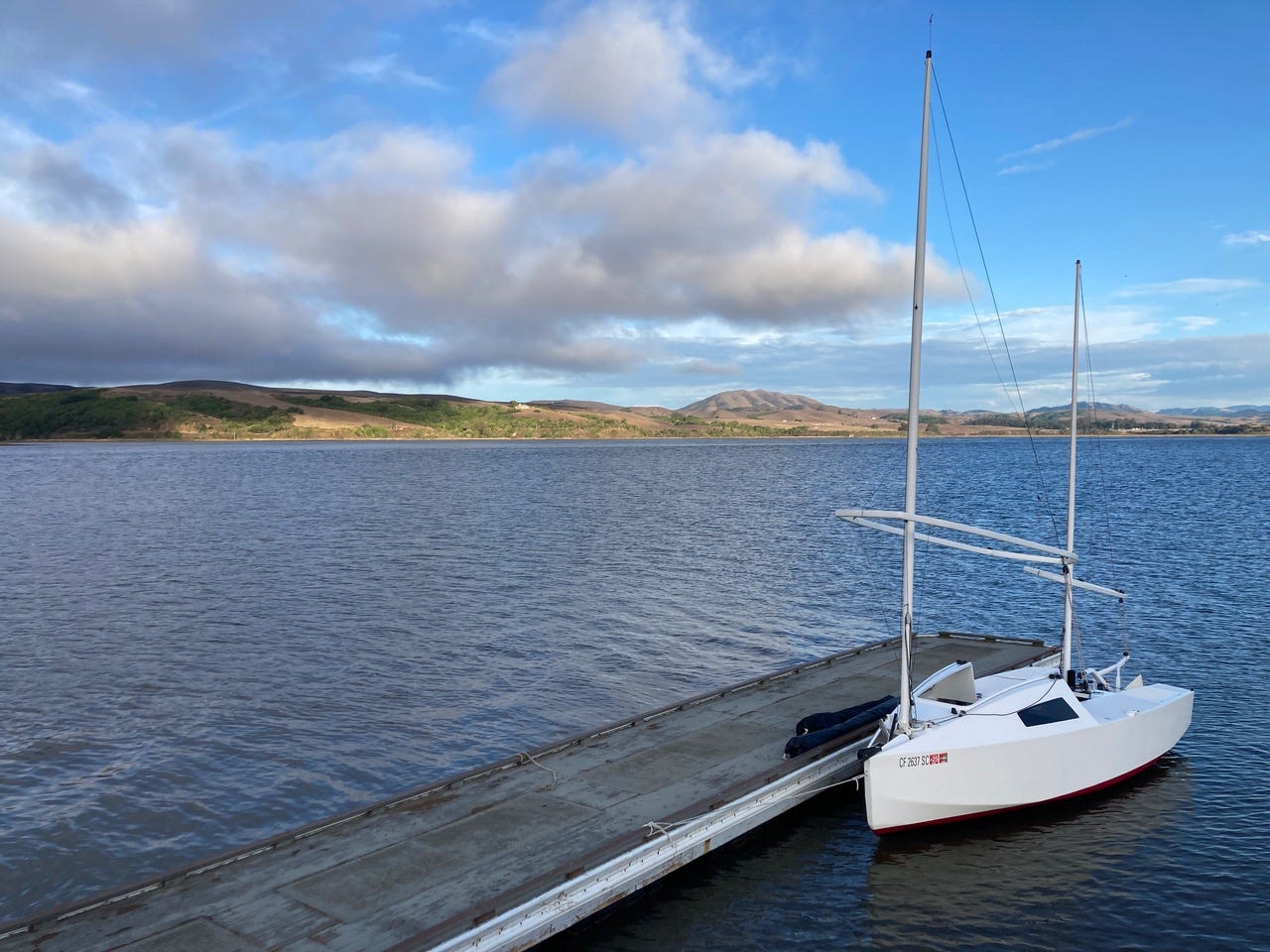
Reader Stephen Buckingham says his boat tent is a work in progress. Here’s a photo below. Also included is another photo of his boat—a Bedard-designed RoG —since we know some you will be curious about it.
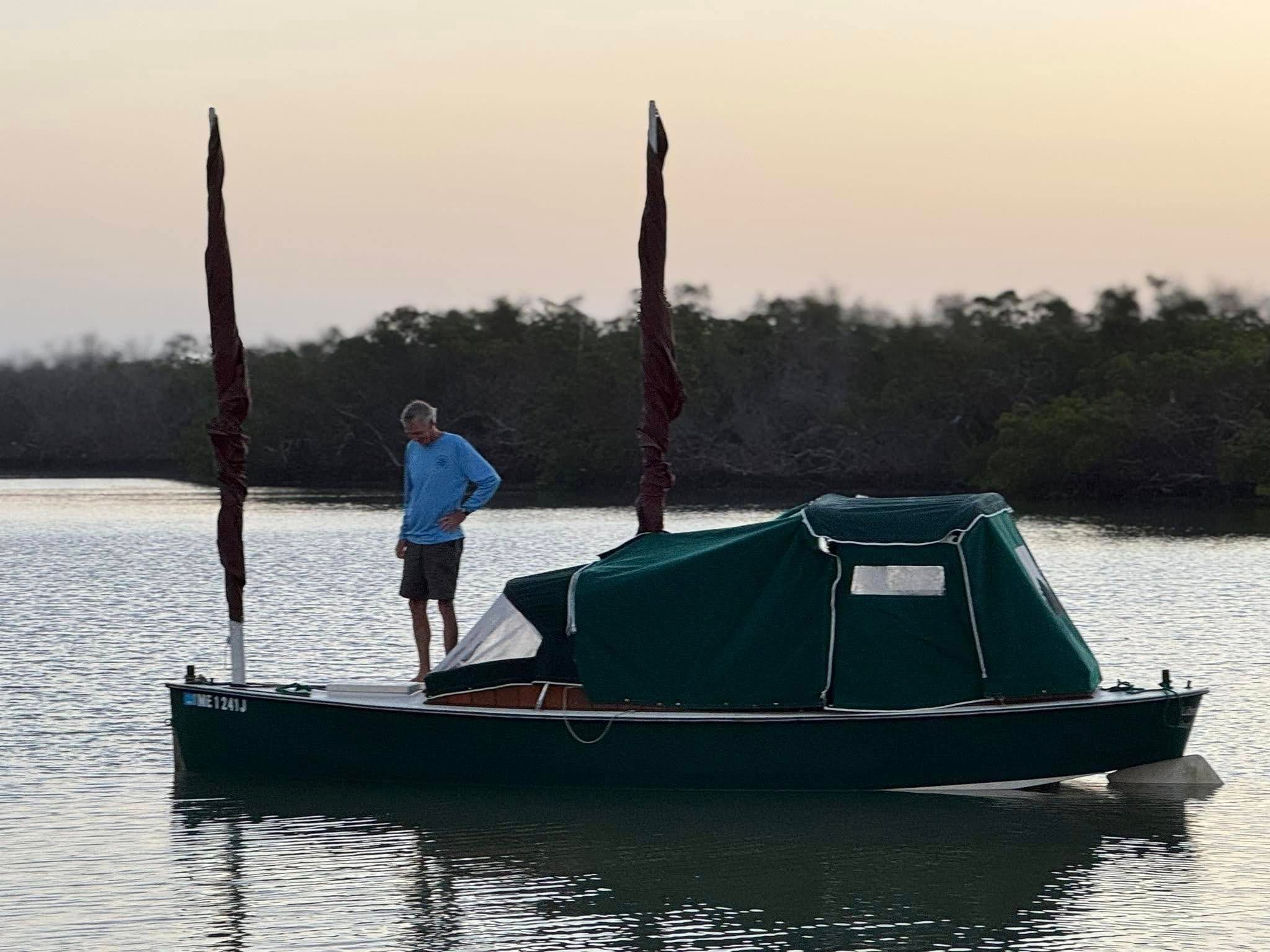
Reader Steve Walbridge has sewn a couple of handsome and commodious tents for his 21-foot Lightfoot cat ketch and his Caledonia Yawl.
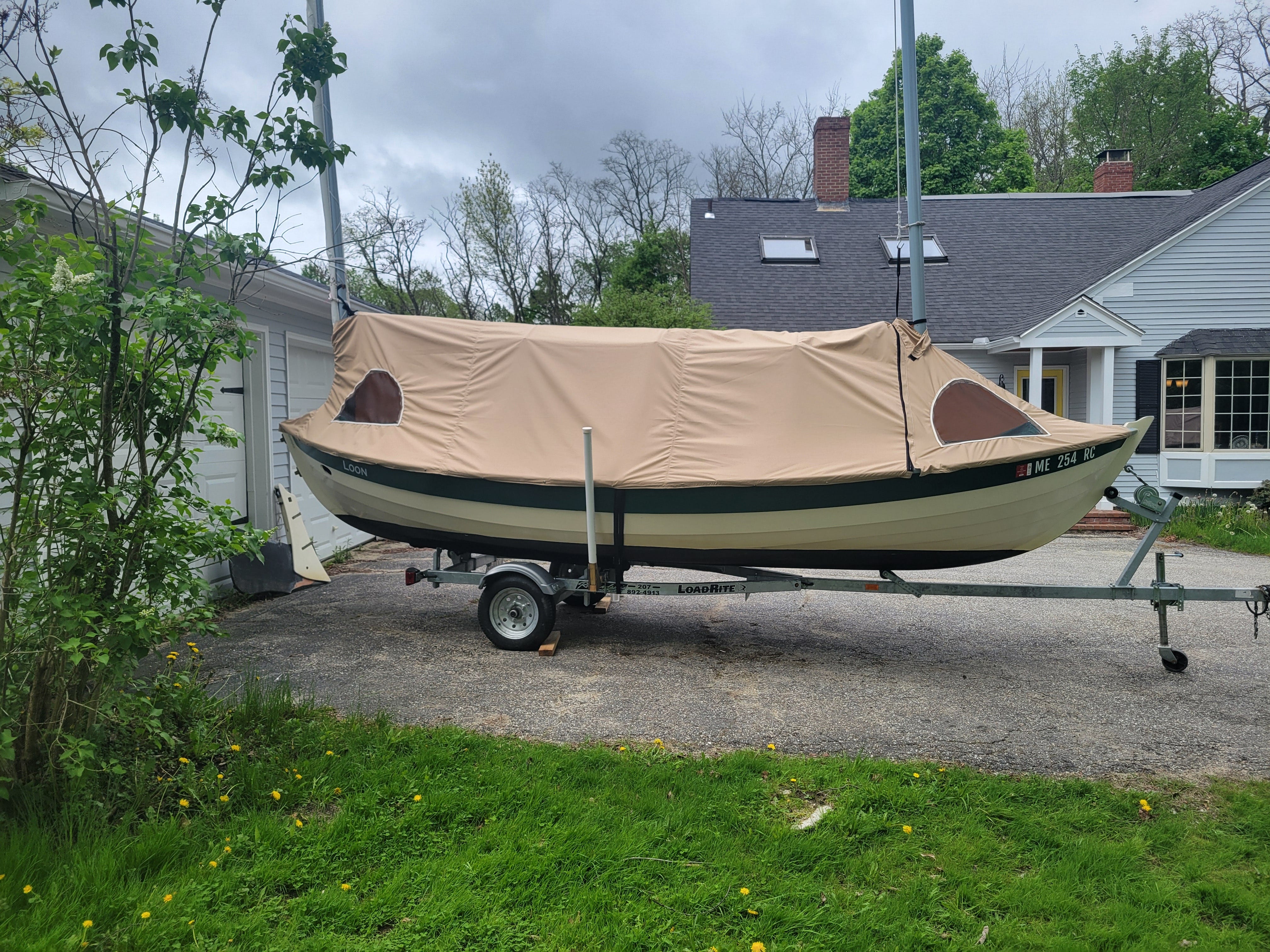
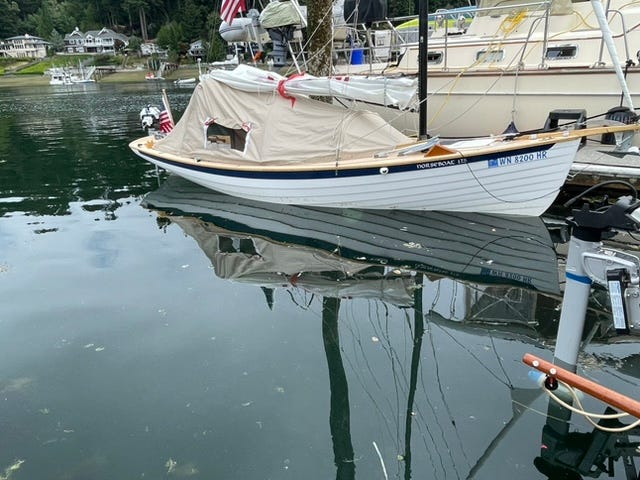
Reader Mike Yates sent the following photos of the standard-issue Norseboat 17.5 tent/dodger arrangement. He writes:
The tent zips into the dodger. Both attach to the boat with snaps on the outside of the cockpit combing. The dodger uses a folding stainless steel custom hoop. The tent uses a folding stainless rack at the back with a sail batten hoop in a sleeve at the center. The rear rack folds up behind the rudder post. Quick to set to set up. Lots of ventilation. The rear has lots of headroom for cooking and cocktails. Good in a blow. Sometimes the combination of humidity and dew can make things drippy. Probably to be expected with a single membrane tent.
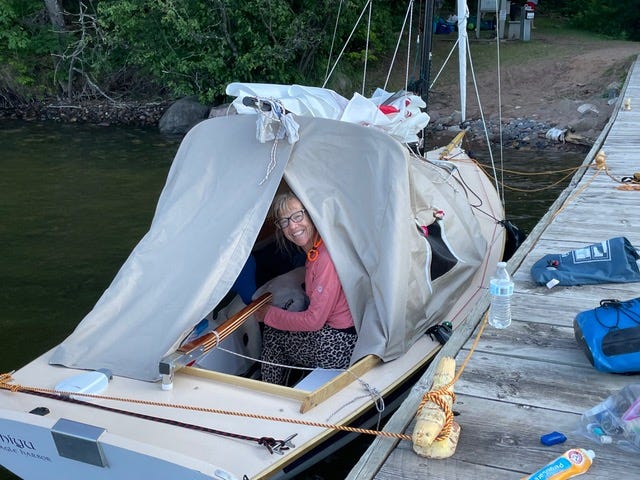
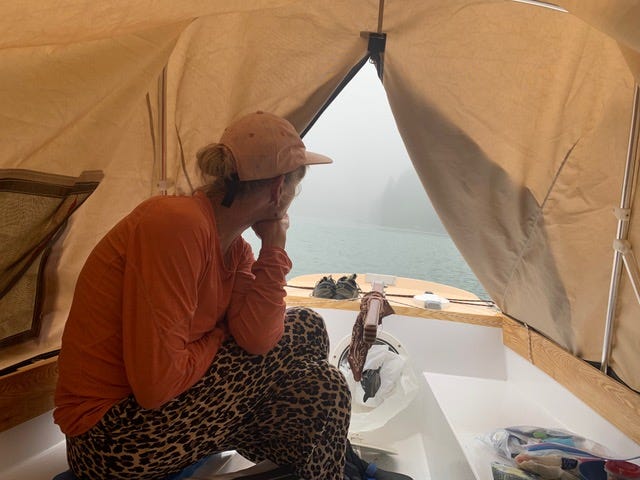
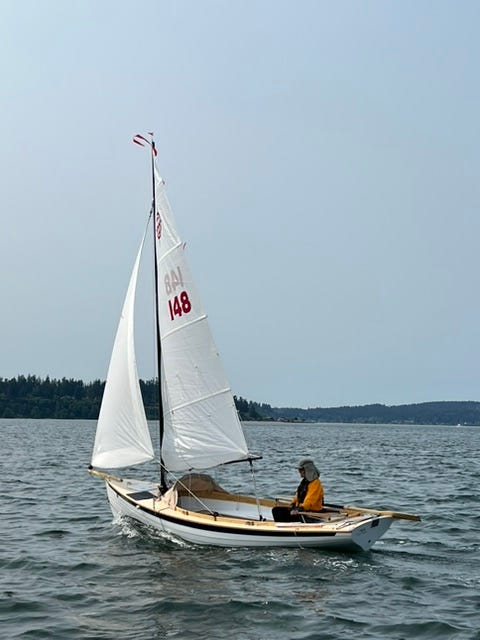
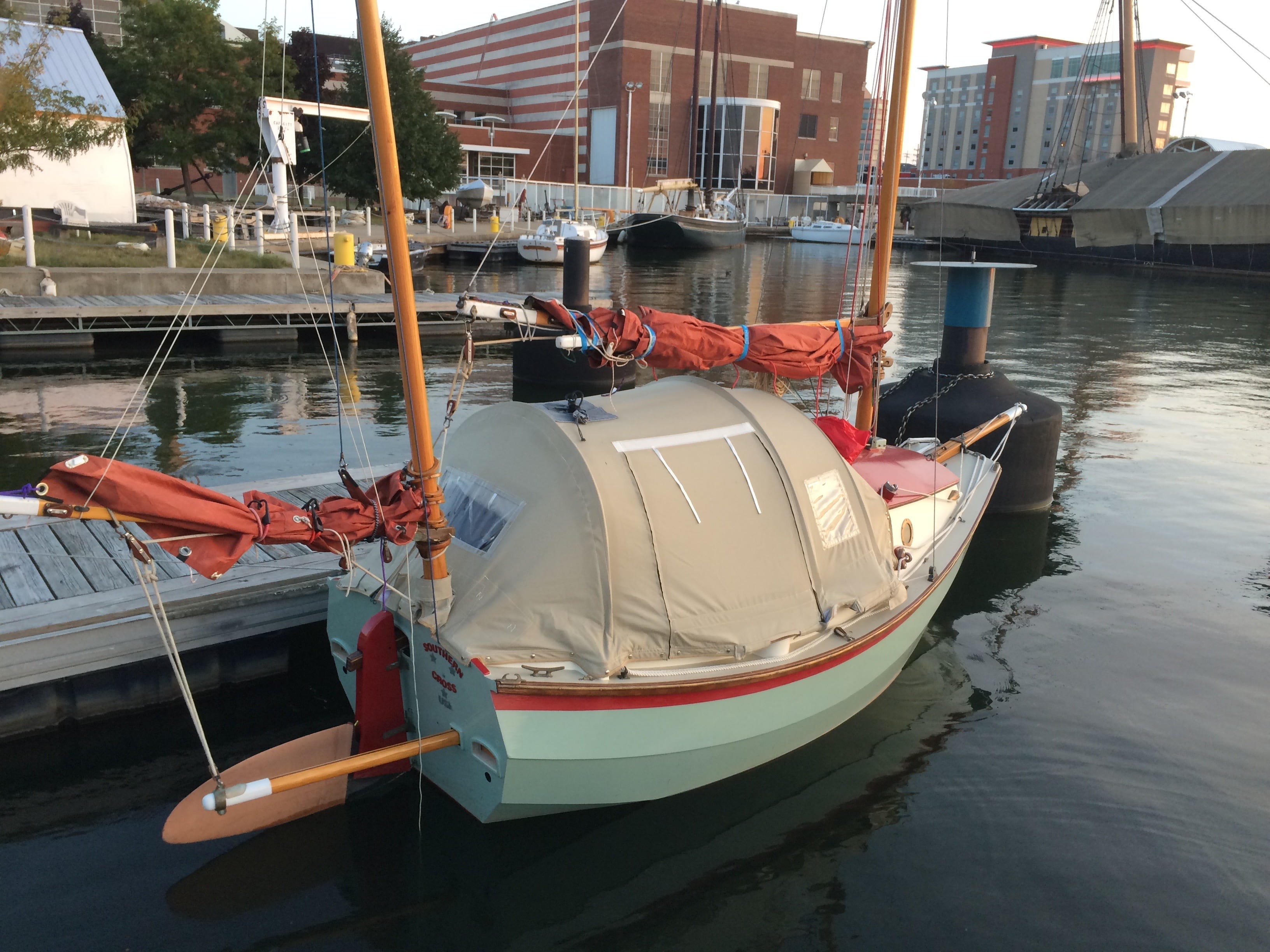
We asked longtime contributor and adventurer Howard Rice to send photos of the well-thought-out tent system he designed for sailing his SCAMP in the Roaring Forties. Howard notes that his SCAMP #2, Southern Cross, actually features three separate tents. He describes them this way:
1. High wind- Low profile, no pole, can be set up in the dark in less than 5 minutes with no light. Works in 4 different modes.
2. Three-pole general use tent—roomy, setup time is less than 10 minutes. Great for extended stays at marinas or for two.
3. Road cover tent- Used for road travel and general coverage. Provides a waterproof cover, slows prying eyes down a bit. The road cover makes a great travel mini-trailer for long drives.
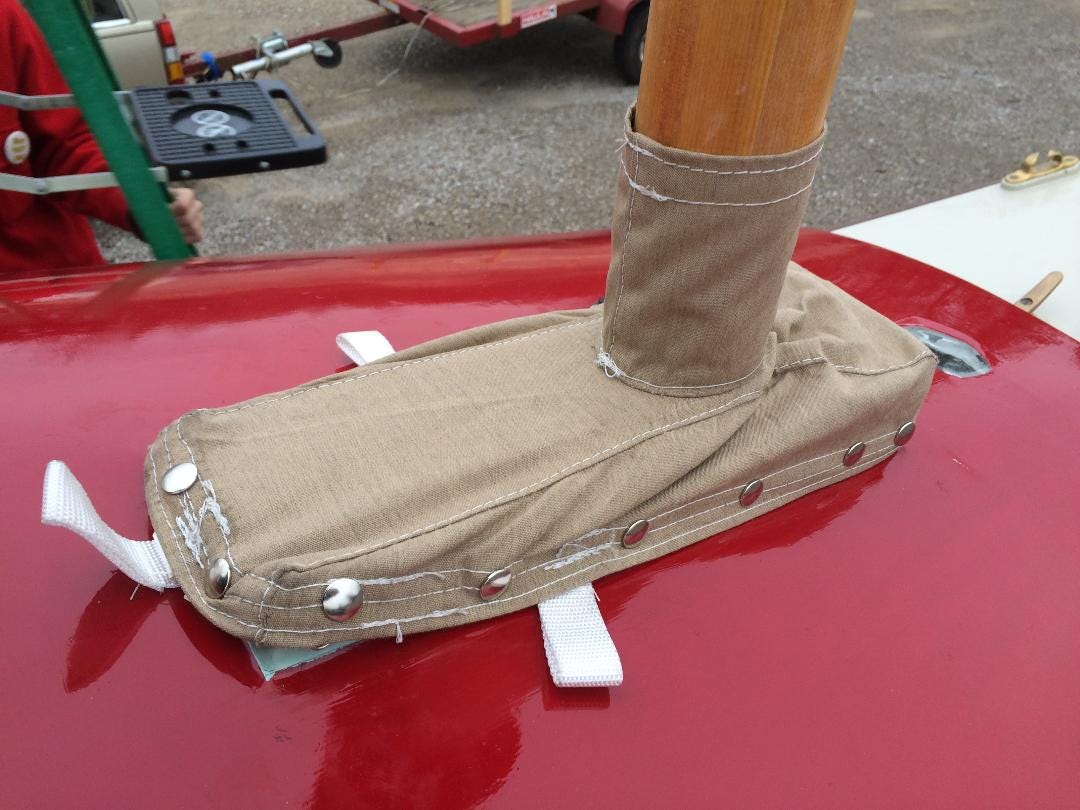
4. Any SCAMP tent needs a mast boot to be dry.
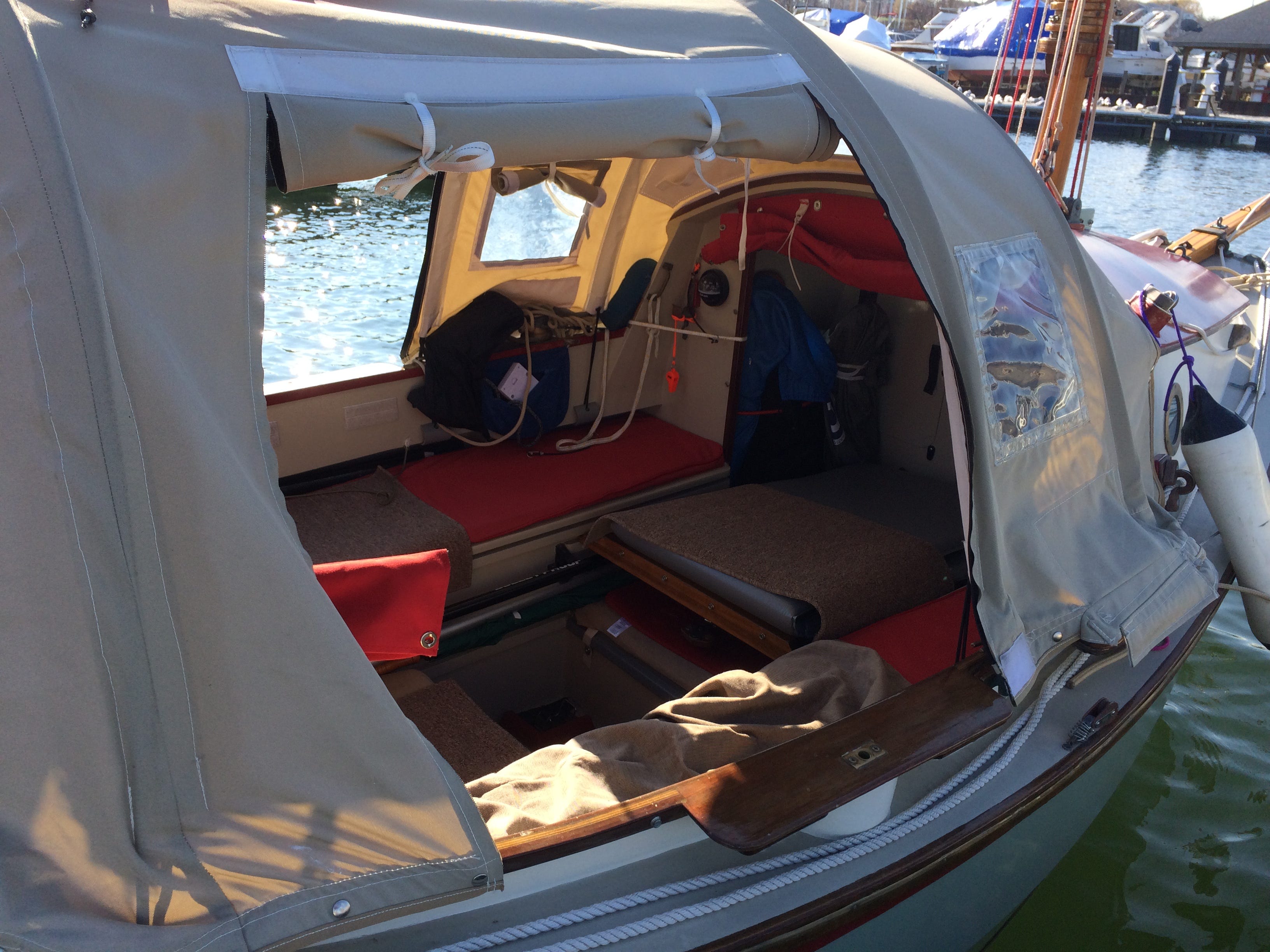
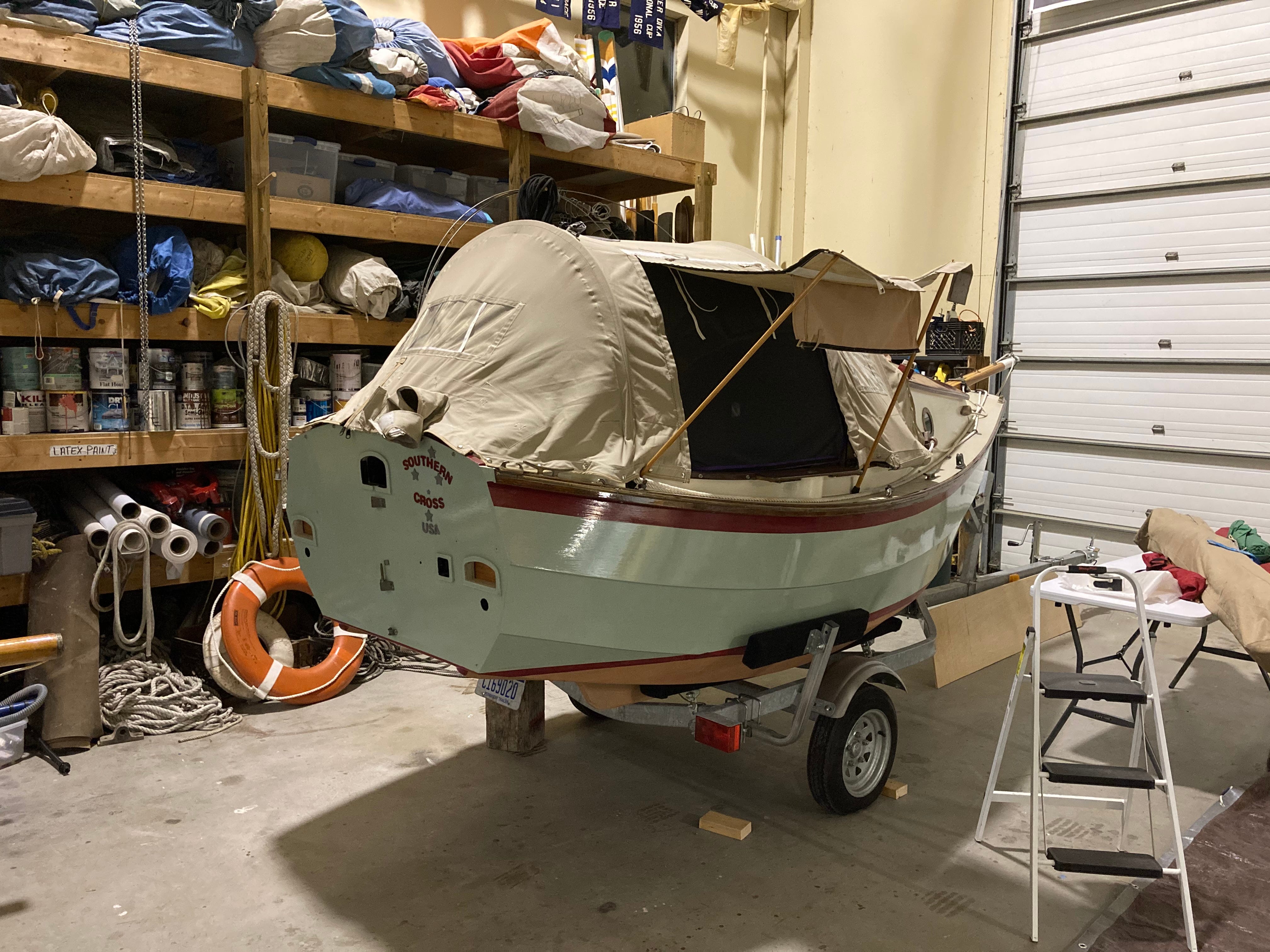
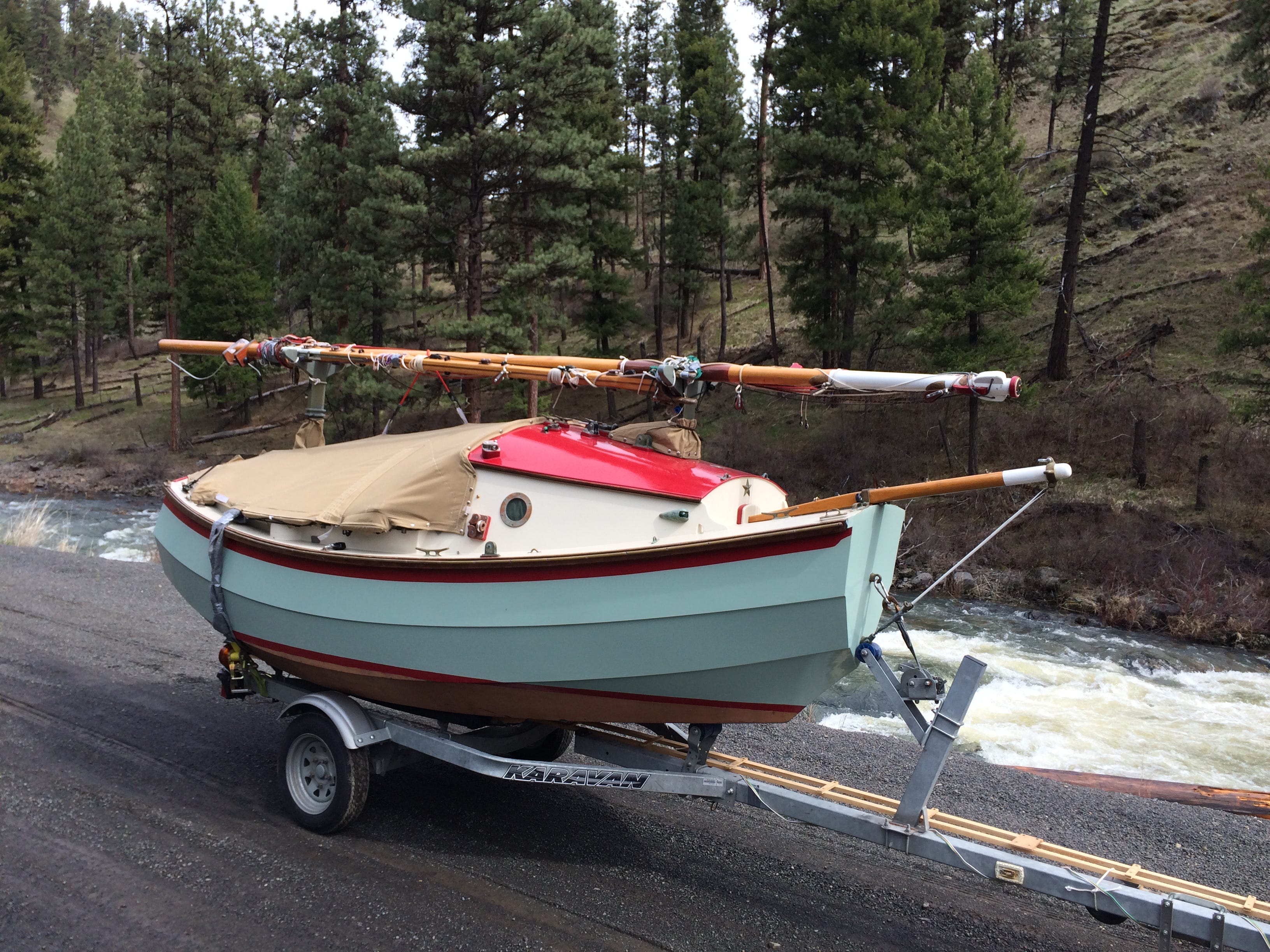
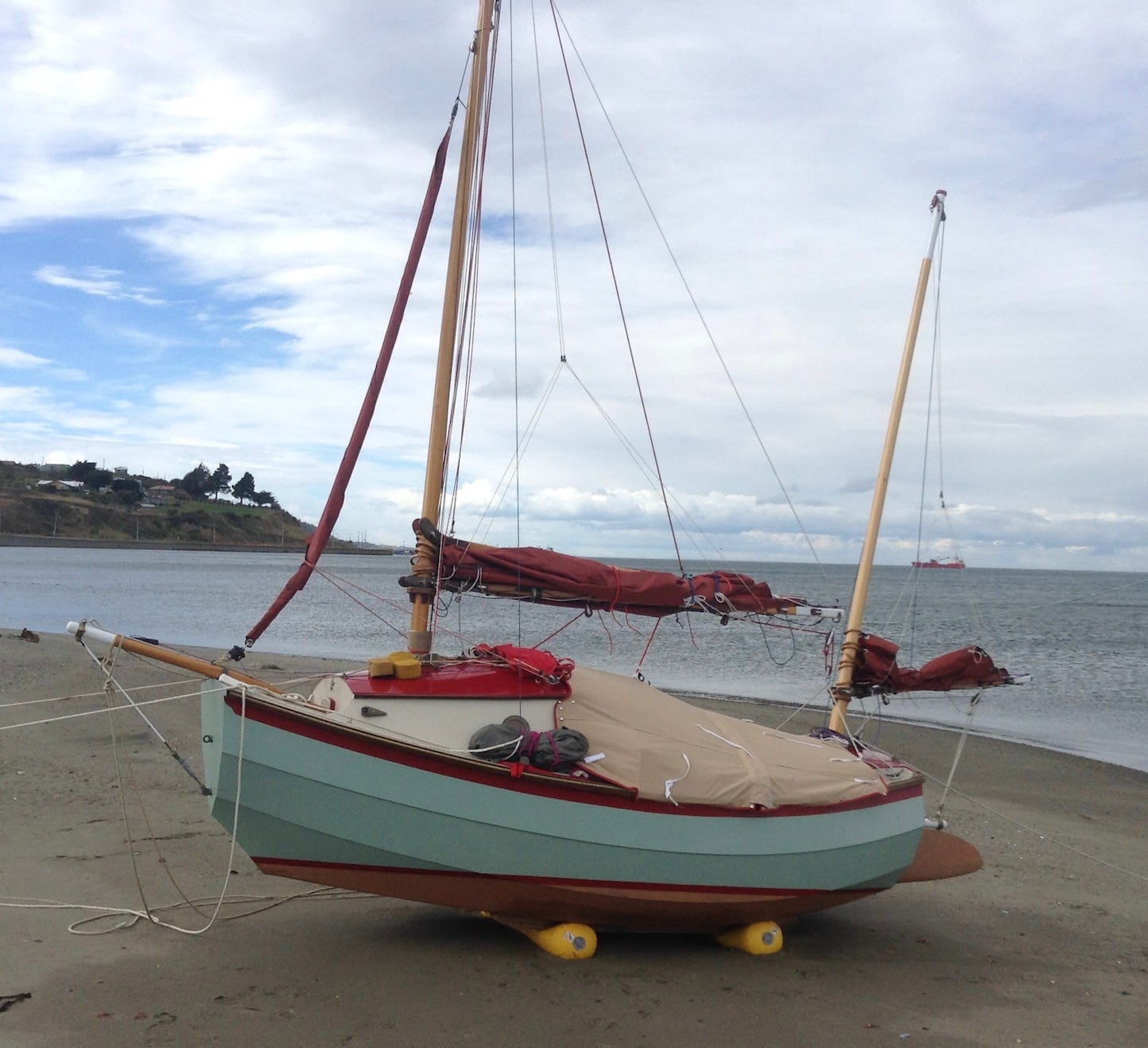
And lest you think a sailing canoe is too small to add cruising comforts, Howard also included a few photos of the tent he sets aboard his little boat.
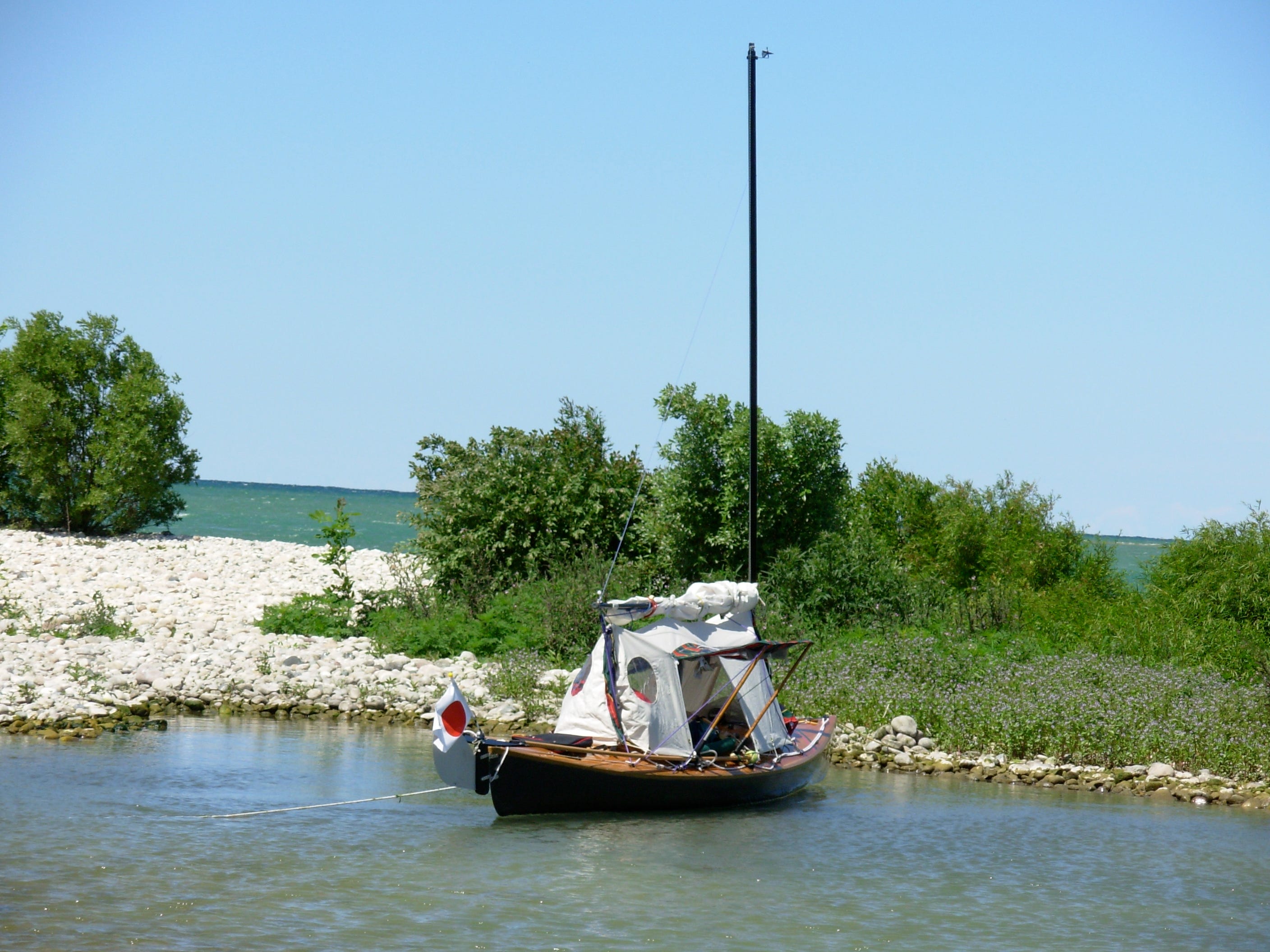
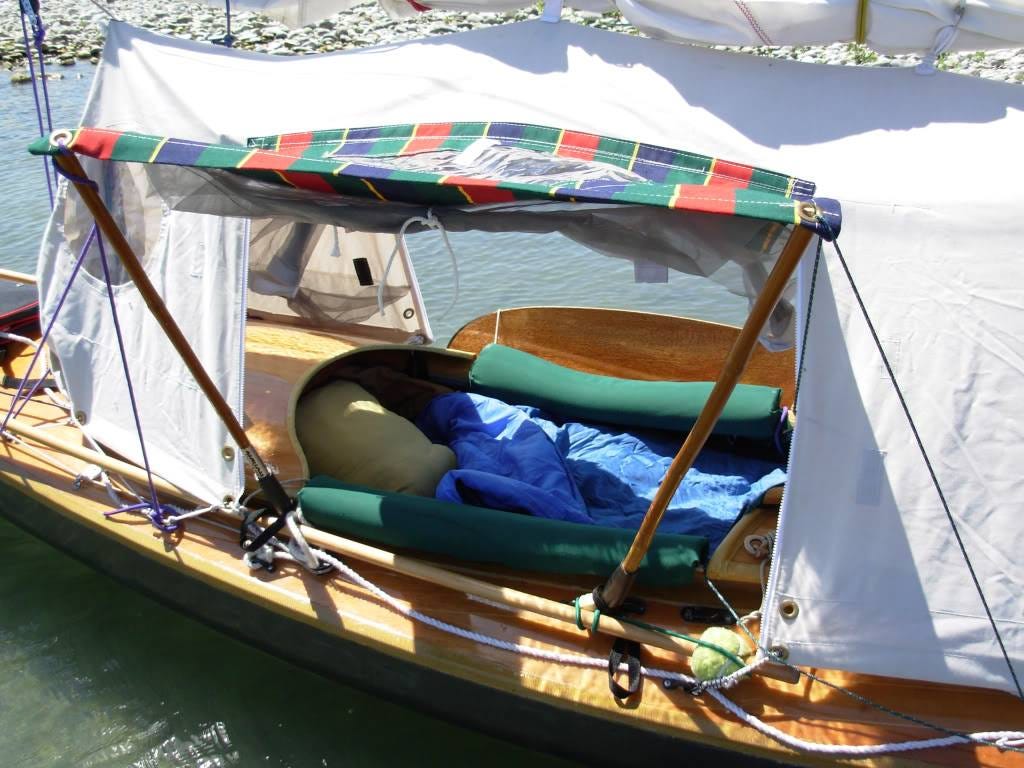
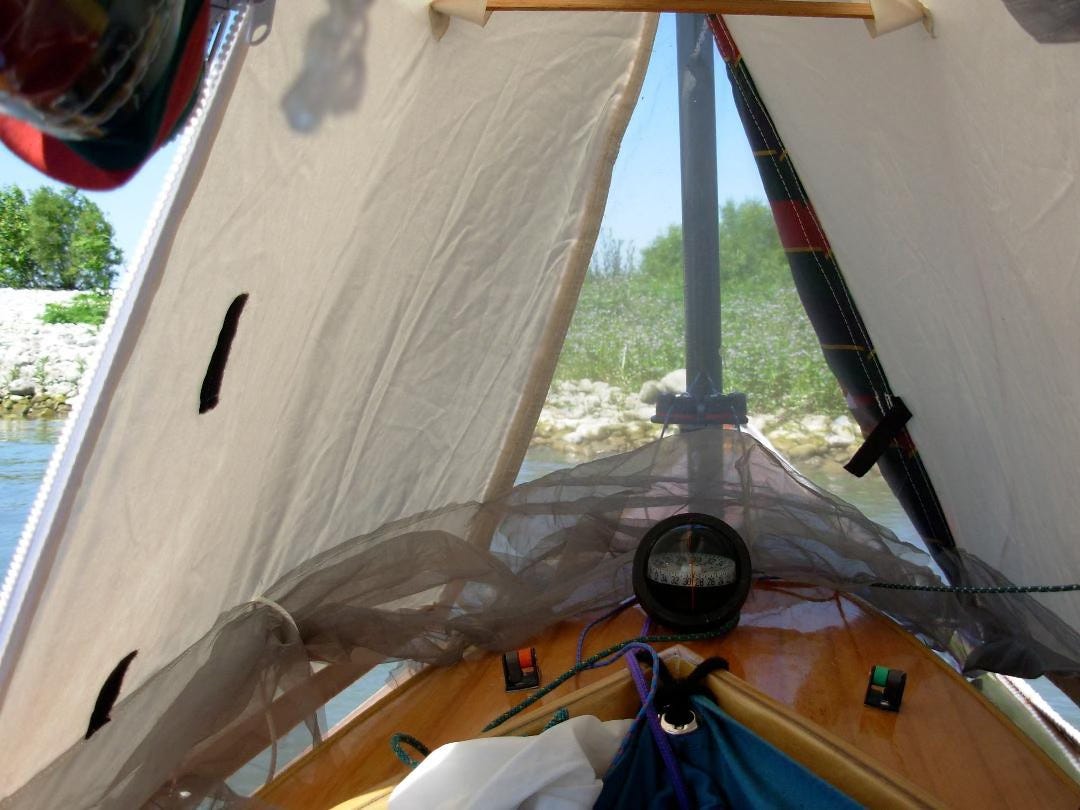
Reader Mark Bratton responded to our request with a fantastic explanation of the lovely tent he fashioned for his Caledonia Yawl. Enjoy.
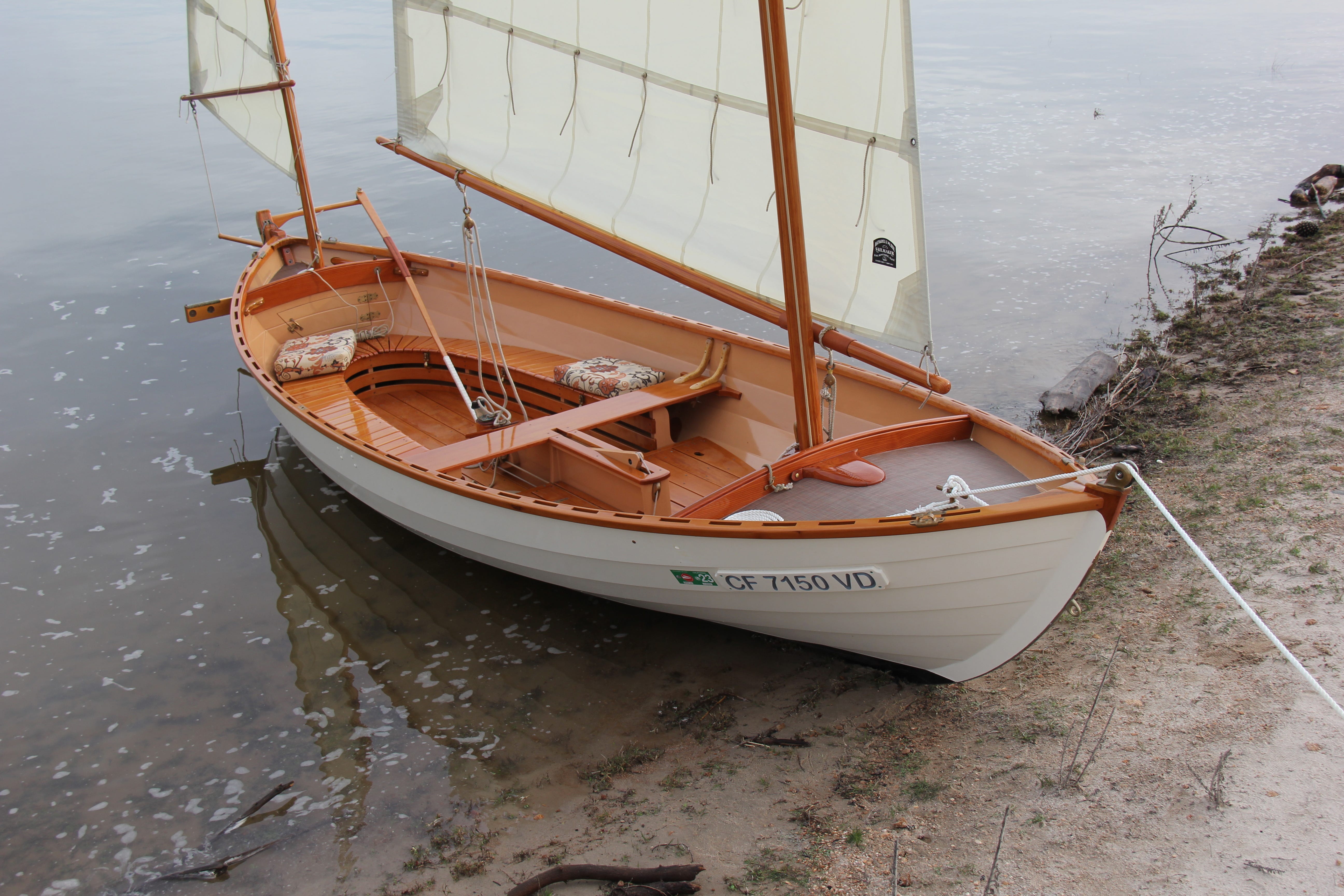
So to tell the story of my tent I should start with a little bit about building my Caledonia Yawl. I was encouraged to design and make the interior my own. I knew I wanted to go camp-cruising and mostly on inland freshwater lakes and rivers. I got rid of the forward benches and dedicated the forward space to sleeping and storage. I raised the floor 4" to give more shoulder room either side of the centerboard box. This also created more storage space under the floor so the floors are hinged to allow access. On the interior I tried to keep things traditional looking by mainly using Douglas Fir, Live Oak, bronze and brass hardware. So when it came to designing and fabricating the tent I wanted it to look traditional as well.
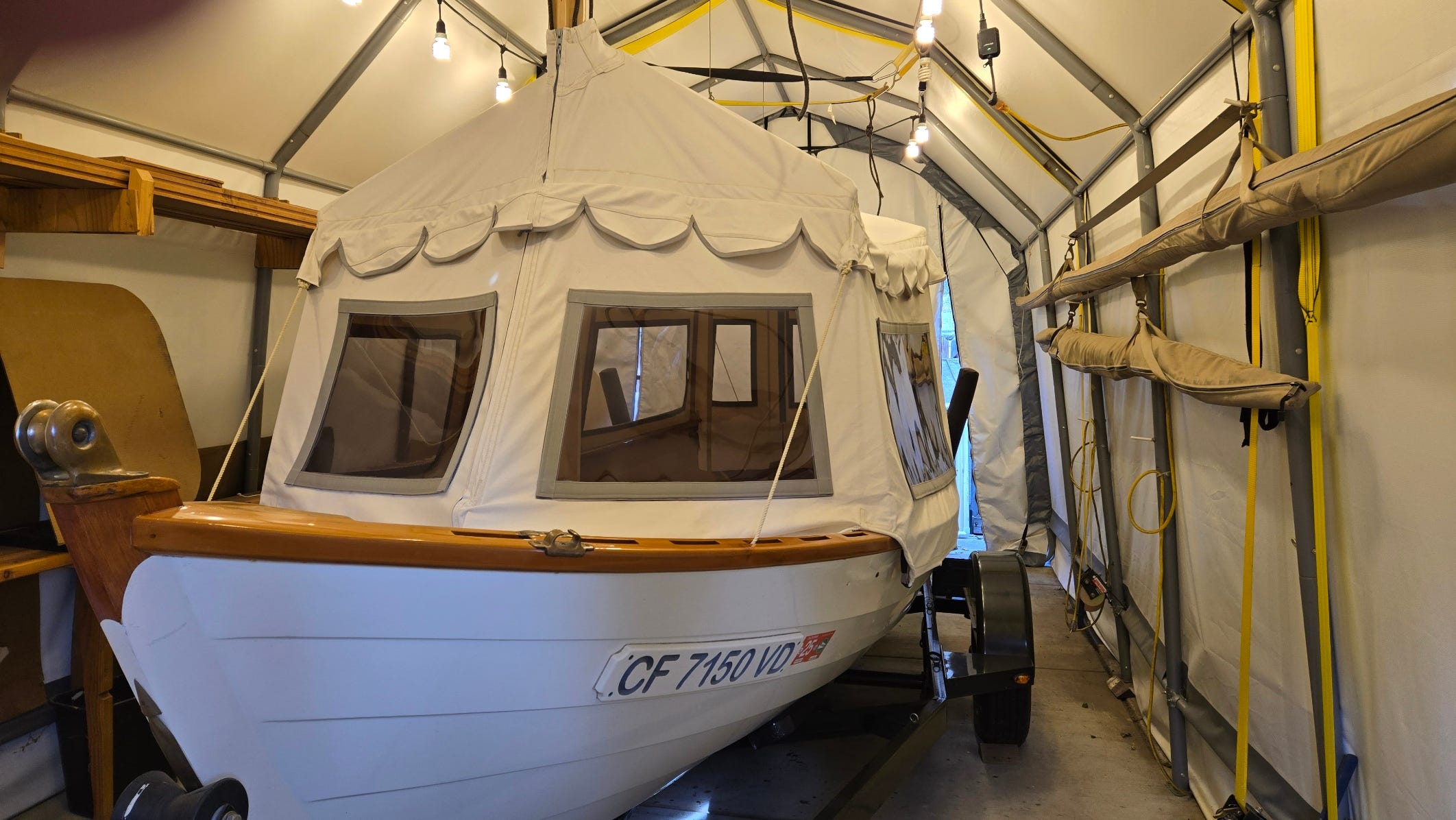
I decided I didn't want the tent to go from an elevated boom to over the rail, as this would make sitting on the side benches difficult. So I made four lightweight collapsible frames out of Douglas Fir with Dacron straps that secure to the boom and mainsail. Dacron hinges at the outer corners are somewhat visible in the last three photos. I wanted lots of windows and ventilation. And again to keep the traditional look I added the scallops. I used 10 oz. natural cotton canvas treated with waterproofing and fire retardant. Eight windows and a door on either side all screened and all openable. The doors zip open and the window film is held on by velcro. You can crack a corner open or remove it completely. I fabricated zippered gussets in the top that formed around the masts to make them fairly waterproof. There is also 5 feet of three strand rope that runs along the ridge. I can hang solar panels from it on either side.
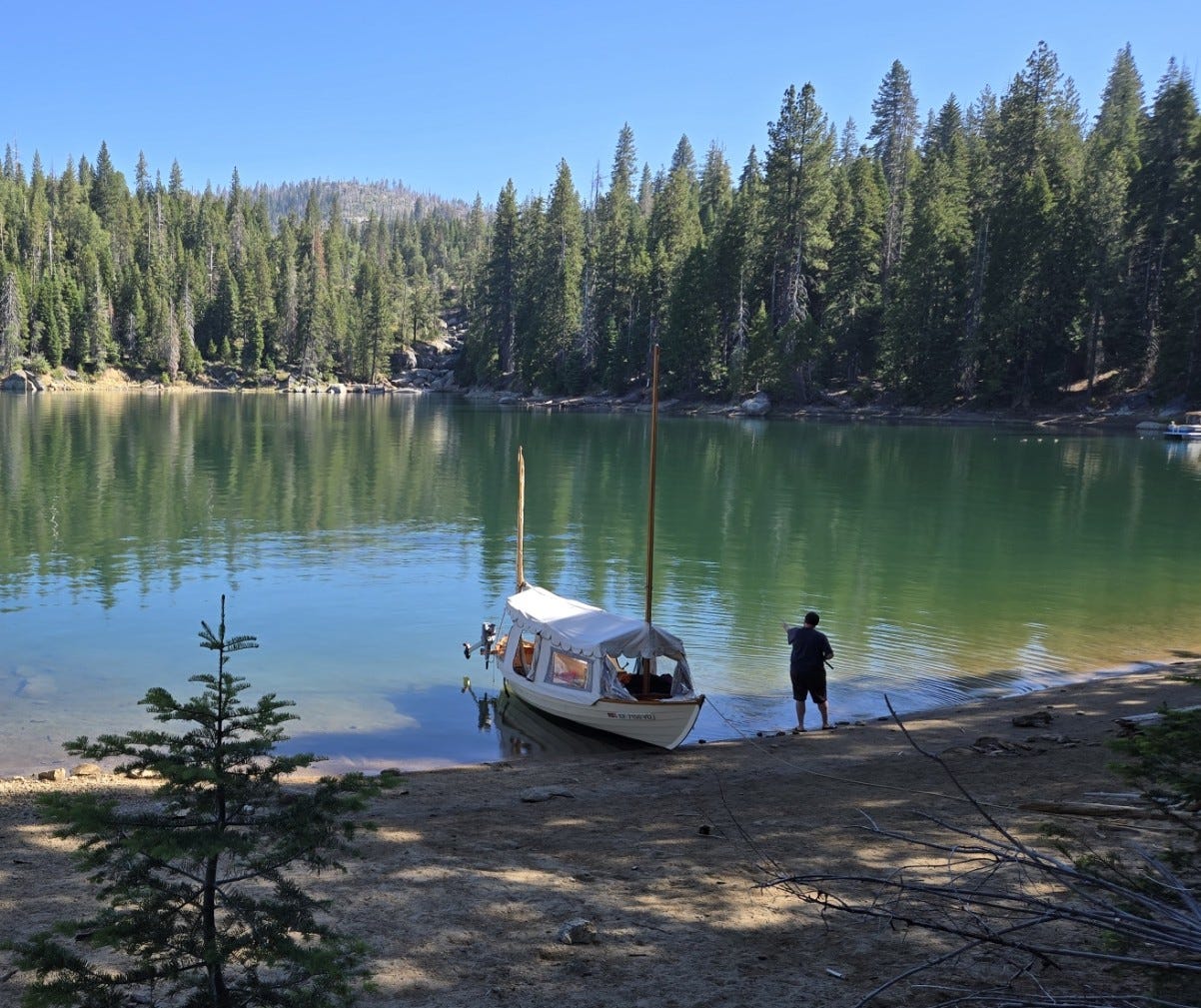
The roof and two sides are 3 separate pieces of canvas. The roof has 1 1/2 inch Dacron tape underneath inside around the whole perimeter just above the scallops. Visible in the second photo a 1/4-inch polyester 3-strand rope secures the top at each corner. The rope runs into the open rail and passes over a free-spinning bronze bushing on a #12 bronze screw before heading to a bronze tube clamp. This adds fore, aft and downward tension and the 1 1/2 inch Dacron protects the 10 oz canvas.
The sides of the tent attach to the top with zippers. Starting near the center cross bench. The zippers travel fore and aft on both port and starboard sides. This adds a lot of versatility as you can peel back each tent side from the bow or the stern as far as you want. In the above photo we were a little warm so we opened the bow, stern and both side doors. There were not many bugs so we left the screens off as well.
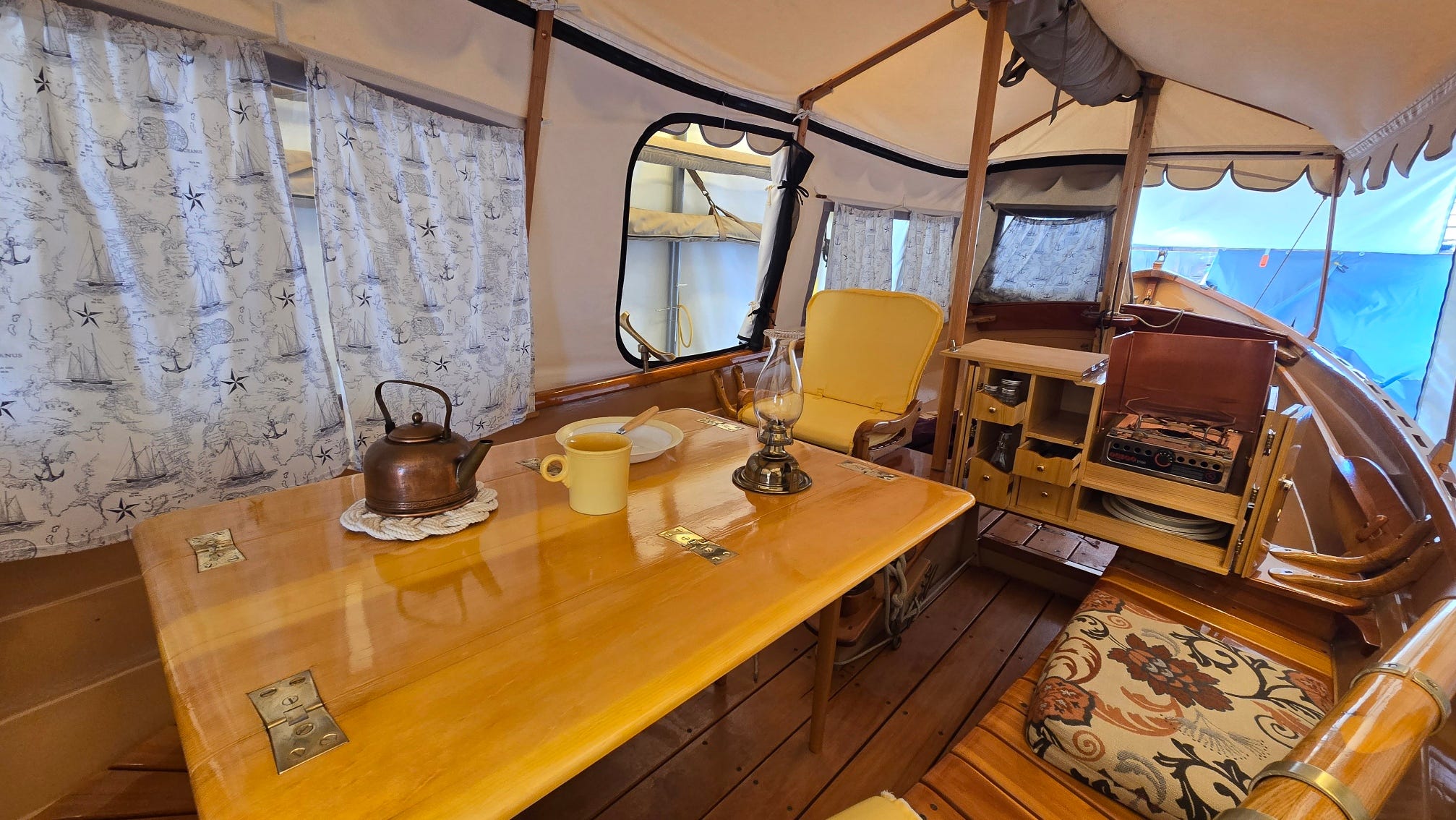
So this photo at home in my boat shed you can see only the port tent side is in place. It has a black #10 zipper holding it to the top. The bottom edge of the tent on the side is held to the rail with upward facing pins that insert into holes in the bottom edge of the outer rail. This can all be done on the water. On the starboard side I used a white #10 zipper to help me determine what side goes where. In the center of the bench is a crutch that supports the mainsail boom and yardarm. It prevents things from sagging but almost more valuable it is something to grab onto when stepping into the tent from the dock or shore. I made a folding table 28" x 32" and it folds down to 14" x 4" x32". I don't think I would use it for a camping trip but maybe for sunset cocktails, dinner or playing cards under the top. I just finished the tent, table and galley box late in 2025 and so far have only had the tent up on an actual overnight just one time since. Other life duties keep getting in the way.
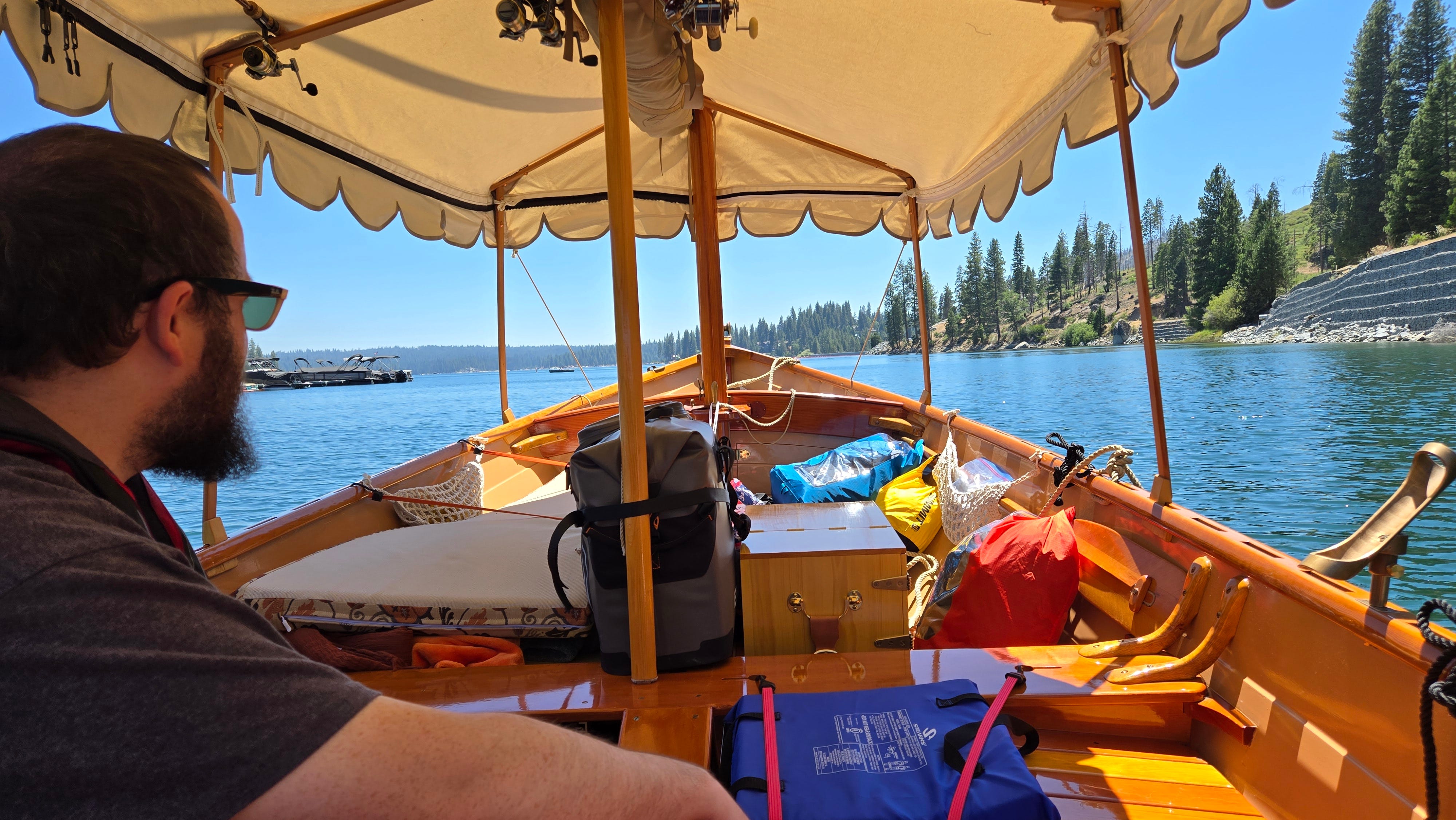
Not much wind for sailing on this day so we decided to place the top on in the parking lot and motor across to the far end of this lake where we planned to camp and fish. The wooden frames that support the top fit into the spaces of the open rail and also worked out as a great out of the way place to stow fishing rods above. This was my first overnight (two nights). I brought way too much stuff. Will try to go lighter next time.
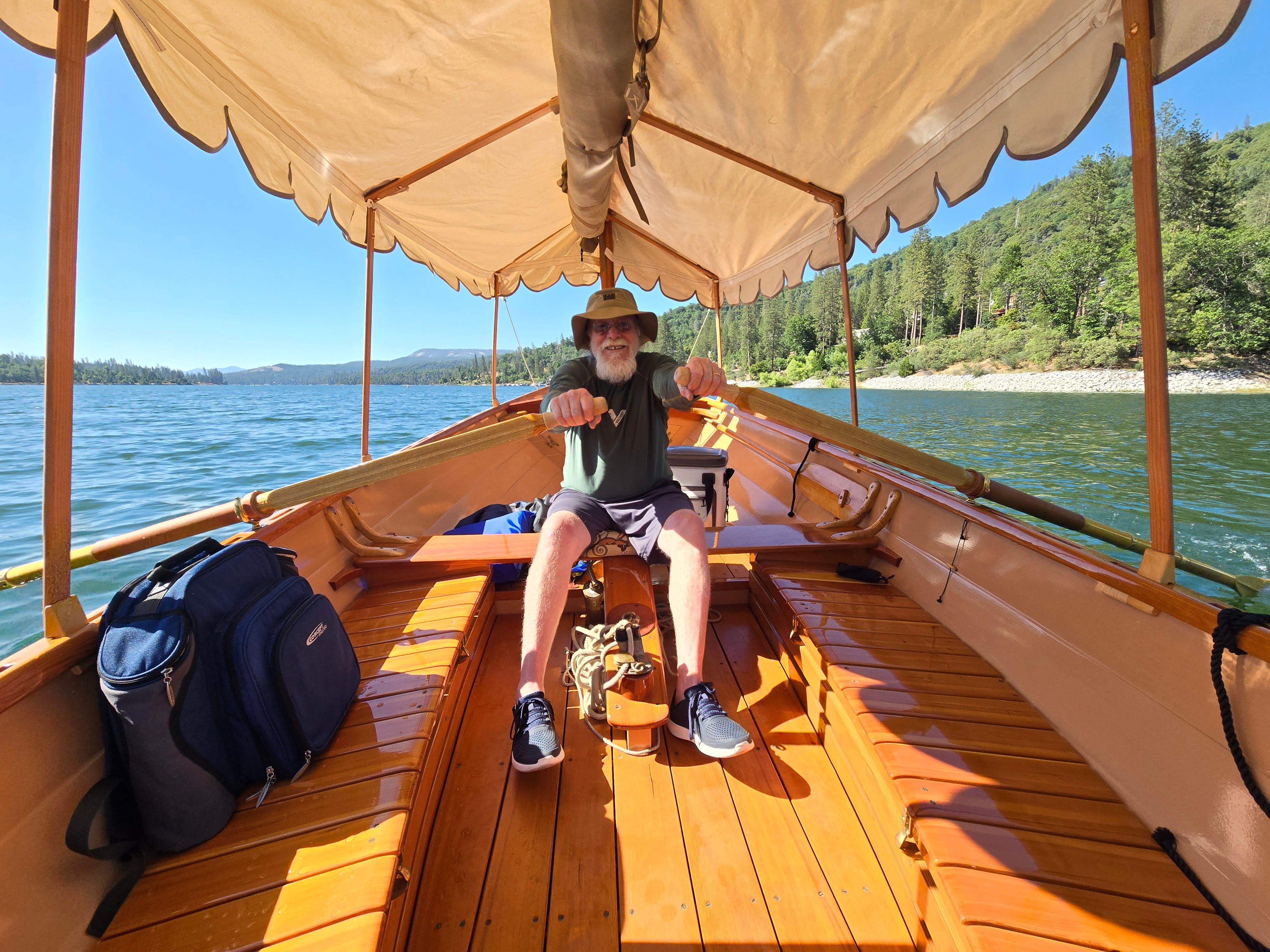
On this day I had not yet fabricated the tent sides but was out testing my recently completed oars on a picnic row with my wife. So what do I like and dislike about this tent? It’s very roomy and comfortable. I have standing headroom on the aft floor. It has lots of windows offering great outside views. It is very versatile in its configurations. It looks like it might belong on this traditional looking boat.
But those things came at a cost. The top and wooden supports fill up one 40” x 10” duffle bag and the two sides fill another. These two duffle bags are pushing the scales close to 20 pounds each. As much as I tried to make it simple and fast to erect it is still a solid 40 minutes to put up or come down. It’s really designed for use in flat calm conditions on inland waters. I would not want to test it in rough conditions. I will turn 70 this year, flat and calm is fine with me.
That’s all for now, but if you have a tent or dodger setup you’d like to share with readers, send it along to josh@smallcraftadvisor.com and maybe we’ll run a short follow-up article.
Below is Marty’s original article. —Eds •SCA•
Gimme Shelter

Nothing compares to cruising in a small, open boat, whether rowing, paddling, sailing or motoring. When underway or at anchor you are close to, sometimes almost in the water—seeing, hearing, feeling and occasionally even tasting the universe below. You’re not riding high above the surface in a boat-shaped apartment, removed. You are
Great collection of tent rigs! They are so nice it is real hard to find a favorite - I'd have four favorites!
Anyone know how to get in touch with with Steve Walbridge? Would be interested if he created a template for the Caledonia Yawl tent. I’ve been puzzling over a similar project.