
Finch Hits a Log
Article by Liam Pareis
Heading south from Alaska, I had spent the last three weeks dodging gales, as the late-fall low pressure systems began to roll over the north and central coast. Ducking south into Queen Charlotte Strait had brought a little relief, but after a circumnavigation of the strait with a friend on her rowboat, I was even later in the winter than I had originally planned for my return trip from R2AK. Heading south into Johnstone Strait, Finch was running easily under the power of a borrowed 8hp outboard with the last few days of calm weather before another low pressure system rolled over the coast.
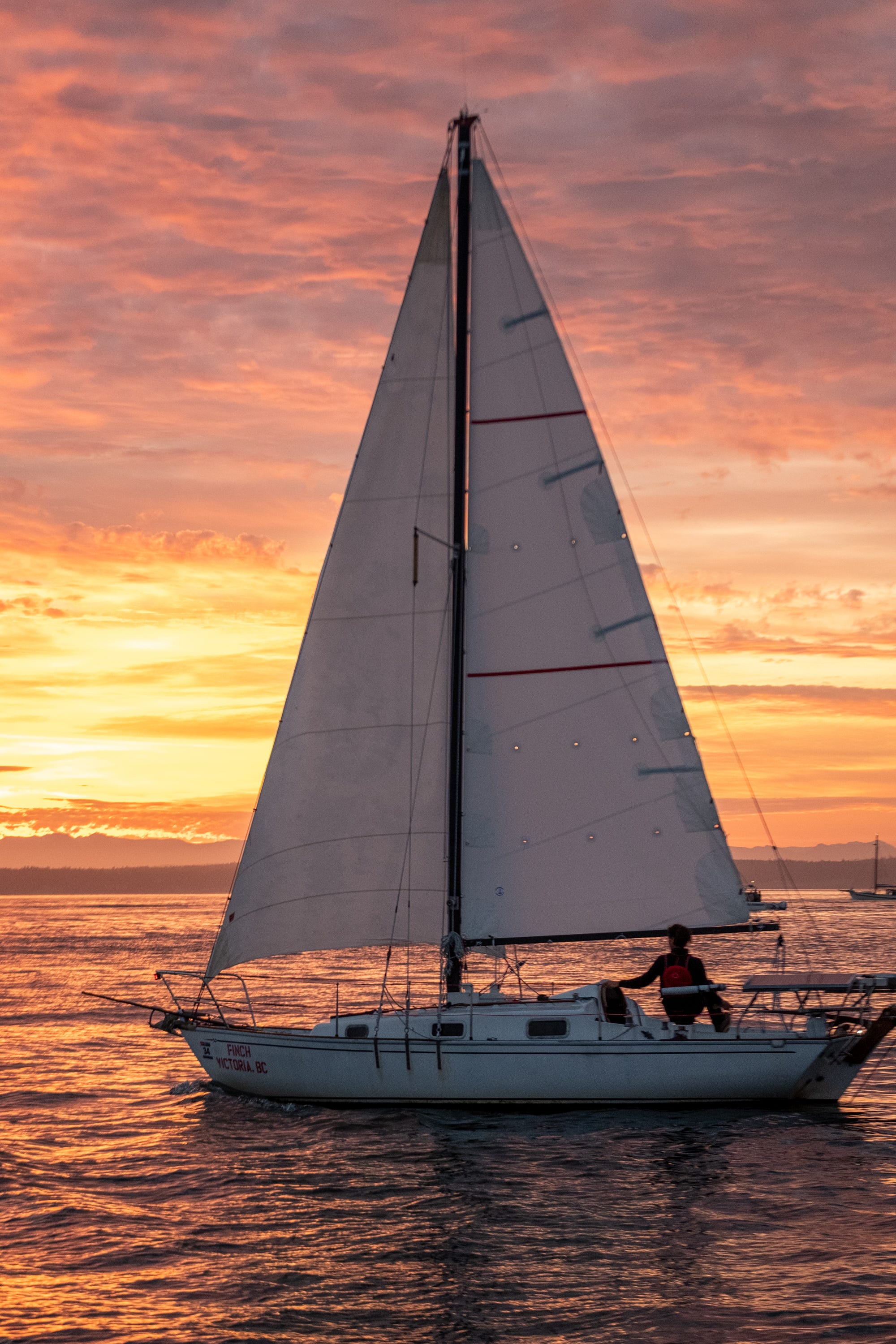
I had anchored the day before in Port Neville, waiting for the tides to carry me down to Seymour Narrows and through to the comparatively calm waters of the Strait of Georgia. This time of the year, with the hours of daylight so short, the ebb tides (flowing against me) took up all the daylight hours and the flood tides that would carry me towards Seymour Narrows meant I must wait for the dead of night to travel southwards.
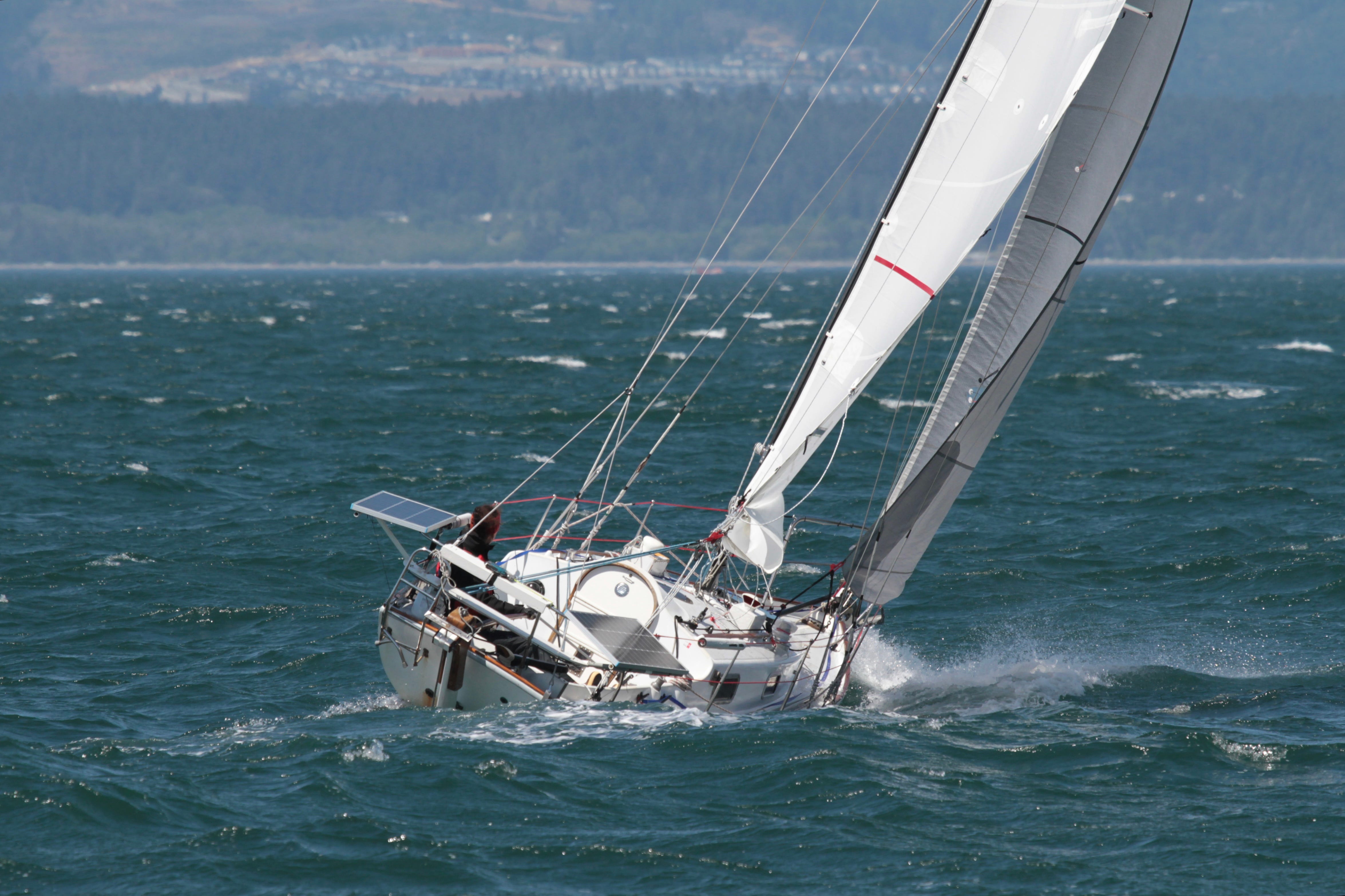
Finch was running under outboard motor in the dead calm of the night, near 2 a.m., and I was below in the cabin cooking yet another pan of quesadillas to keep myself warm and energized during the long fall nights. It was cold, not too far above freezing, but clear and black, the stars not peeking out from a high level layer of clouds but the darker outlines of the shore and trees clearly visible against the ever ever-so-slightly lighter water. The tiller pilot was steering Finch, I was having to make adjustments and occasionally take the helm as we steamed down the channels, the ever-growing flood tide beneath her keel drawing her further and further along towards our destination. I would peer forward, searching for any hint of whales, or dolphins, other boats, or logs, but despite the frequent skritch scratch of small branches and bark stripped from driftwood against the hull, everything had been quiet.
I ducked below, flipped a tortilla, and as I came back up to resume my cold and lonely watch, there was a massive thud! Finch, her 5,500 pounds of momentum carrying her along, continued forward and rode a little higher in the water for a moment as terrified, I ducked aft, scrambling for the outboard motor’s handle. If I could get to the throttle and shifter in time, I could forestall what I imagined the danger to be: a branch from whatever massive hunk of log I had just struck breaking a prop or stalling the engine. Instead, as my hand met the shifter and my ears heard the scrape and groan of the log working its way further under the boat and aft towards the rudder, the tiller next to me jumped upwards and for a quarter of a second hung suspended before flailing to starboard and tilting away and below the surface of the water. The outboard engine was knocked upwards as well, one of the two mounting screws sliding upwards and as the rudder vanished below it stopped. I was stunned into silence for the span of 20 seconds.
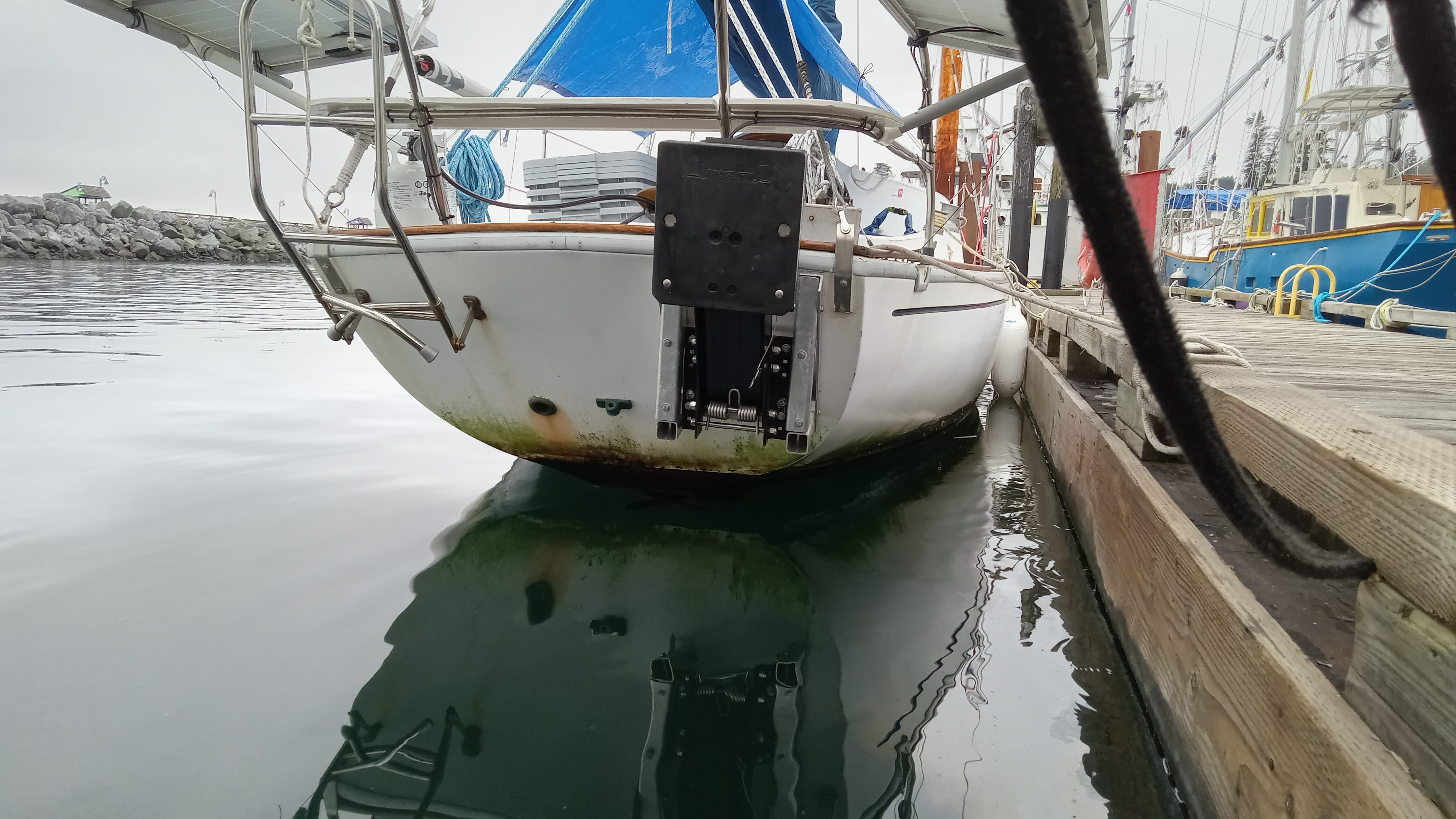
Never had I imagined that any log could tear off the rudder of Finch: a full keel boat with an outboard hung rudder, its forward end protected fully by the rest of the boat. But there was no time to waste. Finch was already turning sideways, with the flood tide carrying me further south and drifting slowly towards the shore. I had to get somewhere safe and try to save the boat and by the luck of whichever smirking god still grinned down on me, the outboard was still attached. I jiggled it back down into position, and by some miracle it roared to life again with only a moderate vibration added to show the effects of whatever we hit. Maybe a minute and a half had gone by at this point, and some small part of me hoped that I was mistaken, that the rudder had just sunk a little and bobbed back to the surface and maybe I could still rescue it and return it to its spot on the stern. The boat was controllable with the outboard motor as a stern thruster, just barely, kind of skidding like an over-enthusiastic teenager in a rear-wheel-drive truck as I over-corrected with the motor to get her turned up-current and back to the site of the impact.
I was confused, even as I flipped on the little spotlight I carry in the cockpit: where was the log? This was not the first log Finch had hit, truth be told. On the race northwards that spring, 3 times I had missed sighting substantial logs in the water and the shuddering thud of the hull impacting them had startled me, once when I was taking an 18-minute nap below as we tried to make way north. But this impact had been something else entirely. I played the spotlight over the water while struggling with the outboard’s tiller, far over the stern as it was, and eventually I saw the cause of the impact. Low in the water, perhaps waterlogged for far longer than most of the already-dangerous logs that riddle the north coast waters, this was a behemoth. Long since stripped of bark, as I motored Finch in a circle around it, it must have been 6 feet or more in diameter, and nearly 40 feet long. I stared out, peering into the still-empty night, but around the log was no sign of the rudder whatsoever. It was gone, and we’d have to carry on without it.
I think at this point some of the reality of the situation started to hit me, and I shifted the motor to neutral and ran below to peel up a floorboard and check the bilge. Surely the kind of collision that tears off an outboard rudder could have cracked my hull and started to admit water. A little panic, staved off so far by the necessity to act quickly, set in, but no water revealed itself to me. Finch was whole. In the cockpit, I assessed the fuel situation: 15 litres left, maybe 18, and about 5 hours of the flood left to me. Seymour Narrows, and beyond it Campbell River, was still within my reach. And the forecast for the day, scrawled on the whiteboard inside the cabin from the last hour’s VHF weather report, said I had just the one night of calm before gales would be whistling northwards again. Finch was controllable at the moment, with the outboard running, but surely with any wind against me it would not be so lucky. We had to make it to Campbell that morning.
The flood tide was still running southwards, and with 5 and a half knots of additional speed the outboard could take me south just in time to make it through before Seymour turned against me and the gate slammed shut. The boat was weaving in the wavering currents, especially rounding the last turn from east to south, 10 miles from the narrows. Like a fishtailing skier, careening just in control down an icy slope, my boat worked her way south. And the last remains of my luck presented themselves to me as I entered Seymour Narrows itself: no tug and tows to oppose me, and no speeding fish boats to throw Finch around. Still, we drew a few circles on the map as the whirlpools in the narrows spun us 360 degrees around, but with the little bit of outboard motor to help my control it wasn’t too difficult to power out of them, and within 45 minutes, make the safety of the Fisherman’s Wharf in Campbell River.
But, what next? I had sold my old inboard to finance my Race to Alaska, starting the race with barely $70 to my name. There was really only one thing to do: get to Port Townsend as originally planned and find work for the winter. Unfortunately, poor Finch would have to stay in Campbell River, rudderless, until I had enough funds to haul her out and build a new rudder, which would be a whole different kind of adventure. •SCA•
If this story resonated with you, a GoFundMe has been put together to help with Finch’s ongoing rebuild.
Excellent story. Have heard more than one rudder/prop damage tale from vessels big and small hitting deadheads at night. Look forward to the conclusion of your story!
6x40 feet is ENORMOUS! Glad you survived!