
Cabbage Key Rendezvous
Article by Ida Little
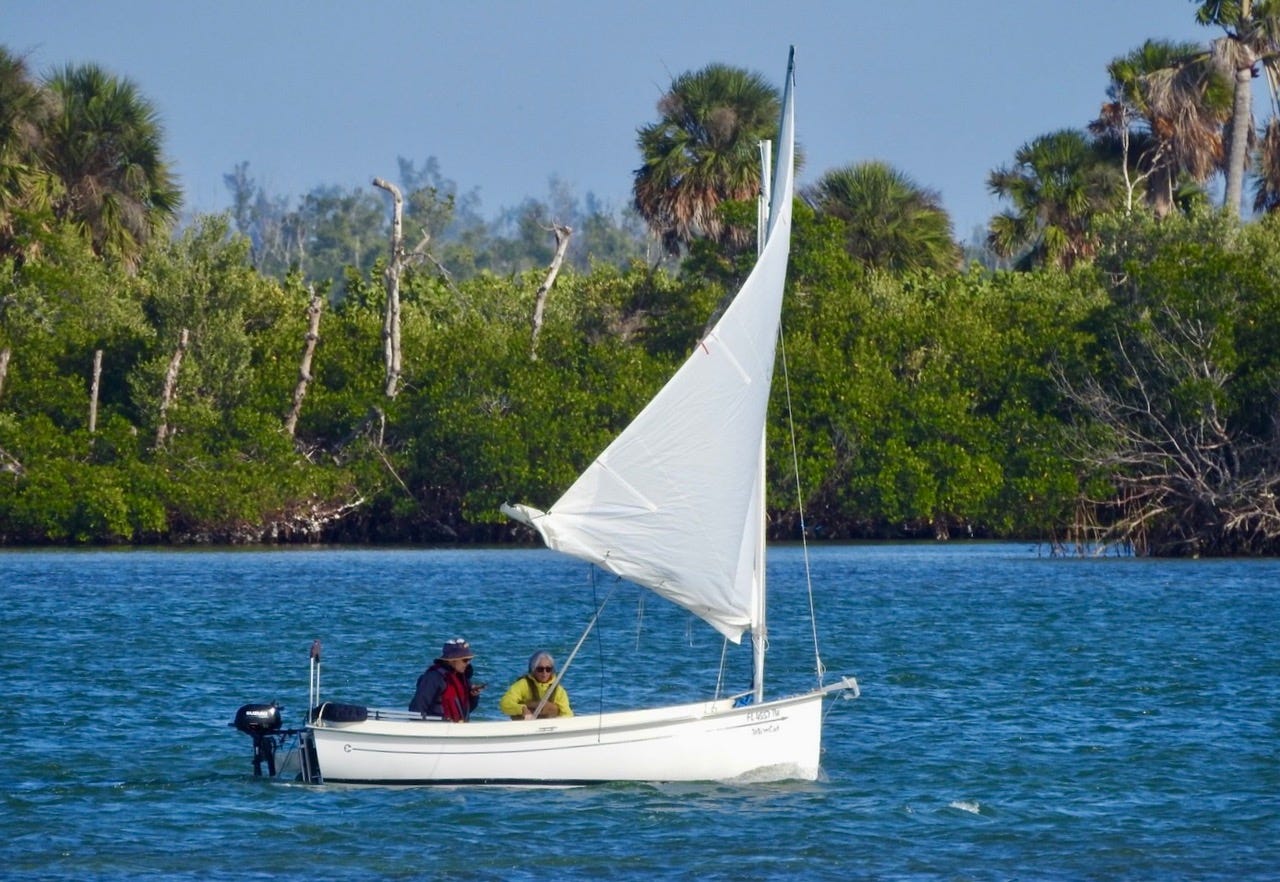
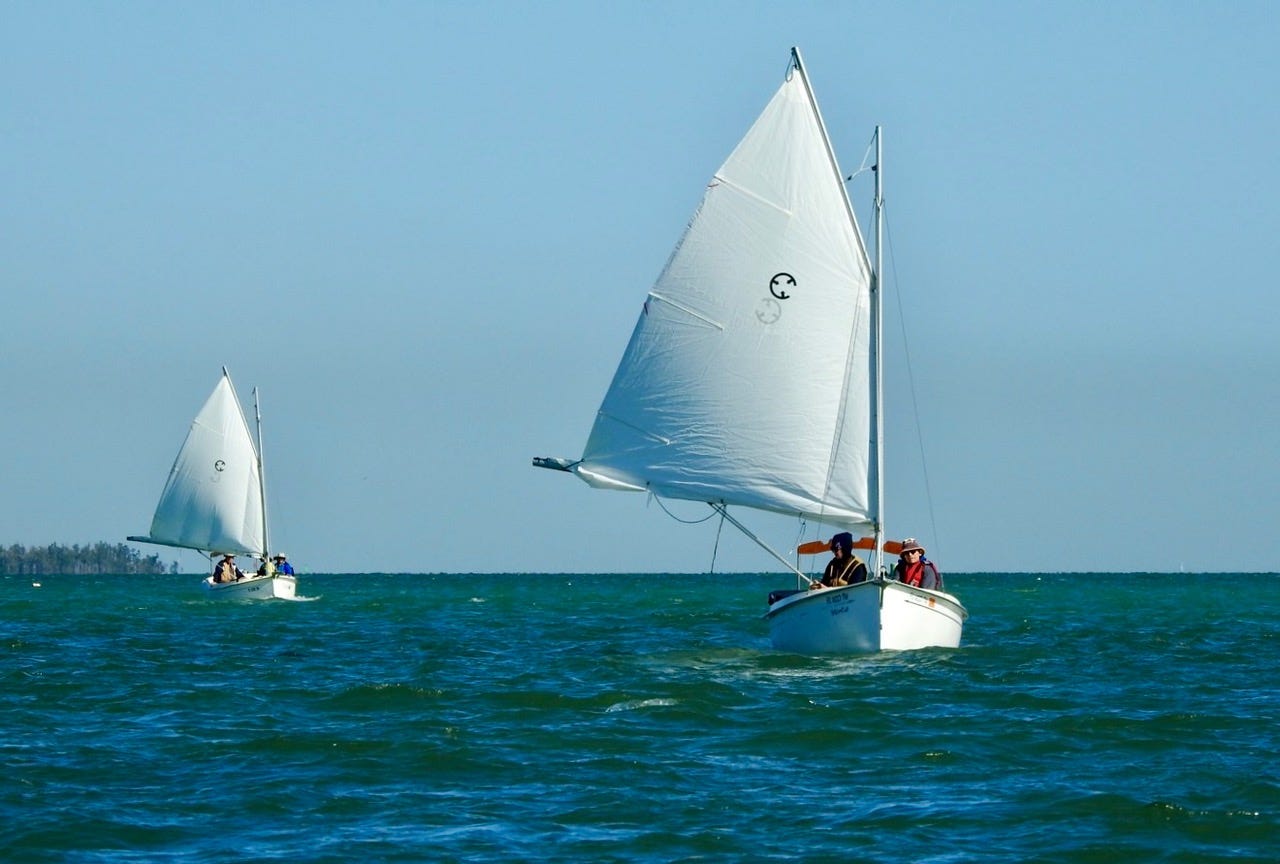
We decide to leave a day early, ahead of a Cold Front, with calm winds and slight threat of thunderstorms. Though the sail from Pine Island to Cabbage Key is just over five miles, the next day’s forecast calls for gusty 20+ knots of wind. That’s about 10 knots more than the Com-Pac 14 Picnic Cat likes. Especially when loaded with gear for three people and food to share with more. In fact, before we shoved off Donna handed over our huge cooler to John on his Com-Pac 17 Sun Cat. That done, we had most of the gear stowed below the cockpit hatches. Most, anyway.
Still….
There was that time in Canada when Michael and I thought we had time to sail across a bay ahead of an approaching squall. We got half way across before the black squall slammed in to us with driving hail. Stones pounded our naked bodies (it had been a sunny, warm day on the wilderness lake). My arm on the tiller went limp when an icy chunk slammed against a nerve. The canoe began filling up with hailstones and just as we began to sink, the canoe grounded on the shoal shore of an island.
Still….
Staring across the launch ramp into Pine Island Sound, deciding whether to cast off right now, or to hesitate for more preparation, I lean towards “do it now.” The hail storm trauma was enough of an outlier in my sailing life that I favor the attempt. After all, the waters are so shallow and the islets so profuse that this is no life or death decision.
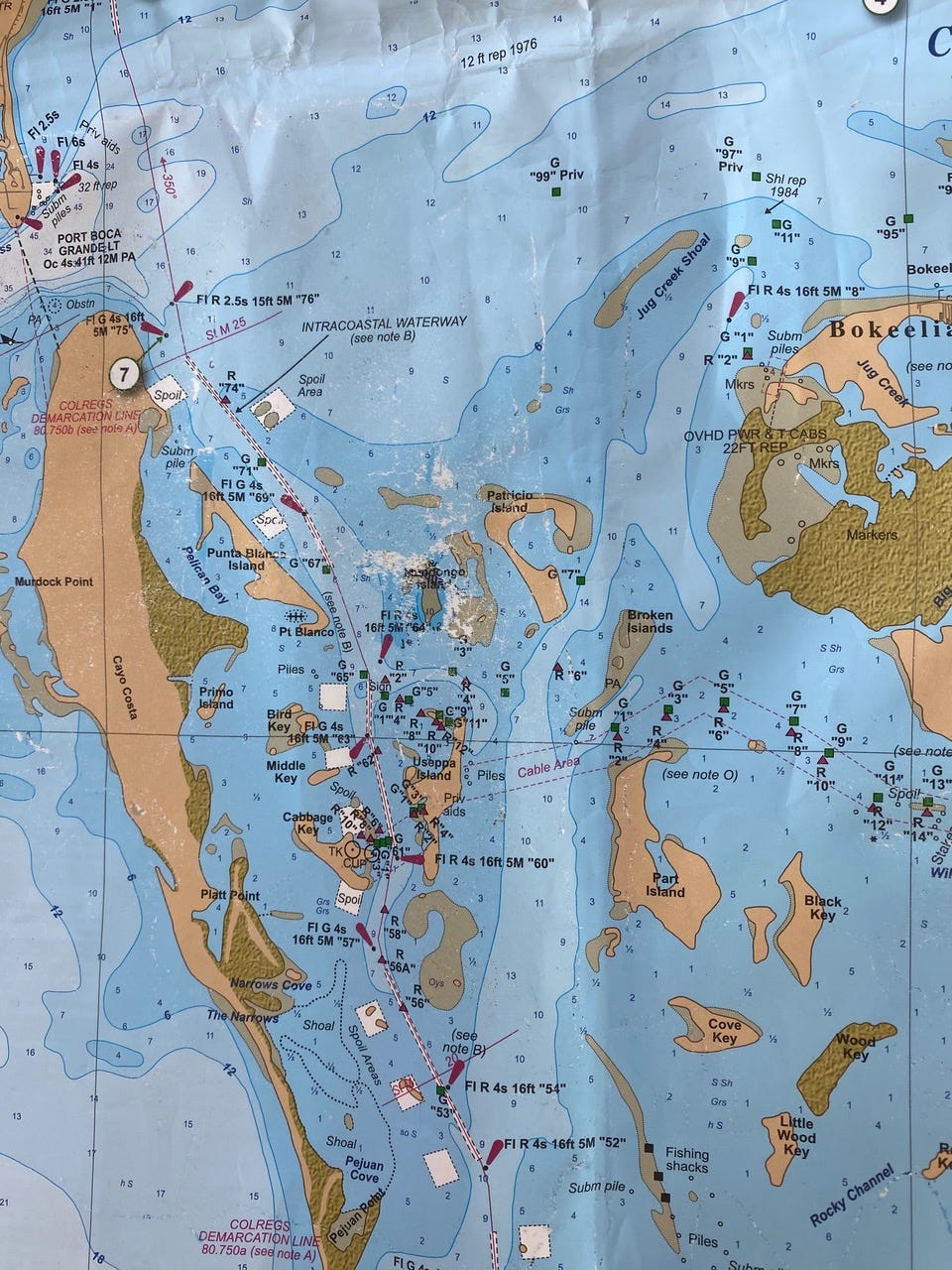
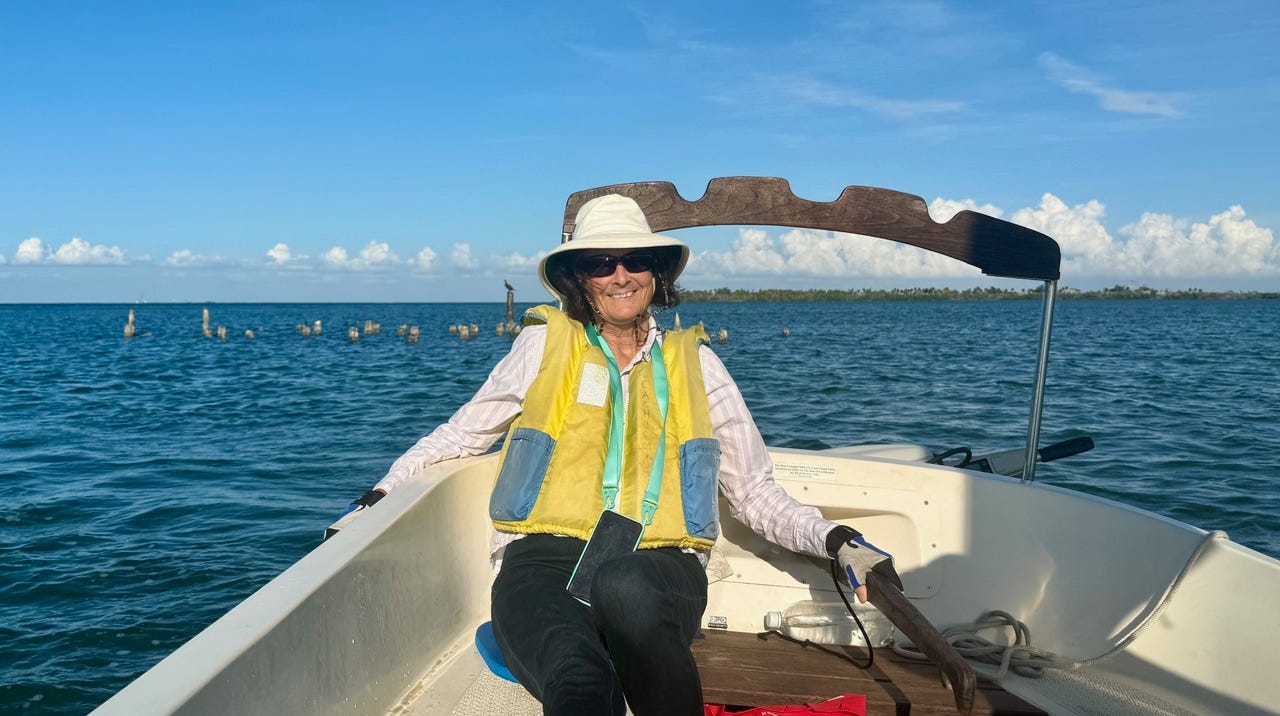
Donna and David agree. And for nearly two hours we are moving quietly under electric motor across the glassy Sound. The clouds dissipate. Streaming light reveals shoals and shallows so clearly it is like gliding across an aquarium. This is the joy of 6” draft and a centerboard warning signal. Even so I manage to run us up on a shoal so that David has to push us off with an oar. Not get out, just push.
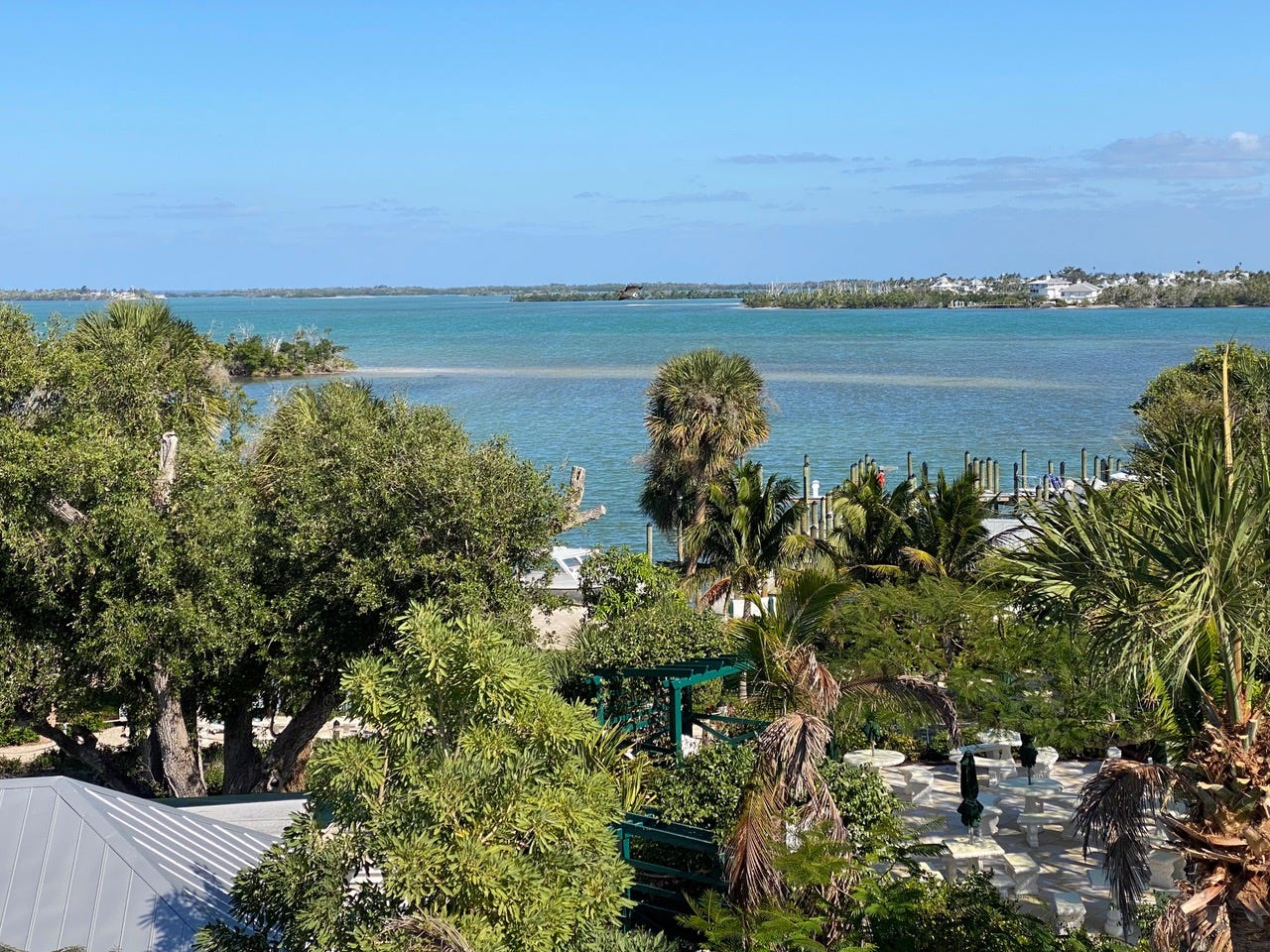
The short distance from Pineland Marina to Cabbage Key doesn’t measure the travel through time. If you Google the Key you’ll read over and over about how it’s like journeying to a by-gone era. Not as far back as when the Calusa and later, Cuban fishermen, were living here, but back to the ‘30s when the Rineharts created a tropically natural island get-away. Clustered loosely amid sea grape and cabbage palm, the funky old dining cottage and bright white wooden cottages facing the sound look skeptical of the changes they see. Or maybe that’s just me.
This is a place where we can tie our boats to docks provided for the two cottages. For a few days this becomes a kind of home for the dozen of us who come to sail and and share food and stories. One couple new to the West Coast Trailer Sailing Squadron (WCTSS) felt they’d found their tribe. As had I, after losing my love and sailing partner Michael.
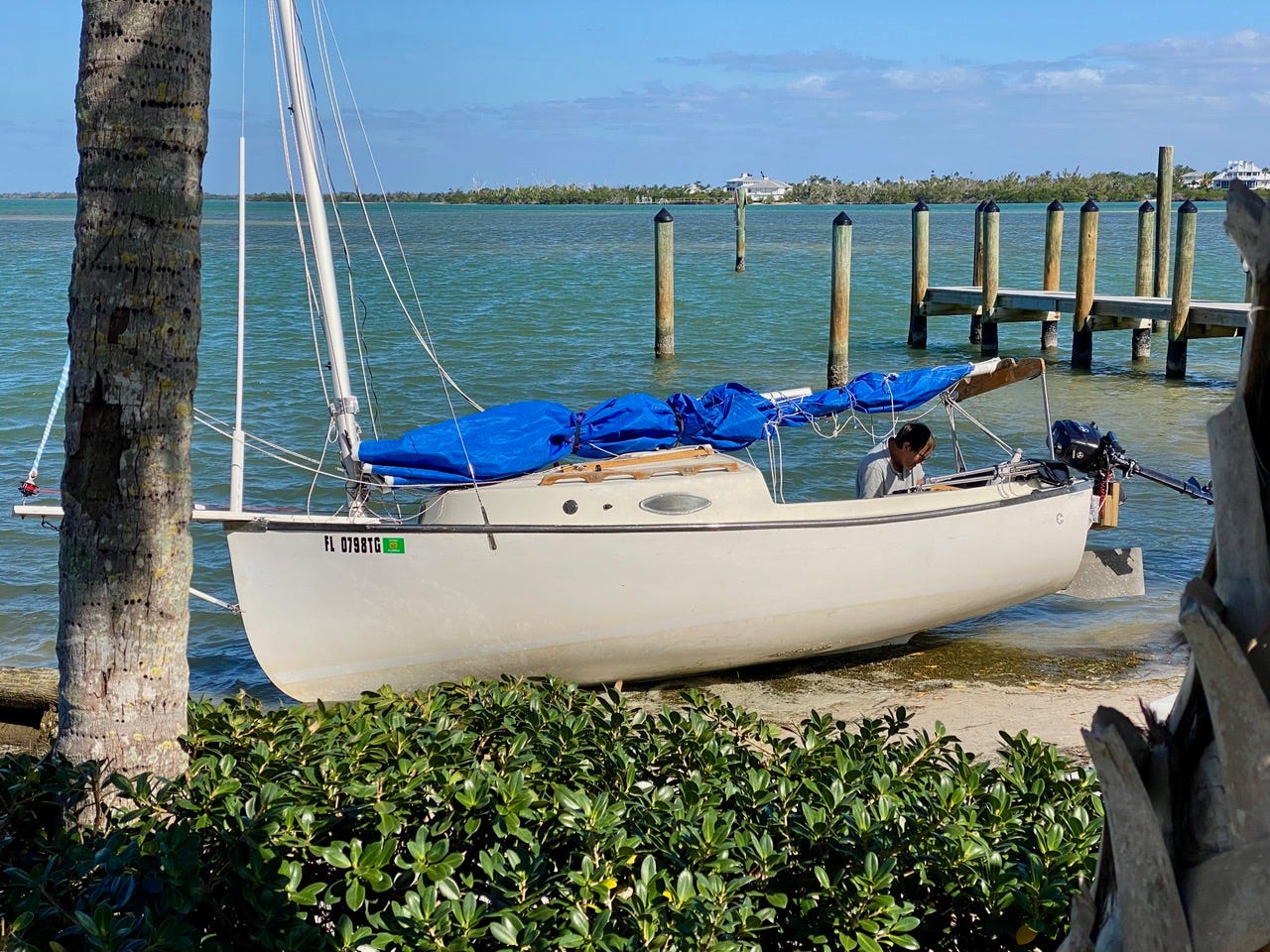
By the next day, sure enough, the winds are howling out of the north. Hard but fair wind for the sailors coming from a causeway to the north as well as from Pine Island. Dan, aboard his Wayfarer, is fairly flying when he rounds the channel toward the dock. He’s pretty much of a show off as he luffs the reefed sail and gently brushes the dock. As he is the supreme commander in chief responsible for all this fun, he has a reputation to maintain. Close behind are Steve and Linda on their Lightfoot, and Mike and Cathay on their Sun Cat. Roberto, aboard his CLC Passage Maker, races through the channel expecting to land on the beach behind the mangroves. At the last minute he sees the beached Sun Cat blocking his landing. In that instant he heads up to avoid a crash. But only with the Cat. The piling doesn’t let him pass without a courtesy smash to the nose. Roberto gives what I think of as his signature “oh well” grin. When I ask about the damage to the bow later he shrugs and says, “I built the boat, so I can repair it no problem.” Again, the grin.
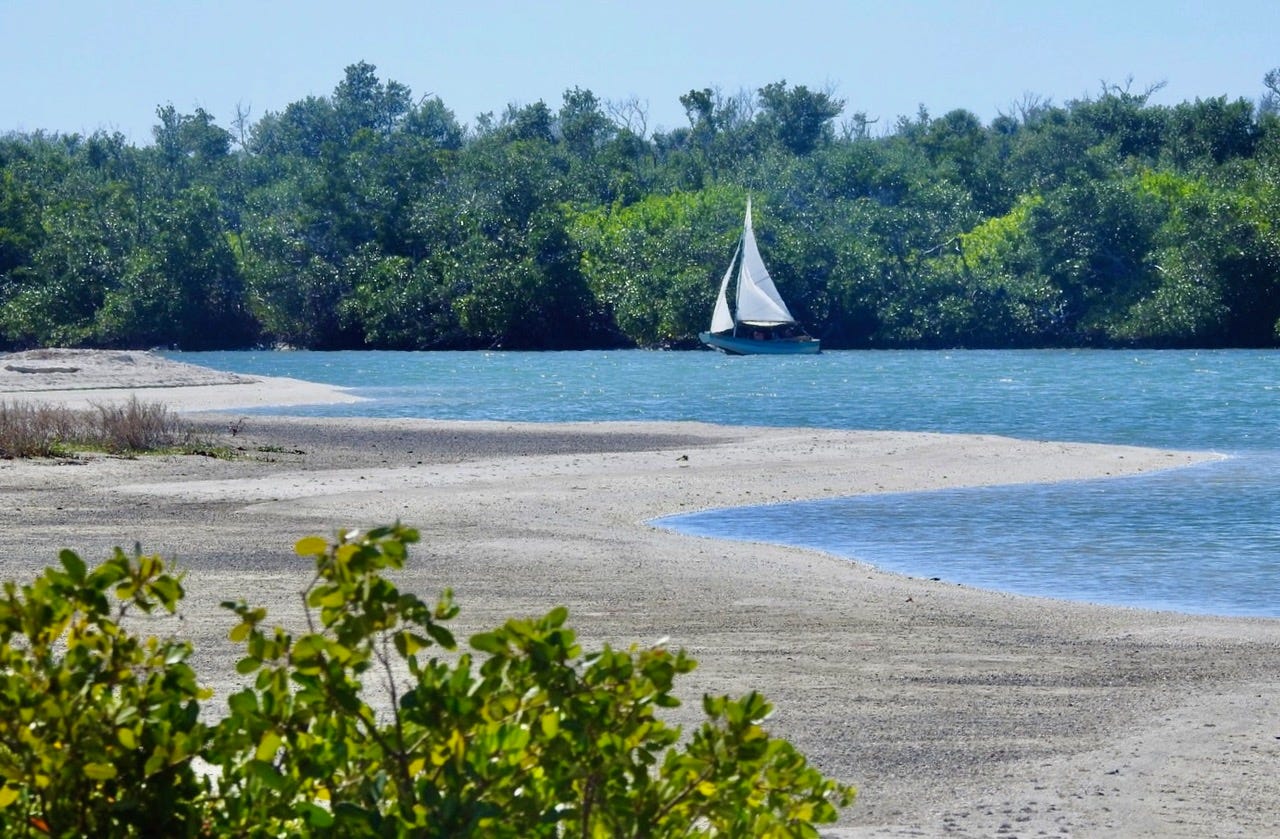
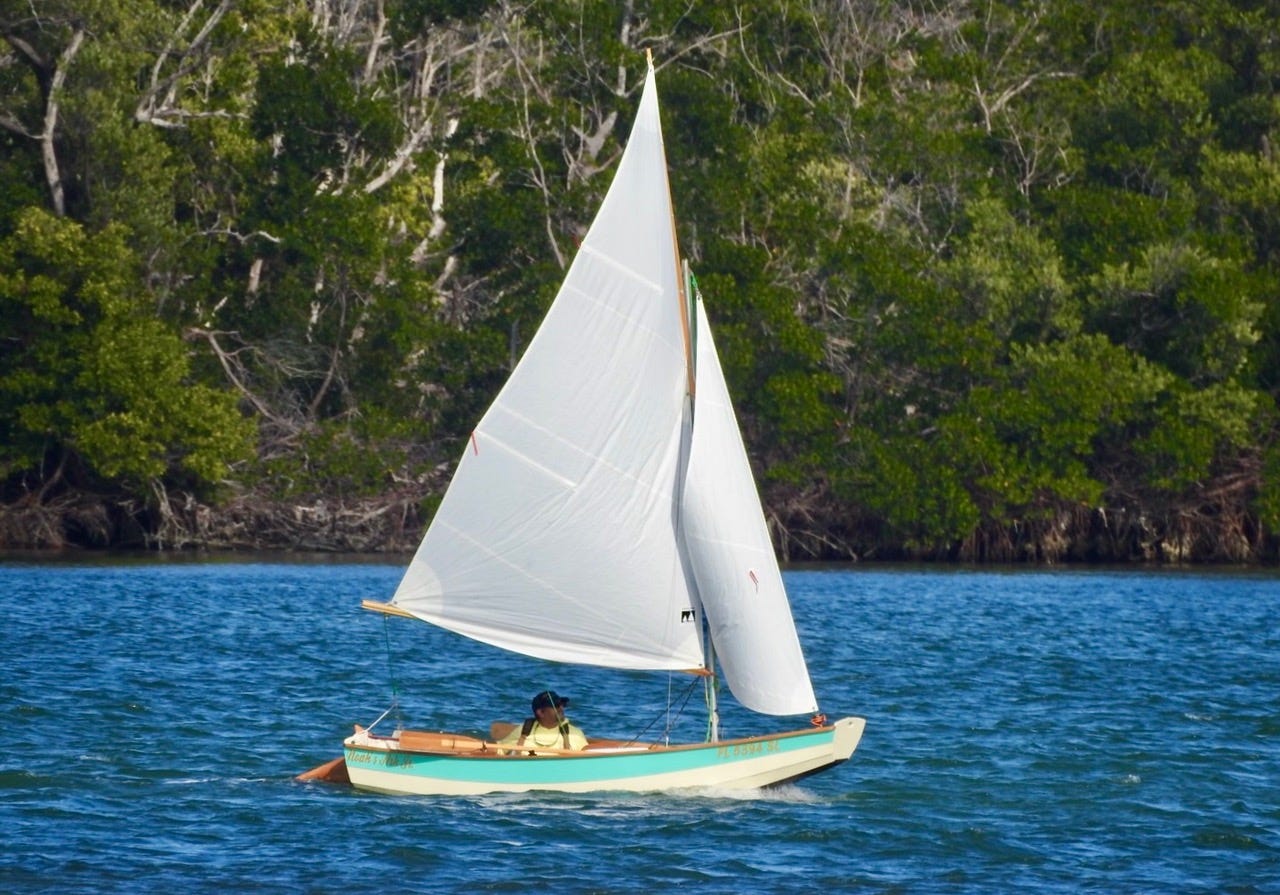
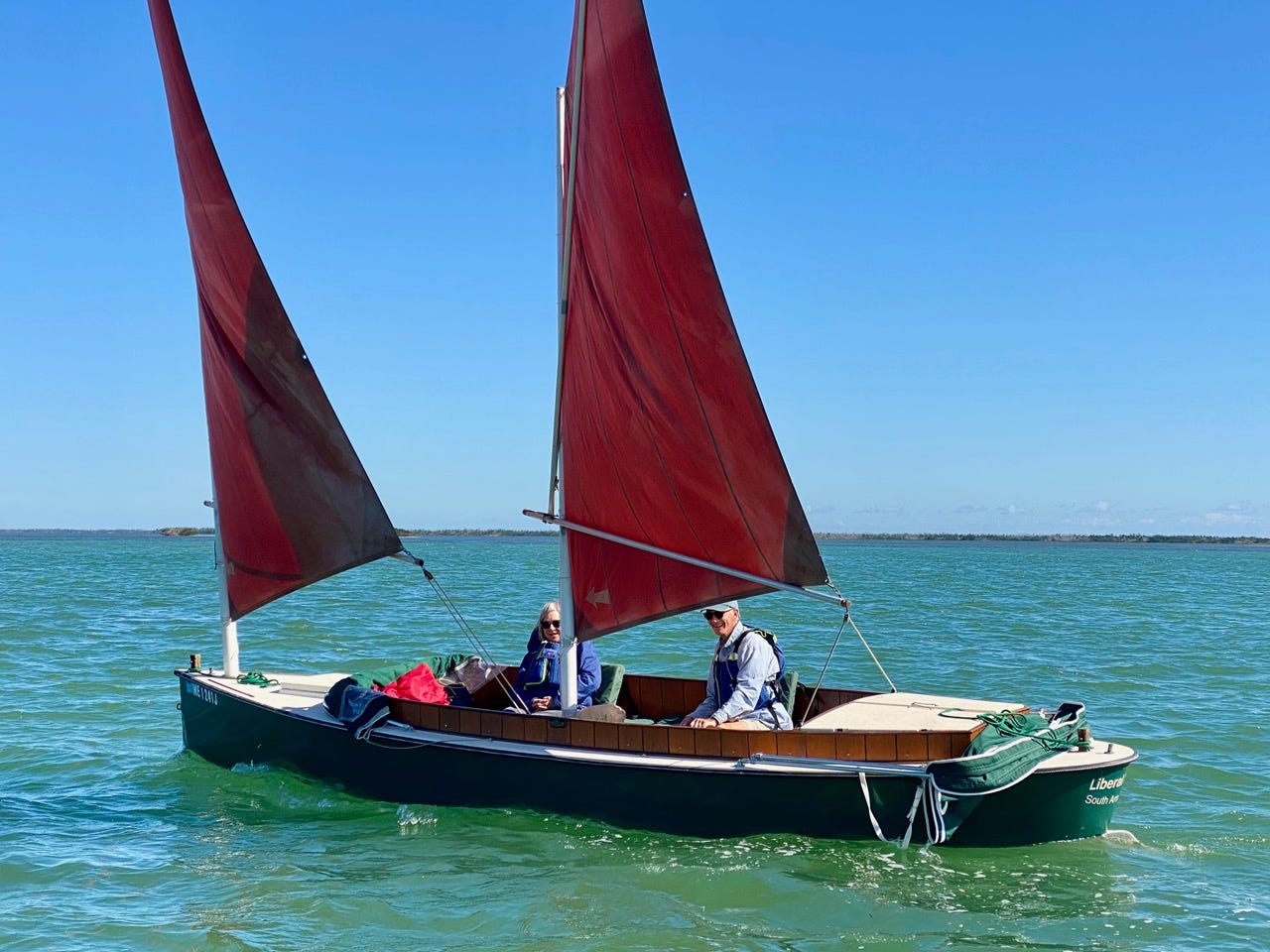
The grown-up group of Swallows and Amazons spend the next morning sailing the length of neighboring Cayo Costa island southward to a beach on the south tip, then back north again to the north tip. It’s all play, skirting the shoals—or not—and weaving among mangrove clumps and providing waves for dolphins…and whispering to pelicans asleep in roosts among the mangroves. One boat has manatees swimming alongside. Osprey cry overhead and a Bald Eagle glares from a high perch and oh, I can’t believe it, a swooping Northern Harrier?? I saw two otters who didn’t see me but then did see me and were pretty sure I was after them. Gone.
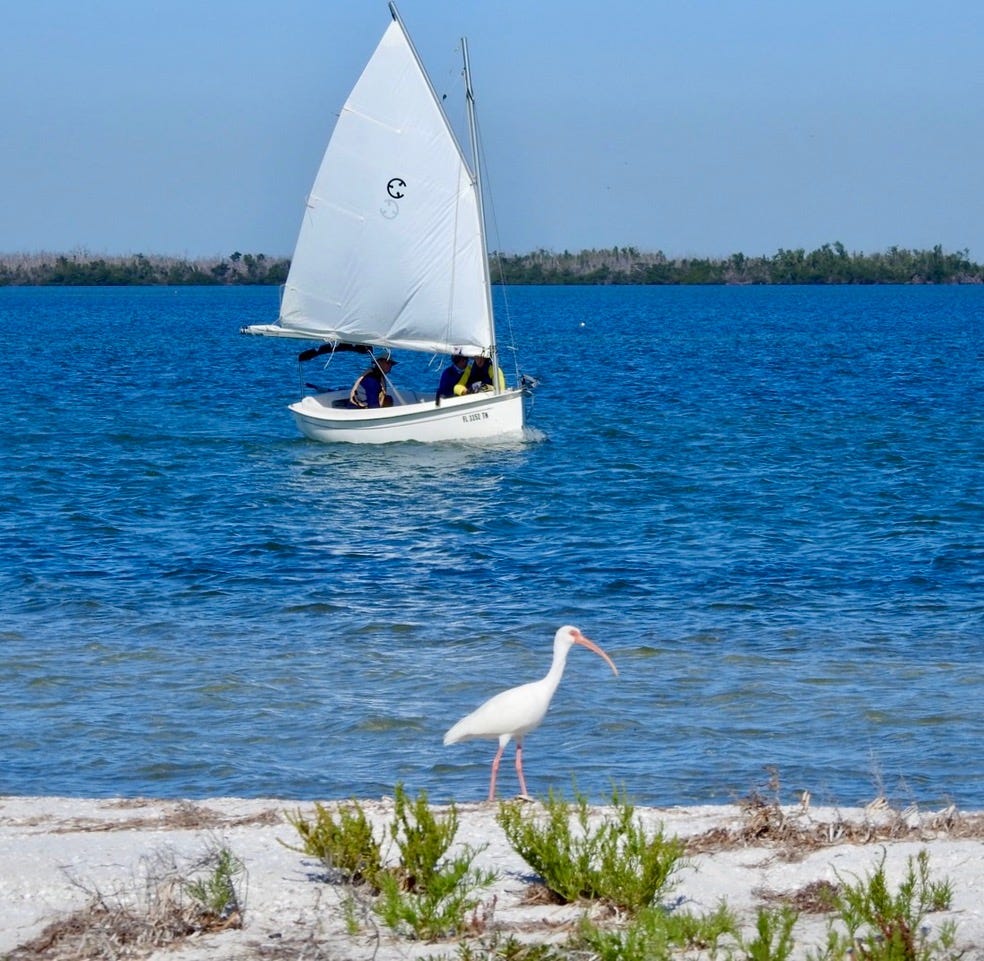
Most of Cayo Costa is state owned. And until the damaging hurricanes of the past few years, the island supported a state park with camping. Seven miles of white sand beach run along the island’s western flank making it one of the most precious undeveloped islands in the state. And on the eastern side, where we are sailing, there is a blue green lagoon inside a beach sandbar where we can all slide ashore. I came here with Michael in our sailing canoe back in 2010. We’d stuffed that 19-foot sailing canoe full to the gunnels then piled folding chairs on top so that we could sail over and stay for weeks, rather than years as we had done in the ‘70s and ‘80s and ‘90s. But long enough to feel immersed.
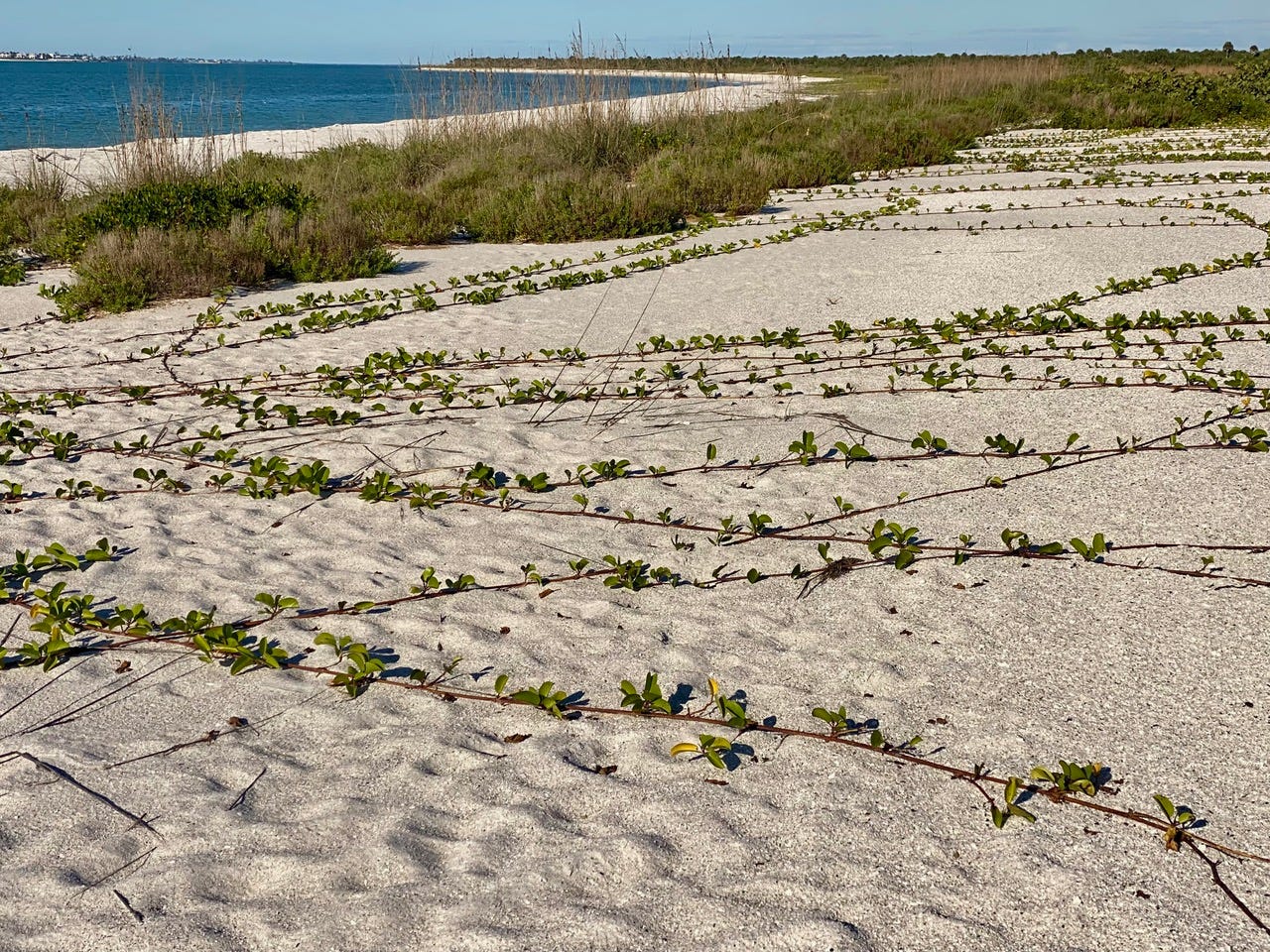
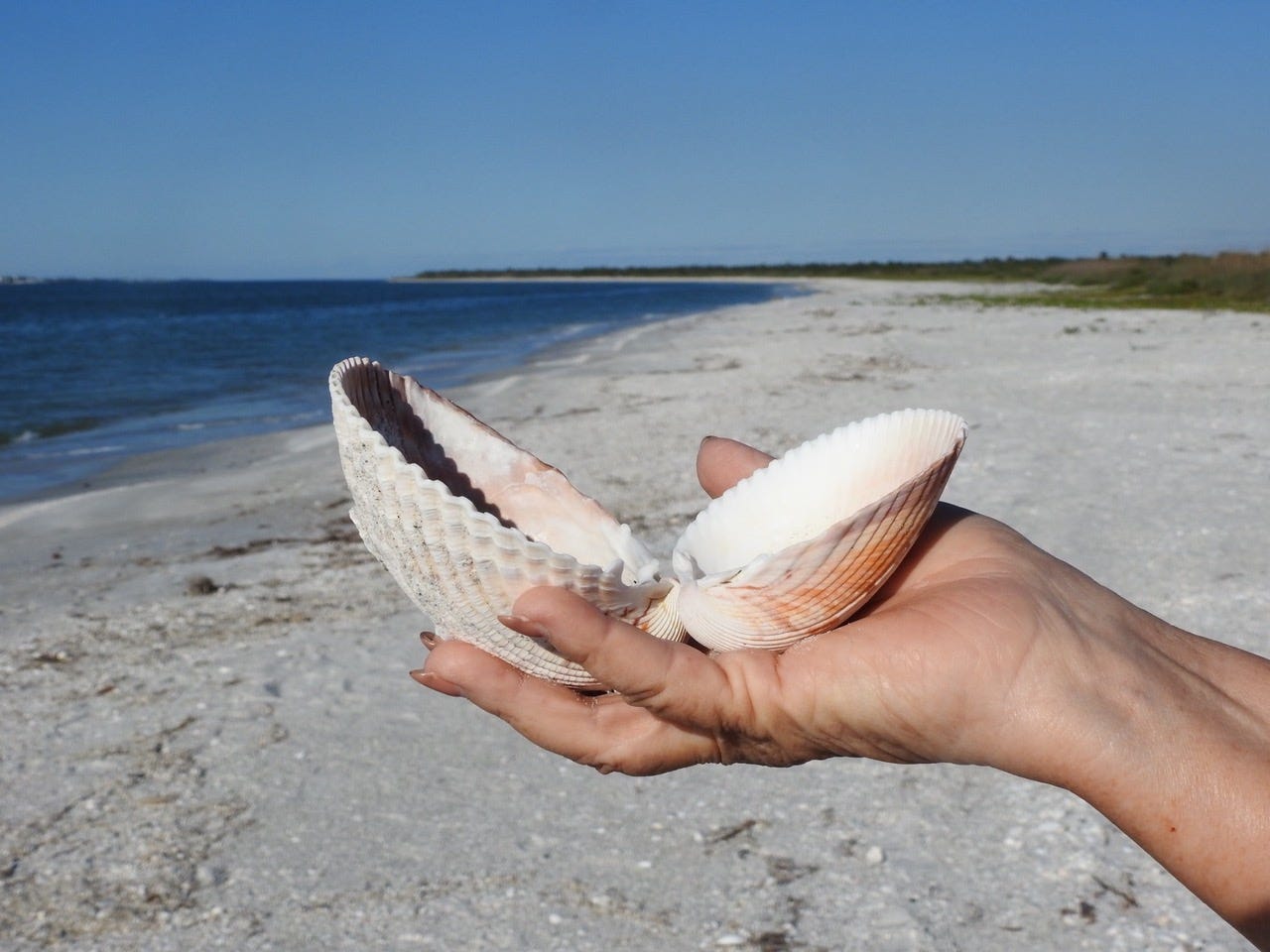
Donna and I walk the half a mile sandy road across the island under the shady live oak trees. “Donna,” I whisper, “remember this moment. We have the island pretty much to ourselves.” I am so aware of how much this will change once the State Park is repaired and campsites and cabins are occupied and multiple ferries bring visitors throughout the day. For now, it’s me and Donna and David, (watching over the boat at the beach), and a couple rangers futzing with equipment.
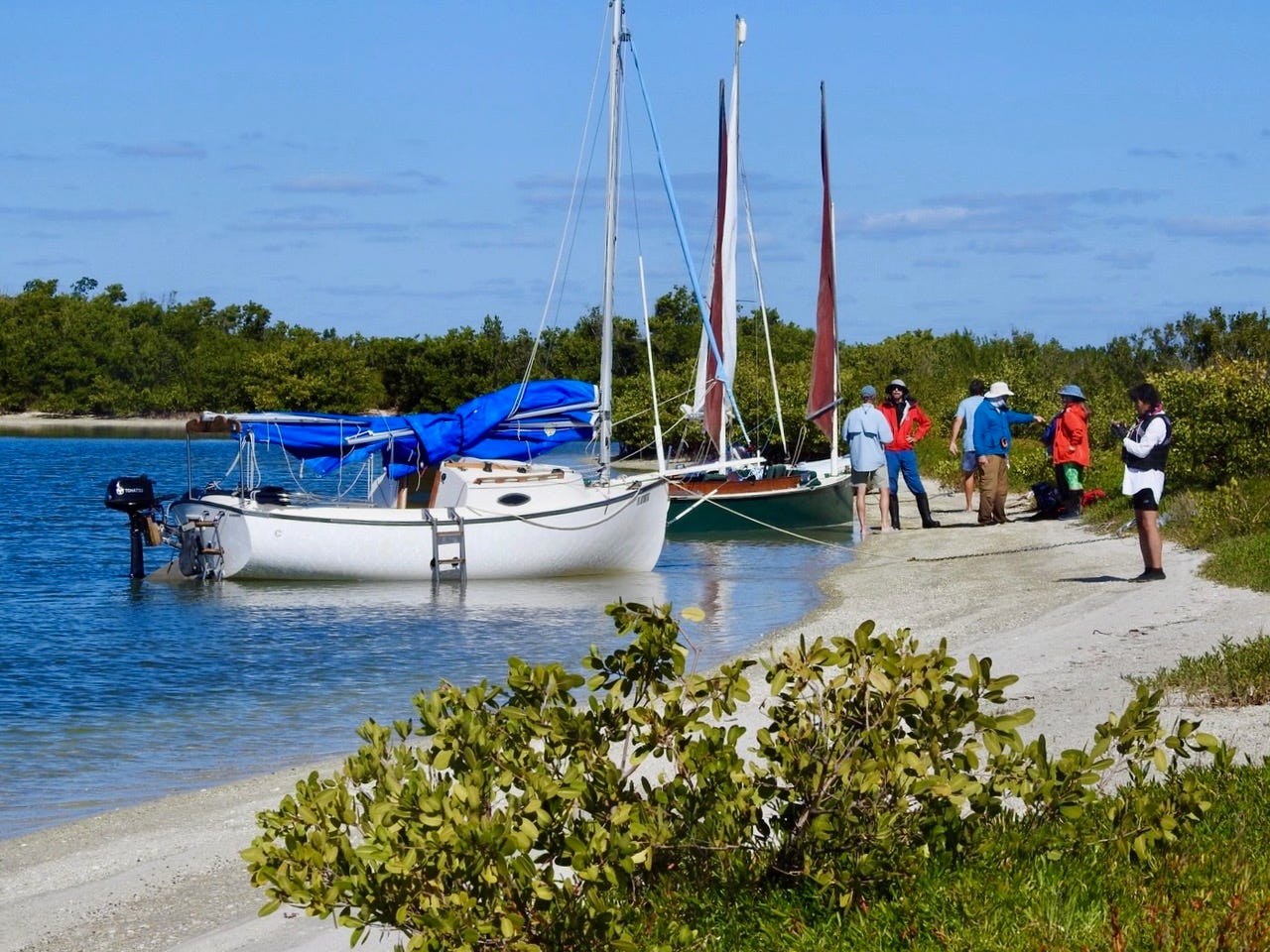
Tomorrow we will all sail back through time to the current era, somewhat nostalgic for the past, and even more appreciative of the present pockets of paradise. •SCA•
Ida is the author of the book Beachcruising and Coastal Camping.
Ida, thank you for an excellent tale of sailing in one of the best spots in FL. It takes me back to many years ago when i was sailing the area in my Core Sound 17 ‘Lively’.
Thank you, Ida for continuing to share your adventures with the small boat community.