
Article by Jerry Culik
Recently Small Craft Tasmania gave us a YouTube video from the 2025 Australian Wooden Boat Festival that is chock full of John Welsford’s design wisdom (see The Modern Cruising Dinghy). I get at least one more nugget every time I watch it. And since I’ve been contemplating a new small boat build, and I’m not getting any younger or nimbler, I’m focused on one of his themes that seems particularly relevant: safety. In the video Welsford briefly outlines how he designs safety into his boats, and “buoyancy” is a critical contributor to it. Intrepid sailor Howard Rice tested Welsford’s theories by capsizing and reboarding Welsford’s SCAMP in a video (SCAMP Active Capsize) that’s now gotten more than 100,000 views.
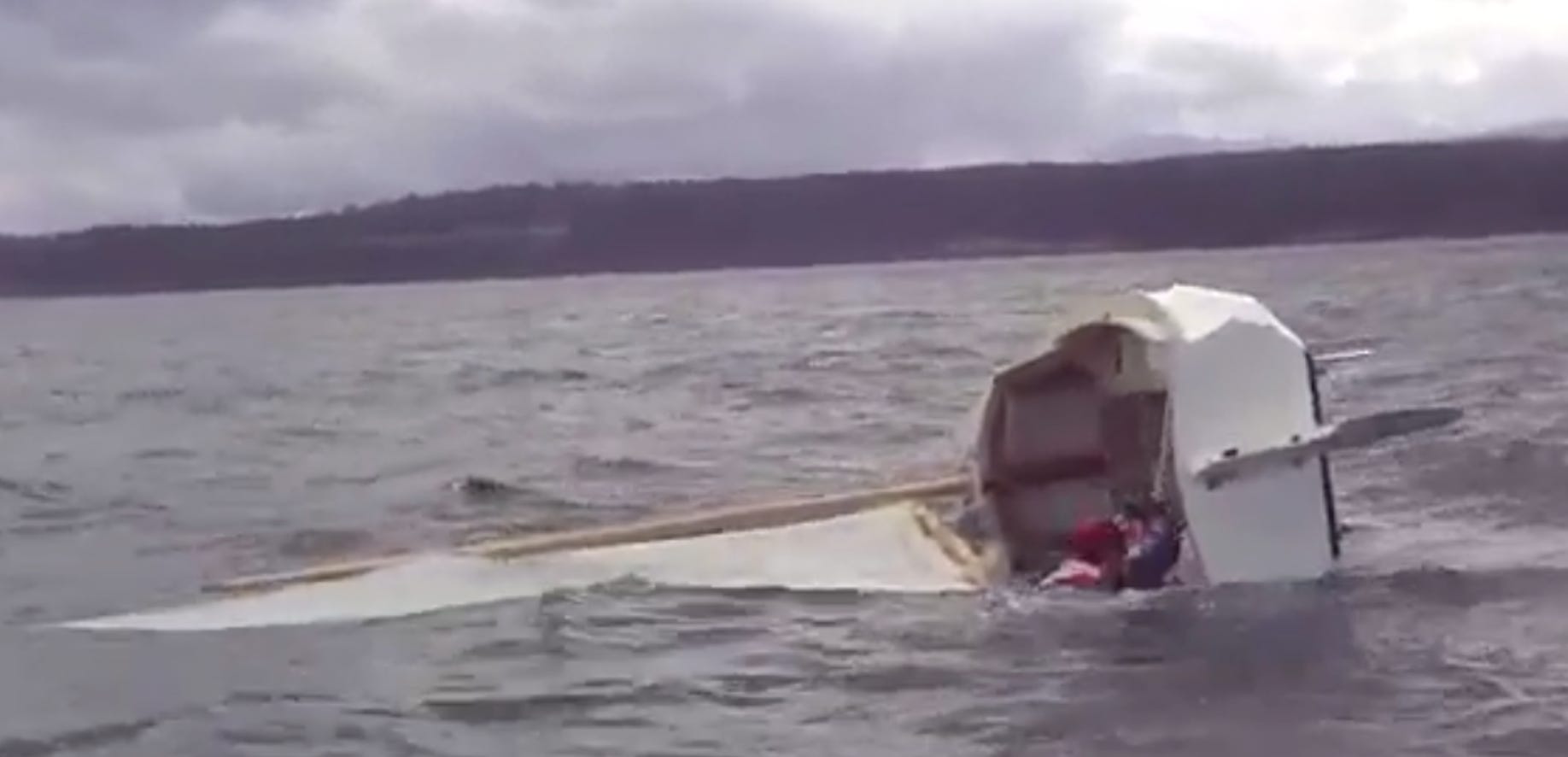
Buoyancy is usually defined as how much weight a hull is capable of supporting – the hole a boat makes in the water. And you need it to figure out waterlines and maximum loads. Flotation, specifically positive flotation, is the displacement needed to keep a swamped boat (and load) afloat. For Welsford, effective buoyancy (flotation) in his dinghies means not just that the boat can’t be sunk if it’s holed or capsized. Besides keeping the boat afloat, the buoyancy (positive flotation) must be distributed such that the dinghy can be righted from a capsize, a person can climb over the side and back into the boat, and that it will float high to be able to be bailed out. Welsford specifically avoids using the transom to clamber aboard because doing so will likely pull the bow up; in windy conditions, that could easily result in the boat sailing away from the swimmer. And, of course, the centerboard trunk (and outboard well) must be designed to avoid re-flooding after the dinghy is righted.
Antipodean dinghy guru Michael Storer, designer of the Oz Goose and Goat Island Skiff, provides a lot more information and ideas about capsizing and safety on his website. I zeroed in on “When Safety features may make a sailing dinghy less safe,” which describes a project to develop a light, single-handed, water-ballasted “raid” boat. But in this particular case he never published the plans because it was very difficult to reboard the prototype dinghy after it got knocked down. His surprising conclusion: “More [buoyancy/flotation] is not more safe.” And he uses the project’s post mortem to highlight the differences between buoyancy in the boat’s ends—and positive flotation along the sides.
