
Anticipating Old Salt
Ruminations on the Birth of a Boat
Article by Greg Willihnganz
(Editors note: See bottom for an Old Salt update as well.)
From time immemorial we have taken to the sea in boats. We have fished from them, hauled with them, travelled down streams and across lakes, journeyed over oceans. We have lived on them and made our living from them. Water craft have been central to the evolution of our species and integral to the fabric of our lives.
But only within the last hundred years or so have the design and production of boats been geared to the simple pleasure of riding the water beneath the sky. In times past, recreational boats built solely for the enjoyment of their owners were the domain of the wealthy. Today the middle classes have claimed their right to “pleasure” craft which can be found in abundance around the globe.
Recreational boats are largely purpose-designed. They are created for racing, day-sailing, exploring rivers, camping, fishing, rowing, paddling, and cruising to new ports or unsullied natural preserves. Design parameters are tailored to what the small craft will do rather than who will be doing it, a secondary consideration.
Nowhere is the truer than in sailboat design. At the end of the Age of Sail, when canvas, cordage, and oakum gave way to steel and steam, great belching engines pushed their craft directly into the wind. The design of sailing craft, now limited primarily to pleasure boats, fell to naval architects who believed that purpose dictated all. Here is John Rousmaniere, writing in The Annapolis Book of Seamanship:
“The design in its entirety should be a frank, vigorous declaration
of the use to which the boat is to be put.” Those words, written by
Norman L. Skene in his manual Elements of Yacht Design, summarize
boat architecture in a nutshell.
But should they? Might we not also consider the needs and abilities of the operator, the man or woman in the boat? While it is certainly common to set priorities when designing sailboats such as speed, competitiveness, adherence to class requirements, or cruising creature comforts—this last limited to concerns such as how we may hide a miniature privy that will compost its contents—the physical abilities of the sailor are rarely considered and assumed to have some universal profile that will adapt itself to whatever boat the naval architect is designing.
Small boat design has long paid homage to the classic grace of a Herreshoff hull or the blazing quickness of a Hobie Cat, but after the flash and dazzle of this year’s wooden boat show have faded, after dreams of cozy berths and teak-lined chart tables have left us; there, at the edge of our minds, a whispered question lingers...what about the old guys? What about the seasoned vets decades past their prime who struggle to handle a recalcitrant Cunningham or step a 60-pound mast. What about their needs? Do we run the risk of driving them from the community of sail by giving them boats they cannot handle?
The design of a boat intended for the elderly and infirm might seem condescending; aren’t we all youthful and vigorous, despite our maturity? Sadly, no. Father Time has dictated that just as we acquired our physical prowess over a period of many years, so shall we lose it, slowly, distressingly, in the fullness of time in whatever time we have left.
But youthful enchantment with mastery of the sea dies hard, doesn’t it? Even in the shadow of the scythe, we remember pushing our craft upon the water, calculating wind and wave, matching our skills to the elements. The rise on the swell, the pull of the sheet, the slap of water on the hull, all the familiar routines of sail craft fill some inner need we are hard pressed to define.
Naval architects have, of course, made some concessions to the aging. The sliding hatch offers ingress belowdecks without the contortions of a pre-teen slipping out his bedroom window for a night of Halloween pranks. Multi-geared winches provide ratcheting power only a gorilla could supply bare-handed. But even so, many of these well-intended accommodations bear the faint whiff of afterthought. Rarely, if ever, has the design of a boat proceeded from the operator outward to the craft. Until now.
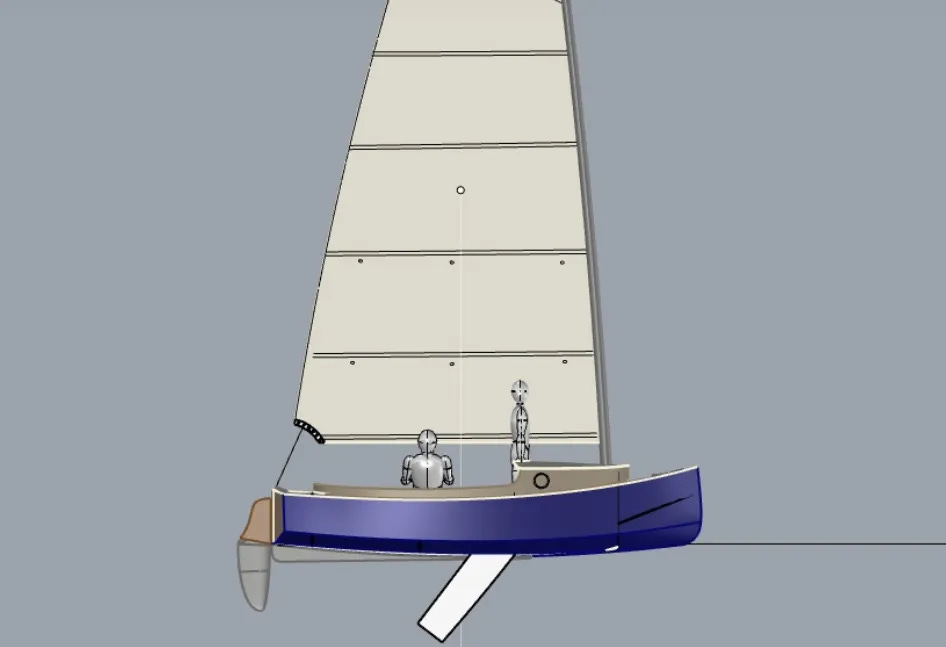
In a blaze of insight, Josh Colvin, promulgator of SCAMP, the odd duck of the cruising world, and Brandon Davis of Turnpoint Design, have winnowed the needs of a small cruising sailboat down to the barest minimum and then simplified further to create a boat of such crowning simplicity that a child can sail it (and probably will). But, as the unfortunate title of the boat proclaims, the real intended user of the boat is an Old Salt. Try to conjure the marketing plan for that title.
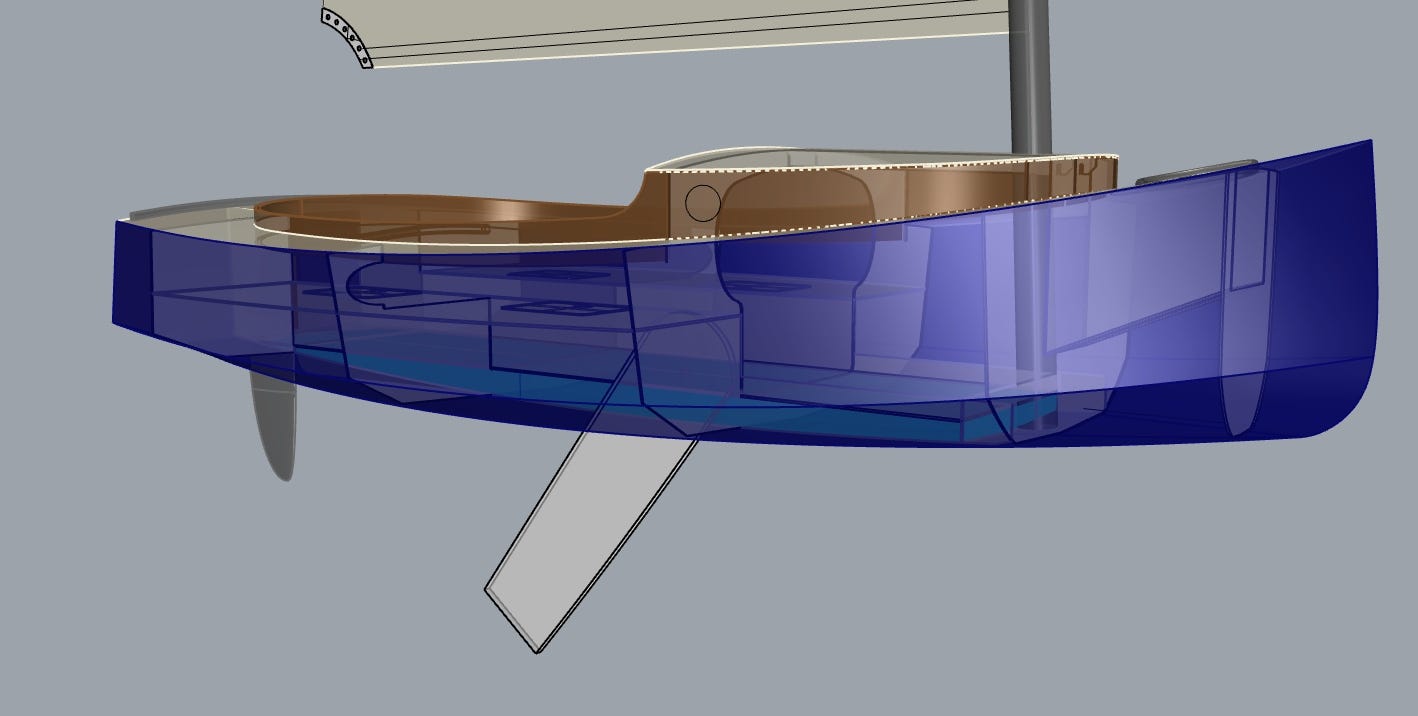
My reservations about the name aside, the design itself has a vigor of intent that rivals Captain Ahab onboard the Pequod. It is sailing made easy. No shrouds, no stays, no boom, no headsails, a light mast stepped through a slot in the cabin top, a wide, flat cockpit floor free of a centerboard trunk (but concealing a centerboard!), and a fully battened sail easily reefed—this is a design for the ages and the aged.
Of course, it hasn’t actually been built yet, but the initial version is nearly complete. When it slides down the ways—off the trailer actually—a new era of accommodation and design will begin. And this old salt will be privileged to be part of it. •SCA•
OLD SALT UPDATE:
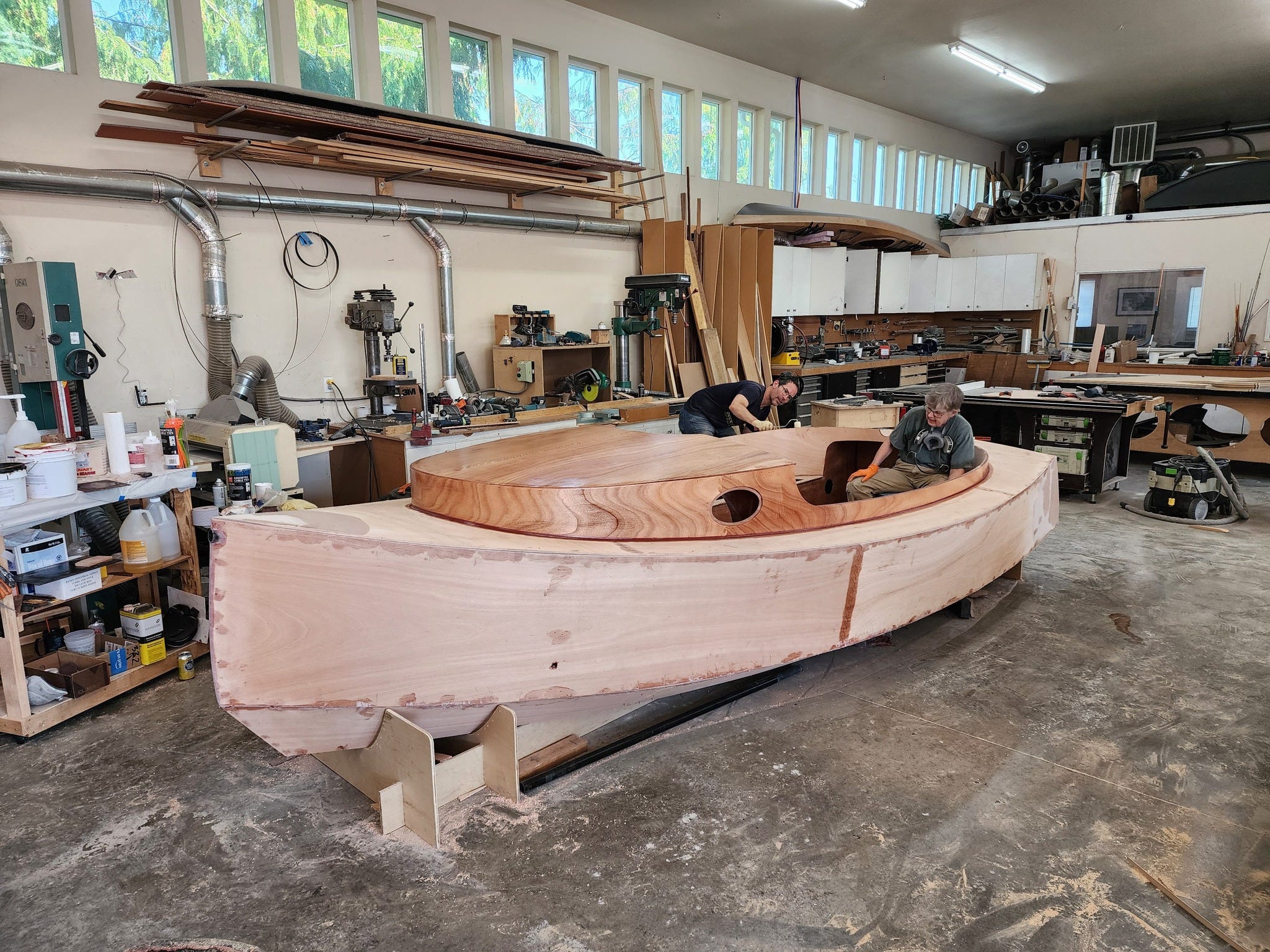
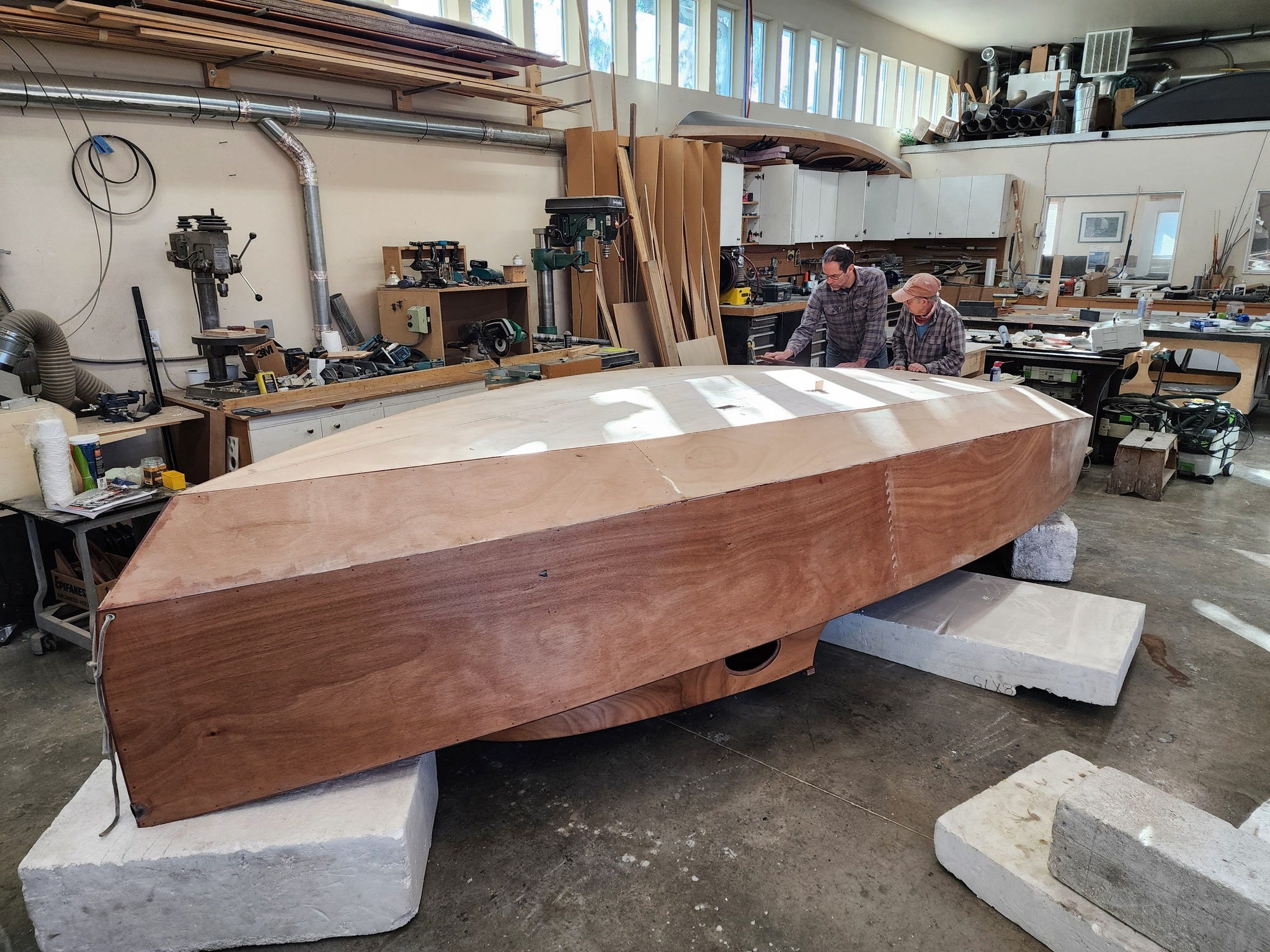
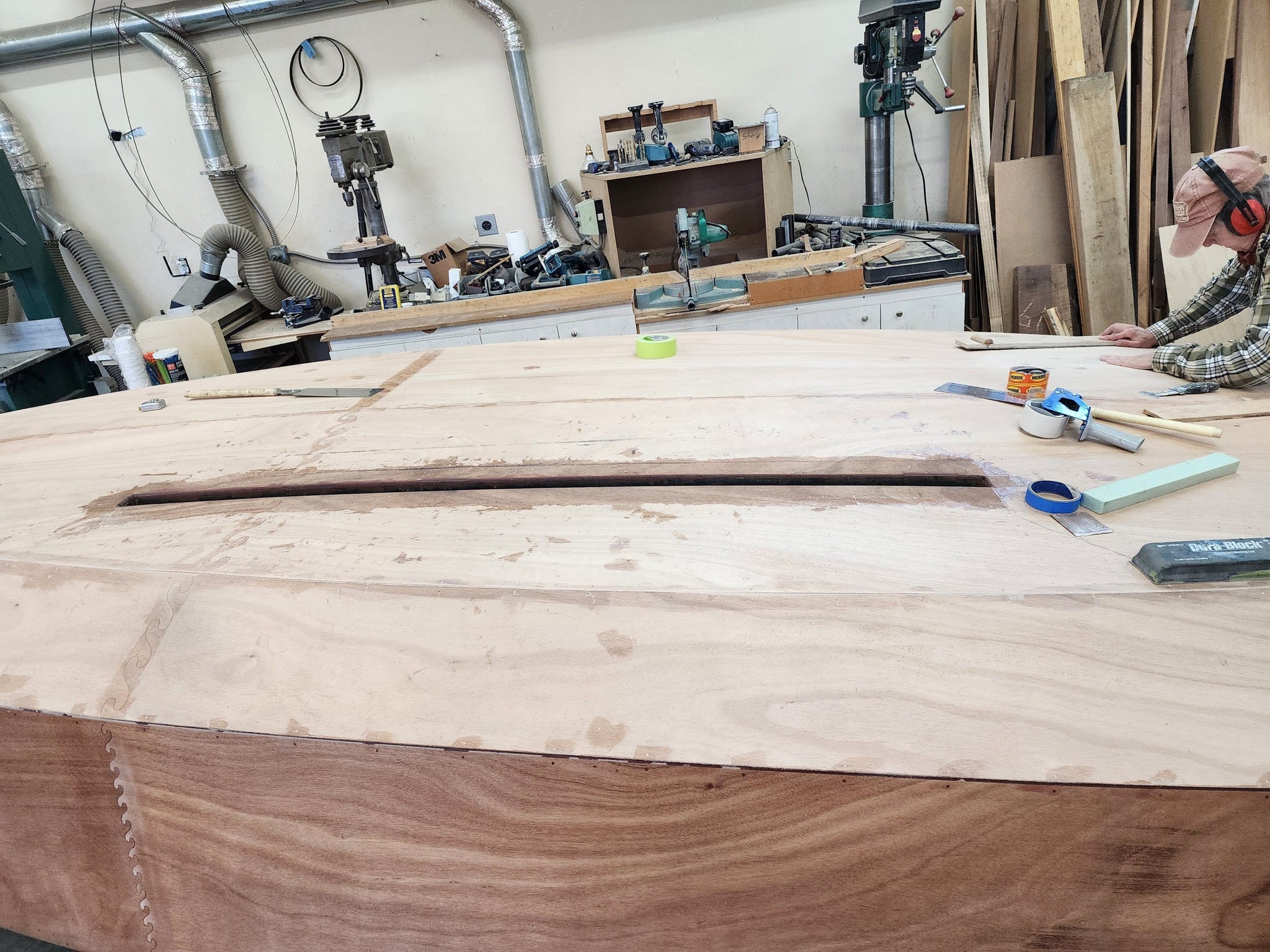
Following the Wooden Boat Festival we got busy with other things, but we’re finally back to working on the new Old Salt 15 prototype. In some of the photos below you can see the hull has been flipped and the offset centerboard slot prepped for bottom glassing.
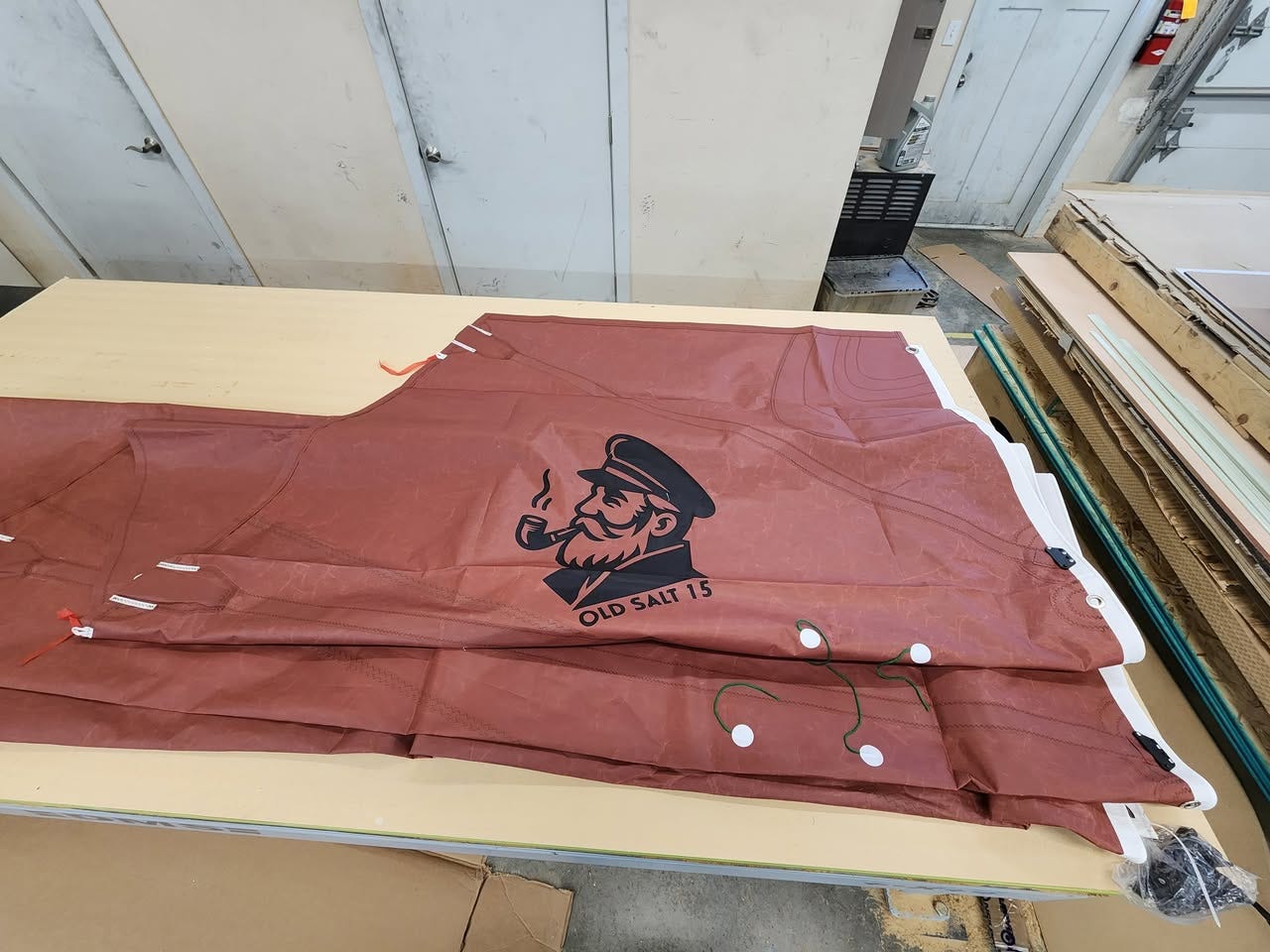
The prototype sail has arrived from the loft. Not too long now before we get the Old Salt out for a test ride.
We have a number of builders participating in the Old Salt 15’s Founder’s Build in March at the Northwest Maritime Center in Port Townsend. If you’re interested in participating in this group build (or the next one) you can contact them here.
We’ve got the website working at kitboats.com, though we’re still updating and adding things. We’ve started to take inventory of masts and sails for the Portage Pram and Scouts and will begin shipping orders shortly.
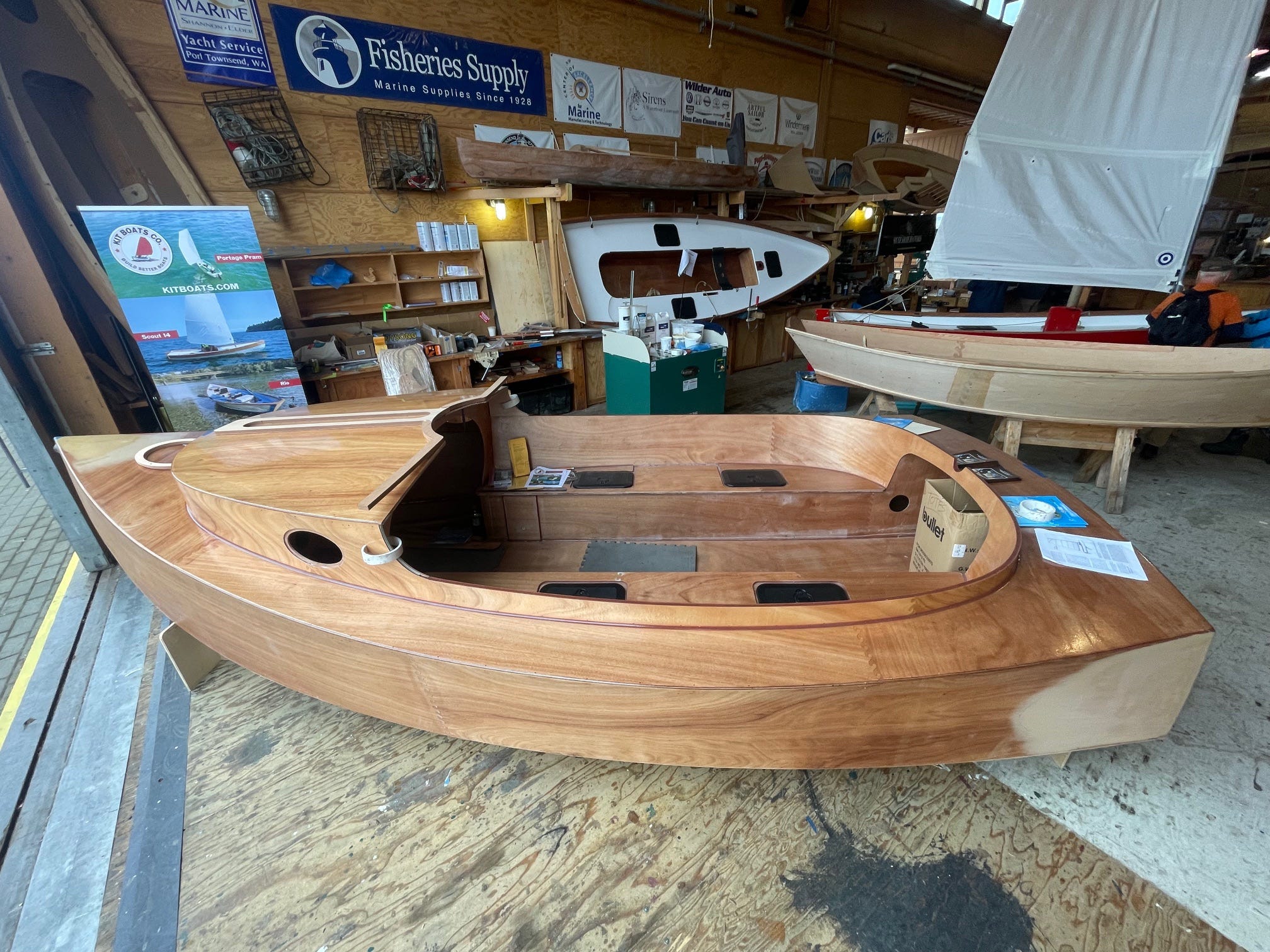
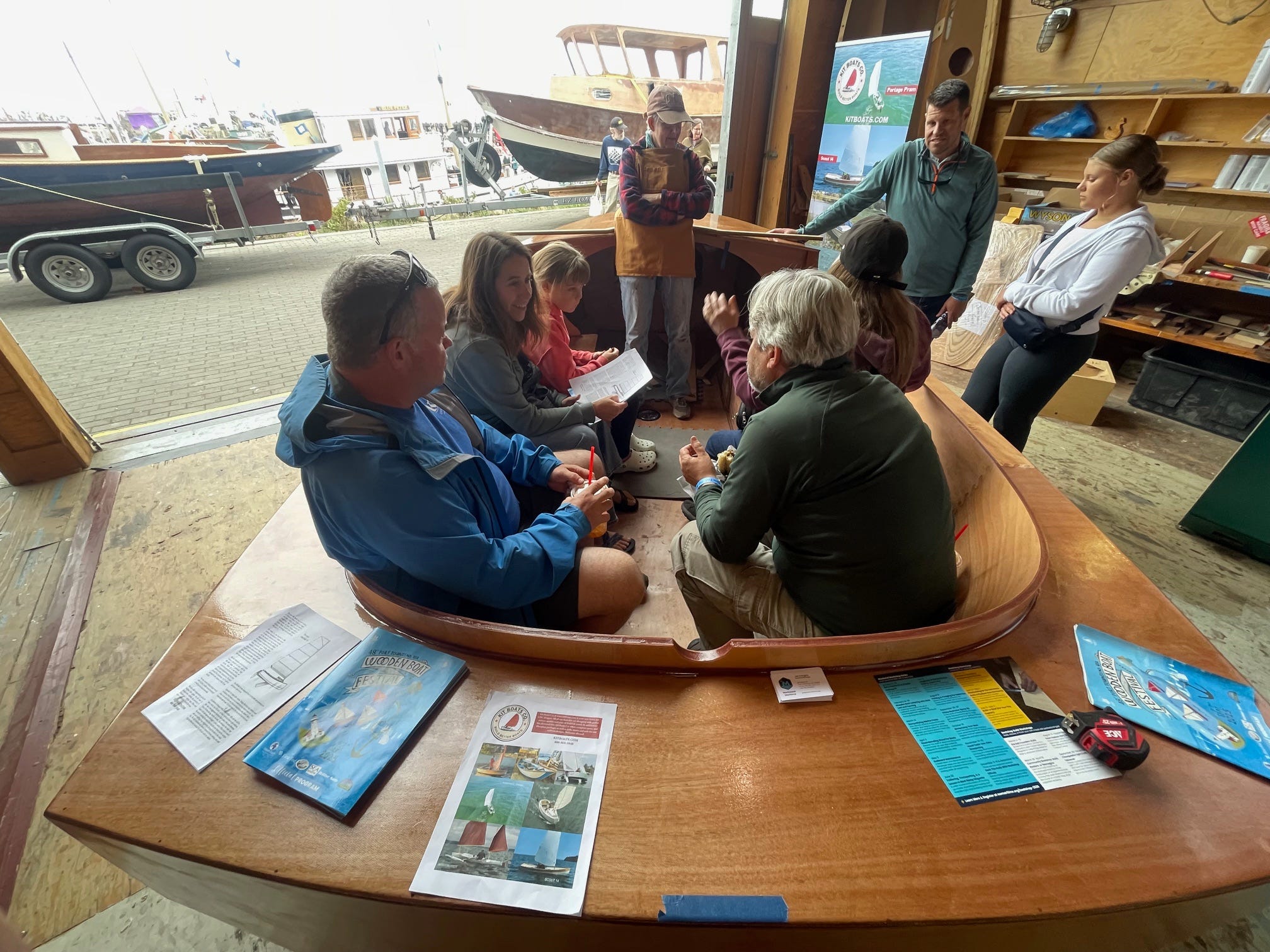
A couple of photos from the Wooden Boat Festival. Note the huge cockpit that swallows passengers like one of those big round restaurant booths.
•SCA•
"Shadow of the scythe", nice!
And why shouldn't boat design consider the intended user/s? That's been a core tenet of architecture for decades.
I'll be 80 on my next birthday, but it is still tempting.